Su Buqing Former Residence
⭐ 3.60
Su Buqing Former Residence, Tengjiao Town, Pingyang County, Wenzhou City, Zhejiang Province, China
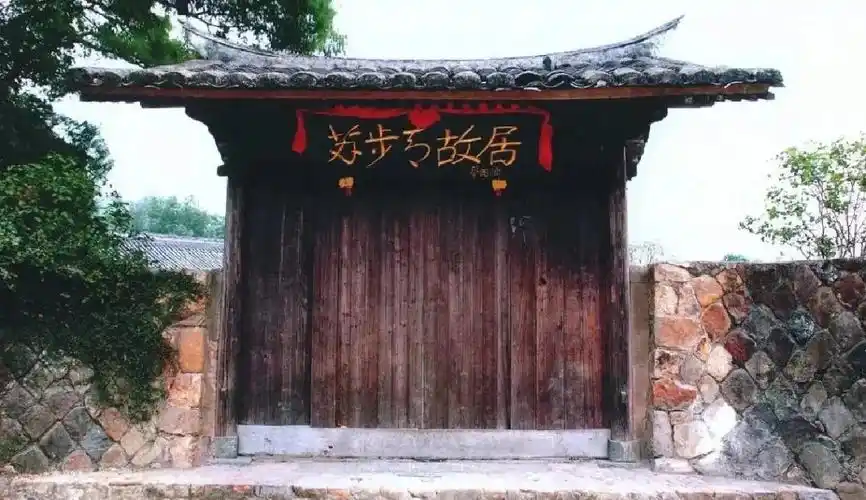 Built in the twilight of the Qing dynasty—an era contemporary with the Belle Époque in Europe and the final years of the Austro-Hungarian Empire—this modest farmhouse witnessed the early life of Su Buqing (1902–2003), a mathematician whose theorems in differential geometry stand alongside the work of contemporaries such as Italy's Tullio Levi-Civita and France's Élie Cartan. While Western science was being shaped at Göttingen and Cambridge, Su trained at Japan's Tohoku Imperial University before returning to a homeland in turmoil. Walking these rooms, visitors encounter a story that parallels the great European academic migrations of the 1920s, yet unfolds in a quintessentially southern Chinese setting.
The residence is a textbook example of late-19th-century vernacular architecture from southern Zhejiang, a region sometimes called the "Venice of the East" for its waterways and carved stone bridges. Spanning roughly 3,500 square meters and expanded from five bays to seven in the 1940s, the timber-frame hall opens around a series of courtyards where a venerable banyan tree entwines with a loquat—a natural curiosity locals call "fig embracing loquat." Comparable in spirit to a restored Tudor cottage in rural England or a half-timbered Alsatian farmstead, the structure exudes the same patient craftsmanship, while its sweeping swallow-tail eaves remain unmistakably Chinese.
Designated a Zhejiang provincial cultural relic in 2011, the site anchors a three-venue cultural campus that includes the Su Buqing Education Hall and the adjacent Mathematics Discovery Center. Together they form an unusually focused "homeland of a mathematician" theme, a concept Western visitors may recognize from composer house-museums in Salzburg or Vienna. Inside the biography hall, multilingual panels in Chinese, English, and Japanese chronicle Su's path from rural student to academician, accompanied by a marble bust and calligraphic plaques once inscribed by national leaders. The interactive math pavilion transforms calculus and topology into playful exhibits—a rare bridge between abstract scholarship and family-friendly sightseeing.
The former residence welcomes visitors daily from 8:30 a.m. to 5:00 p.m., while the Education Hall operates Tuesday through Sunday, 9:00 a.m. to 4:30 p.m. and closes on Mondays. Admission is free, though groups and special exhibitions should reserve in advance by calling 0577-58106535, where English-speaking guides can also be confirmed. Travelers based in central Wenzhou should allow 1 to 1.5 hours by car; rural buses exist but run infrequently. Those planning to include the nearby historic lanes and Chess King Stele Forest should set aside two to three hours in total.
Facilities in this township setting are modest, with few cafés or shops nearby, so carry water and light snacks. Smoking and flash photography are prohibited inside the wooden heritage buildings, and flat shoes are essential on the uneven flagstones. For the best atmosphere, aim for a morning visit between 9 and 11 a.m. or after 4 p.m., when soft light washes the courtyard and the village settles into a Tuscan-like hush. It is a rewarding detour for travelers who want their Wenzhou trip to include not just commerce and coastline, but the quieter pleasures of Chinese intellectual heritage.
Built in the twilight of the Qing dynasty—an era contemporary with the Belle Époque in Europe and the final years of the Austro-Hungarian Empire—this modest farmhouse witnessed the early life of Su Buqing (1902–2003), a mathematician whose theorems in differential geometry stand alongside the work of contemporaries such as Italy's Tullio Levi-Civita and France's Élie Cartan. While Western science was being shaped at Göttingen and Cambridge, Su trained at Japan's Tohoku Imperial University before returning to a homeland in turmoil. Walking these rooms, visitors encounter a story that parallels the great European academic migrations of the 1920s, yet unfolds in a quintessentially southern Chinese setting.
The residence is a textbook example of late-19th-century vernacular architecture from southern Zhejiang, a region sometimes called the "Venice of the East" for its waterways and carved stone bridges. Spanning roughly 3,500 square meters and expanded from five bays to seven in the 1940s, the timber-frame hall opens around a series of courtyards where a venerable banyan tree entwines with a loquat—a natural curiosity locals call "fig embracing loquat." Comparable in spirit to a restored Tudor cottage in rural England or a half-timbered Alsatian farmstead, the structure exudes the same patient craftsmanship, while its sweeping swallow-tail eaves remain unmistakably Chinese.
Designated a Zhejiang provincial cultural relic in 2011, the site anchors a three-venue cultural campus that includes the Su Buqing Education Hall and the adjacent Mathematics Discovery Center. Together they form an unusually focused "homeland of a mathematician" theme, a concept Western visitors may recognize from composer house-museums in Salzburg or Vienna. Inside the biography hall, multilingual panels in Chinese, English, and Japanese chronicle Su's path from rural student to academician, accompanied by a marble bust and calligraphic plaques once inscribed by national leaders. The interactive math pavilion transforms calculus and topology into playful exhibits—a rare bridge between abstract scholarship and family-friendly sightseeing.
The former residence welcomes visitors daily from 8:30 a.m. to 5:00 p.m., while the Education Hall operates Tuesday through Sunday, 9:00 a.m. to 4:30 p.m. and closes on Mondays. Admission is free, though groups and special exhibitions should reserve in advance by calling 0577-58106535, where English-speaking guides can also be confirmed. Travelers based in central Wenzhou should allow 1 to 1.5 hours by car; rural buses exist but run infrequently. Those planning to include the nearby historic lanes and Chess King Stele Forest should set aside two to three hours in total.
Facilities in this township setting are modest, with few cafés or shops nearby, so carry water and light snacks. Smoking and flash photography are prohibited inside the wooden heritage buildings, and flat shoes are essential on the uneven flagstones. For the best atmosphere, aim for a morning visit between 9 and 11 a.m. or after 4 p.m., when soft light washes the courtyard and the village settles into a Tuscan-like hush. It is a rewarding detour for travelers who want their Wenzhou trip to include not just commerce and coastline, but the quieter pleasures of Chinese intellectual heritage.