Nanxi Cultural Center
⭐ 3.80
Nanxi Cultural Center, Lucheng District, Wenzhou City, Zhejiang Province, China
 Nanxi emerged in Wenzhou around the twelfth century, maturing roughly when medieval mystery plays were developing across Europe. For Western visitors, its foundational role invites comparisons to Greek tragedy or Italian commedia dell'arte, yet Nanxi stands distinct as the first fully integrated Chinese operatic form—complete with codified role types, melodic modes, and structured dramatic narrative. Treasured scripts preserved here include "The Top Scholar Zhang Xie," widely regarded as the world's oldest surviving complete play, alongside "The Story of the Lute," both cornerstone works of Chinese dramatic literature still performed today.
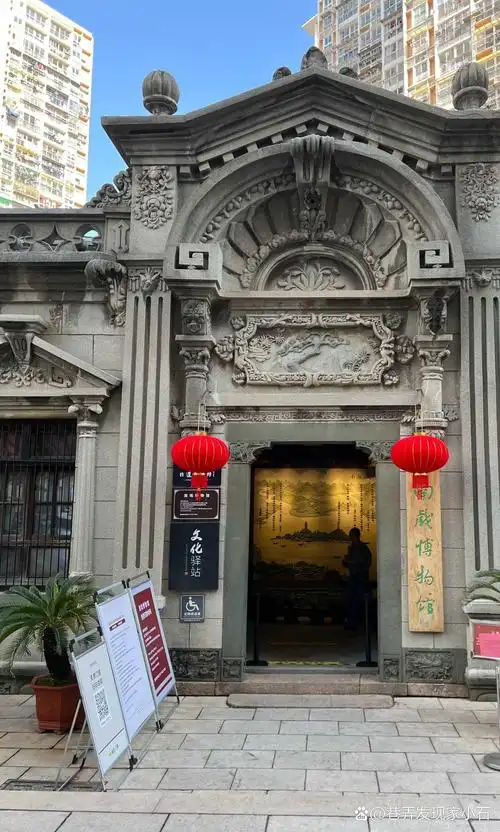
The museum occupies the former Yikang Bank, a Republican-era building displaying a striking "Western exterior, Chinese interior" design. The Baroque-influenced facade—reminiscent of the colonial-era structures along Shanghai's Bund—contrasts dramatically with the traditional Wenzhou courtyard within, where flying eaves and dark tiles nestle alongside Western ornamental reliefs. This architectural conversation reflects Wenzhou's historic identity as a port city that absorbed outside influences while fiercely guarding local traditions, much like Venice or Amsterdam in their commercial heydays.
Across approximately 1,000 square meters of gallery space, eight themed halls present rare manuscripts, original scores, period costumes, and reproduction scripts. Multimedia stations and illustrated panels make scholarly content approachable for general visitors. The collection fills a significant gap in Chinese theater history, offering documentary materials that even specialists rarely encounter outside academic archives. Visitors interested in music, costume design, or dramatic literature will find particularly rich material throughout the carefully curated galleries.
The courtyard's reconstructed ancient stage serves as the museum's beating heart. Professional troupes occasionally perform Ouju opera and Nanxi excerpts here, allowing visitors to experience firsthand the four core skills—singing, recitation, acting, and martial movement—that define Chinese operatic tradition. These live performances transform a quiet museum visit into genuine cultural immersion, comparable to discovering folk music in a European heritage village or stumbling across Shakespeare in an English country house. Visitors should plan around confirmed performances for the richest experience.
Admission is free. The museum opens Tuesday through Sunday, 9:00 to 17:00, with last entry at 16:30; it closes on Mondays. Advance booking via WeChat or on-site registration is required. Free guide booklets are available at the entrance, and selected periods offer audio rental and costume try-on experiences. Mornings tend to be quieter than weekends, when domestic tourism peaks. Visitors should consult the "Wenzhou Museum" official WeChat account for current performance schedules before arrival.
Situated in Wenzhou's historic core near Siyingtang Lane, the museum sits among narrow streets lined with vendors selling regional specialties—savory lamp cakes, fish ball soup, and sticky rice—perfect for combining cultural exploration with culinary discovery. Theater enthusiasts and history researchers will find particularly rich rewards here, while families with children should time visits around performances or interactive sessions. Plan at least two hours to appreciate the full exhibition, longer if attending a live show.
Nanxi emerged in Wenzhou around the twelfth century, maturing roughly when medieval mystery plays were developing across Europe. For Western visitors, its foundational role invites comparisons to Greek tragedy or Italian commedia dell'arte, yet Nanxi stands distinct as the first fully integrated Chinese operatic form—complete with codified role types, melodic modes, and structured dramatic narrative. Treasured scripts preserved here include "The Top Scholar Zhang Xie," widely regarded as the world's oldest surviving complete play, alongside "The Story of the Lute," both cornerstone works of Chinese dramatic literature still performed today.
The museum occupies the former Yikang Bank, a Republican-era building displaying a striking "Western exterior, Chinese interior" design. The Baroque-influenced facade—reminiscent of the colonial-era structures along Shanghai's Bund—contrasts dramatically with the traditional Wenzhou courtyard within, where flying eaves and dark tiles nestle alongside Western ornamental reliefs. This architectural conversation reflects Wenzhou's historic identity as a port city that absorbed outside influences while fiercely guarding local traditions, much like Venice or Amsterdam in their commercial heydays.
Across approximately 1,000 square meters of gallery space, eight themed halls present rare manuscripts, original scores, period costumes, and reproduction scripts. Multimedia stations and illustrated panels make scholarly content approachable for general visitors. The collection fills a significant gap in Chinese theater history, offering documentary materials that even specialists rarely encounter outside academic archives. Visitors interested in music, costume design, or dramatic literature will find particularly rich material throughout the carefully curated galleries.
The courtyard's reconstructed ancient stage serves as the museum's beating heart. Professional troupes occasionally perform Ouju opera and Nanxi excerpts here, allowing visitors to experience firsthand the four core skills—singing, recitation, acting, and martial movement—that define Chinese operatic tradition. These live performances transform a quiet museum visit into genuine cultural immersion, comparable to discovering folk music in a European heritage village or stumbling across Shakespeare in an English country house. Visitors should plan around confirmed performances for the richest experience.
Admission is free. The museum opens Tuesday through Sunday, 9:00 to 17:00, with last entry at 16:30; it closes on Mondays. Advance booking via WeChat or on-site registration is required. Free guide booklets are available at the entrance, and selected periods offer audio rental and costume try-on experiences. Mornings tend to be quieter than weekends, when domestic tourism peaks. Visitors should consult the "Wenzhou Museum" official WeChat account for current performance schedules before arrival.
Situated in Wenzhou's historic core near Siyingtang Lane, the museum sits among narrow streets lined with vendors selling regional specialties—savory lamp cakes, fish ball soup, and sticky rice—perfect for combining cultural exploration with culinary discovery. Theater enthusiasts and history researchers will find particularly rich rewards here, while families with children should time visits around performances or interactive sessions. Plan at least two hours to appreciate the full exhibition, longer if attending a live show.