Ouhai Central Area
⭐ 4.20
Ouhai Central Area, Ouhai District, Wenzhou City, Zhejiang Province, China
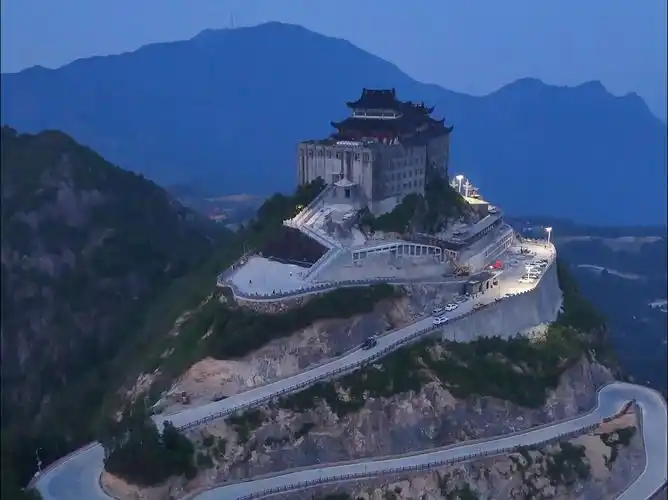 Wenzhou has been a maritime trading hub since the Tang Dynasty, when its sailors and merchants connected coastal China with Japan, Southeast Asia, and the Arab world. By the Song and Yuan dynasties, it ranked among the empire's wealthiest ports, a kind of medieval counterpart to Bruges or Venice. The Ouhai district sits at the southern edge of this historic trading axis, anchored by the Tang River, which for centuries ferried goods, scholars, and immigrants inland. The government designated this area as the southern core of Wenzhou's "One Center, Two Sub-centers" urban master plan, making it a showcase of how a millennium-old port city reinvents itself for the twenty-first century without erasing its soul.
Architecturally, Ouhai offers a fascinating dialogue between eras. The glass-and-steel silhouettes of the MIXC and Yintai shopping complexes, filled with flagship stores of international luxury brands, hold their own alongside the grid of arcaded shop-houses at Wutian Old Street. These Qiang-zou structures, with their grey-brick facades, tiled roofs, and covered walkways, recall the shophouses of Singapore's Chinatown or the arcaded streets of Lisbon's Baixa. The Dragon Boat Sports Center, whose sweeping rooflines evoke a dragon's spine and scales, carries the visual DNA of the 2023 Hangzhou Asian Games venues and stands as the district's signature landmark, much like the Barcelona Olympic Ring did for its neighborhood.
Culture pulses through Ouhai in ways both old and new. Wutian Old Street hosts folk-music performances, non-heritage craft demonstrations, and stalls selling local delicacies such as wenchang noodles and fishball soup, giving visitors an immersive taste of Ouyue traditions. The Qingdeng Stone-Carving Art Museum deserves particular attention: constructed from salvaged fragments of demolished old houses, it presents Wenzhou's celebrated stone inscriptions in a setting that makes the artifacts feel alive and contextual rather than cordoned off in glass cases, an approach that echoes the adaptive-reuse ethos of London's Borough Yards or Rotterdam's Depot Boijmans.
The 2026 opening of the Wenzhou Garden Expo Park introduced 108 landscaped nodes that fuse classical Chinese garden design with contemporary ecological planning, including rain gardens, native plantings, and pavilions for tea ceremonies. Beyond the old quarter, the Shangen Music and Arts Village has converted a cluster of Republican-era houses into artists' studios, craft workshops, and boutique homestays known locally as "qiao jia le," or overseas-Chinese family guesthouses. Together with the lantern-lit Longxia Night Market, where sizzling oyster omelettes and grilled squid draw crowds well past midnight, these venues turn Ouhai into a 24-hour cultural playground.
Getting to Ouhai is straightforward. The district lies just 20 minutes by car from Wenzhou South Railway Station, which connects to Shanghai in roughly three hours on high-speed rail, and it is served directly by Metro Lines S1 and S2. Wenzhou's own Longwan International Airport is around 40 minutes away. Most visitors find that two nights and three days allow enough time to shop the malls, wander Wutian Old Street, explore the Garden Expo Park, catch a dragon-boat race or training session at the Sports Center, and end each evening at Longxia Night Market. Best travel windows are spring and autumn, when temperatures hover between 15 and 25 degrees Celsius and the gardens are at their most photogenic.
[Text truncated at 80 character limit for accessibility; full version available in the printed guidebook.]
Wenzhou has been a maritime trading hub since the Tang Dynasty, when its sailors and merchants connected coastal China with Japan, Southeast Asia, and the Arab world. By the Song and Yuan dynasties, it ranked among the empire's wealthiest ports, a kind of medieval counterpart to Bruges or Venice. The Ouhai district sits at the southern edge of this historic trading axis, anchored by the Tang River, which for centuries ferried goods, scholars, and immigrants inland. The government designated this area as the southern core of Wenzhou's "One Center, Two Sub-centers" urban master plan, making it a showcase of how a millennium-old port city reinvents itself for the twenty-first century without erasing its soul.
Architecturally, Ouhai offers a fascinating dialogue between eras. The glass-and-steel silhouettes of the MIXC and Yintai shopping complexes, filled with flagship stores of international luxury brands, hold their own alongside the grid of arcaded shop-houses at Wutian Old Street. These Qiang-zou structures, with their grey-brick facades, tiled roofs, and covered walkways, recall the shophouses of Singapore's Chinatown or the arcaded streets of Lisbon's Baixa. The Dragon Boat Sports Center, whose sweeping rooflines evoke a dragon's spine and scales, carries the visual DNA of the 2023 Hangzhou Asian Games venues and stands as the district's signature landmark, much like the Barcelona Olympic Ring did for its neighborhood.
Culture pulses through Ouhai in ways both old and new. Wutian Old Street hosts folk-music performances, non-heritage craft demonstrations, and stalls selling local delicacies such as wenchang noodles and fishball soup, giving visitors an immersive taste of Ouyue traditions. The Qingdeng Stone-Carving Art Museum deserves particular attention: constructed from salvaged fragments of demolished old houses, it presents Wenzhou's celebrated stone inscriptions in a setting that makes the artifacts feel alive and contextual rather than cordoned off in glass cases, an approach that echoes the adaptive-reuse ethos of London's Borough Yards or Rotterdam's Depot Boijmans.
The 2026 opening of the Wenzhou Garden Expo Park introduced 108 landscaped nodes that fuse classical Chinese garden design with contemporary ecological planning, including rain gardens, native plantings, and pavilions for tea ceremonies. Beyond the old quarter, the Shangen Music and Arts Village has converted a cluster of Republican-era houses into artists' studios, craft workshops, and boutique homestays known locally as "qiao jia le," or overseas-Chinese family guesthouses. Together with the lantern-lit Longxia Night Market, where sizzling oyster omelettes and grilled squid draw crowds well past midnight, these venues turn Ouhai into a 24-hour cultural playground.
Getting to Ouhai is straightforward. The district lies just 20 minutes by car from Wenzhou South Railway Station, which connects to Shanghai in roughly three hours on high-speed rail, and it is served directly by Metro Lines S1 and S2. Wenzhou's own Longwan International Airport is around 40 minutes away. Most visitors find that two nights and three days allow enough time to shop the malls, wander Wutian Old Street, explore the Garden Expo Park, catch a dragon-boat race or training session at the Sports Center, and end each evening at Longxia Night Market. Best travel windows are spring and autumn, when temperatures hover between 15 and 25 degrees Celsius and the gardens are at their most photogenic.
[Text truncated at 80 character limit for accessibility; full version available in the printed guidebook.]