Lingkun Island
⭐ 3.60
Lingkun Island, Dongtou District, Wenzhou City, Zhejiang Province, China
 Geologically, Lingkun Island is one of only two major river-delta islands in Zhejiang Province, formed over millennia by sediment deposited where the Ou River empties into the East China Sea. Ecologists often compare its tidal-flat ecosystem to Europe's Wadden Sea—a UNESCO World Heritage site shared by the Netherlands, Germany, and Denmark—where similar mudflats shelter migratory birds and crustaceans. Wenzhou itself has been a maritime trading port since the Tang dynasty, and Lingkun's fishermen have long worked these productive waters, supplying the city with seafood along historic river and coastal routes.
The island's signature feature is the 6.5-kilometer Lingkun South Line seawall, a modern dike that combines flood protection with recreational pathways. Comparable in spirit to the Netherlands' iconic Afsluitdijk, this broad paved causeway offers sweeping views where the muddy Ou River meets the blue East China Sea—an evocative meeting of two distinct bodies of water. Cyclists, walkers, and photographers flock here, especially at sunset, when shifting light transforms the tide pools into shimmering mirrors. Along the route, the old Ha Si fishing jetty preserves the atmosphere of a working maritime village.
At low tide, the island's expansive mudflats reveal a hidden world that recalls traditional shellfish-gathering along the Brittany or Welsh coasts. Visitors wade barefoot to catch mudskippers—amphibious fish that "walk" on land—and the charismatic fiddler crabs waving their oversized claws. Timing is essential: the tides dictate the schedule, so consulting a local tide table is crucial for both safety and success. This hands-on encounter with marine ecology delights children and adults alike, offering a tangible connection to the natural rhythms that have sustained local communities for generations.
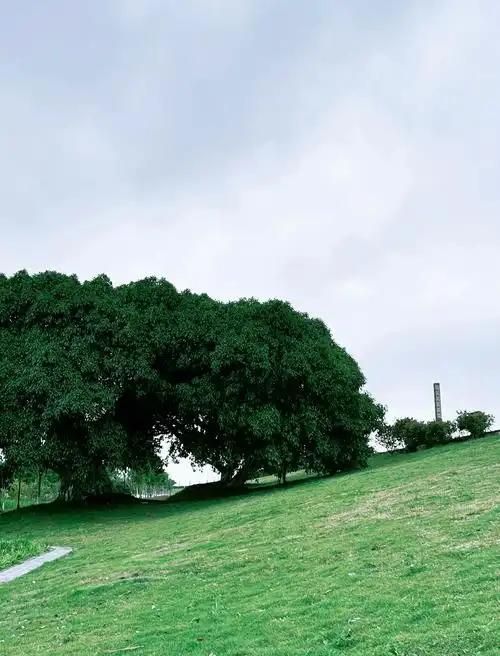
Across roughly 10,000 mu of orchards, seasonal fruit picking is a highlight: strawberries in winter, watermelons in summer, and grapes in autumn. Numerous family-run ecological gardens allow visitors to eat as they harvest. The Jiu Long Lake area, with its broad waters framed by wetlands, attracts herons and egrets year-round and is sometimes likened to the bird-rich Camargue in southern France. A roughly 15-kilometer loop around the island has become popular with cyclists, who pause to photograph the photogenic "Lonely Tree" and rows of modern wind turbines that echo the traditional windmills of the Low Countries.
Lingkun's cuisine is defined by freshness and simplicity. The star is the Lingkun green crab—known locally as youmolou—plump and rich, typically steamed with rice wine and ginger. Other specialties include mudskipper stew, free-range chicken hotpots, and whatever fruit is in season. Farm-to-table restaurants and modest family kitchens cluster around the southern seawall, where meals often feature ingredients harvested the same morning. For Western palates, the experience resembles a rustic Mediterranean coastal lunch: straightforward preparation, stellar ingredients, and a sea breeze drifting through the open windows.
Reaching the island is straightforward. Drivers can cross via the Lingkun Bridge or the newer Oujiang North Mouth Bridge, while public-transit users can take Metro Lines S1 or S2 to Lingkun Station and transfer by taxi or local bus. Allow half a day to a full day; a popular rhythm is "morning fruit picking, lunch at a farmhouse, afternoon cycling and sunset on the seawall." Most scenic spots are free. August brings typhoons and high humidity, so check forecasts and tide tables before traveling. English is limited—download a translation app and an offline map in advance, as mobile signals can waver in remoter areas.
Geologically, Lingkun Island is one of only two major river-delta islands in Zhejiang Province, formed over millennia by sediment deposited where the Ou River empties into the East China Sea. Ecologists often compare its tidal-flat ecosystem to Europe's Wadden Sea—a UNESCO World Heritage site shared by the Netherlands, Germany, and Denmark—where similar mudflats shelter migratory birds and crustaceans. Wenzhou itself has been a maritime trading port since the Tang dynasty, and Lingkun's fishermen have long worked these productive waters, supplying the city with seafood along historic river and coastal routes.
The island's signature feature is the 6.5-kilometer Lingkun South Line seawall, a modern dike that combines flood protection with recreational pathways. Comparable in spirit to the Netherlands' iconic Afsluitdijk, this broad paved causeway offers sweeping views where the muddy Ou River meets the blue East China Sea—an evocative meeting of two distinct bodies of water. Cyclists, walkers, and photographers flock here, especially at sunset, when shifting light transforms the tide pools into shimmering mirrors. Along the route, the old Ha Si fishing jetty preserves the atmosphere of a working maritime village.
At low tide, the island's expansive mudflats reveal a hidden world that recalls traditional shellfish-gathering along the Brittany or Welsh coasts. Visitors wade barefoot to catch mudskippers—amphibious fish that "walk" on land—and the charismatic fiddler crabs waving their oversized claws. Timing is essential: the tides dictate the schedule, so consulting a local tide table is crucial for both safety and success. This hands-on encounter with marine ecology delights children and adults alike, offering a tangible connection to the natural rhythms that have sustained local communities for generations.
Across roughly 10,000 mu of orchards, seasonal fruit picking is a highlight: strawberries in winter, watermelons in summer, and grapes in autumn. Numerous family-run ecological gardens allow visitors to eat as they harvest. The Jiu Long Lake area, with its broad waters framed by wetlands, attracts herons and egrets year-round and is sometimes likened to the bird-rich Camargue in southern France. A roughly 15-kilometer loop around the island has become popular with cyclists, who pause to photograph the photogenic "Lonely Tree" and rows of modern wind turbines that echo the traditional windmills of the Low Countries.
Lingkun's cuisine is defined by freshness and simplicity. The star is the Lingkun green crab—known locally as youmolou—plump and rich, typically steamed with rice wine and ginger. Other specialties include mudskipper stew, free-range chicken hotpots, and whatever fruit is in season. Farm-to-table restaurants and modest family kitchens cluster around the southern seawall, where meals often feature ingredients harvested the same morning. For Western palates, the experience resembles a rustic Mediterranean coastal lunch: straightforward preparation, stellar ingredients, and a sea breeze drifting through the open windows.
Reaching the island is straightforward. Drivers can cross via the Lingkun Bridge or the newer Oujiang North Mouth Bridge, while public-transit users can take Metro Lines S1 or S2 to Lingkun Station and transfer by taxi or local bus. Allow half a day to a full day; a popular rhythm is "morning fruit picking, lunch at a farmhouse, afternoon cycling and sunset on the seawall." Most scenic spots are free. August brings typhoons and high humidity, so check forecasts and tide tables before traveling. English is limited—download a translation app and an offline map in advance, as mobile signals can waver in remoter areas.