Stone Bell Mountain
⭐ 4.20
Stone Bell Mountain Scenic Area, Hukou County, Jiujiang City, Jiangxi Province, China
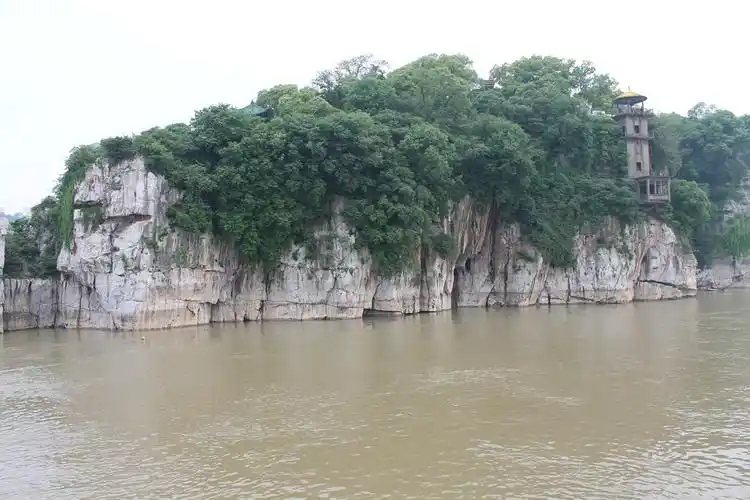 In 1084, the Song dynasty literary giant Su Shi—often compared to a Chinese Petrarch or Charles Dickens for his blend of travel writing and moral reflection—rowed to this rocky outcrop on a moonlit night to settle a centuries-old debate about why the mountain was named for a bell. His essay "Record of Stone Bell Mountain" has since been memorized by generations of Chinese schoolchildren, much as Cicero's letters shaped European rhetoric. Su's insistence on firsthand investigation rather than accepting classical authorities anticipated the empirical spirit that would later animate Europe's Renaissance scientists.
The mountain itself is little more than a limestone knob, yet its compact size has allowed Ming and Qing builders to pack thirty structures—pavilions, halls, ancestral shrines—into its slopes without the rigid symmetry of imperial Beijing. The result resembles a "miniature Jiangnan garden," recalling the intimate scale of Italy's Villa d'Este rather than the grand vistas of Versailles. Look for the Huaisu Pavilion honoring Su Shi, the Posian Lou memorial hall, and the Zhao Zhong Ci shrine commemorating soldiers who fell suppressing the 1855 Taiping Rebellion.
The hill's true marvel lies at its feet. Here the Yangtze—third-longest river on Earth—funnels its sediment-laden yellow flood past Poyang Lake, China's largest freshwater body, which empties in clear blue-green ribbons. The visible boundary between the two waters stretches for miles, an effect as startling as watching the Rhône and Saône merge at Lyon or the Moselle join the Rhine at Koblenz. Two viewing pavilions—Qingzhuo Ting and Jiangtian Yilan Ting—offer the most dramatic vantage points.
Climbing the hill, visitors pass some 170 cliff inscriptions dating from the Tang dynasty through the Qing, including stone carvings of Su Shi's famous essay and a modern statue of the writer himself. This density of literary heritage rivals the inscribed oracles of Greece's Delphi or the carved epics of the Anglo-Saxon Beowulf manuscript. For Chinese literature students, walking here is akin to a Shakespeare scholar visiting Stratford-upon-Avon with the bard's own quill in hand—the connection between text and landscape is visceral and immediate.
Entry costs around 72 yuan per adult, with reduced rates for children and seniors; opening hours run roughly 8:00 a.m. to 5:30 p.m., though seasonal variations apply. The ascent takes only 20–30 minutes along well-maintained stone steps, making this an ideal half-day stop on a Yangtze cruise extension or a Jiujiang–Lushan itinerary. Spring and autumn bring comfortable temperatures and moderate winds that enhance both the water-color spectacle and the bell-like resonance of waves against the cliffs; early morning and late afternoon light transform the yellow-blue waterline into a photographer's dream.
Unlike China's thrill-ride theme parks, Stone Bell Mountain rewards those who come for history, photography, and quiet contemplation. After exploring, descend to Hukou County for local specialties including fermented black beans and prized great white fish from Poyang Lake. Adventurous travelers can pair the visit with a boat excursion to nearby Shoe Mountain Island, a single rocky peak rising from the lake that, like a Chinese Kilimanjaro silhouette, has guided fishermen for centuries.
In 1084, the Song dynasty literary giant Su Shi—often compared to a Chinese Petrarch or Charles Dickens for his blend of travel writing and moral reflection—rowed to this rocky outcrop on a moonlit night to settle a centuries-old debate about why the mountain was named for a bell. His essay "Record of Stone Bell Mountain" has since been memorized by generations of Chinese schoolchildren, much as Cicero's letters shaped European rhetoric. Su's insistence on firsthand investigation rather than accepting classical authorities anticipated the empirical spirit that would later animate Europe's Renaissance scientists.
The mountain itself is little more than a limestone knob, yet its compact size has allowed Ming and Qing builders to pack thirty structures—pavilions, halls, ancestral shrines—into its slopes without the rigid symmetry of imperial Beijing. The result resembles a "miniature Jiangnan garden," recalling the intimate scale of Italy's Villa d'Este rather than the grand vistas of Versailles. Look for the Huaisu Pavilion honoring Su Shi, the Posian Lou memorial hall, and the Zhao Zhong Ci shrine commemorating soldiers who fell suppressing the 1855 Taiping Rebellion.
The hill's true marvel lies at its feet. Here the Yangtze—third-longest river on Earth—funnels its sediment-laden yellow flood past Poyang Lake, China's largest freshwater body, which empties in clear blue-green ribbons. The visible boundary between the two waters stretches for miles, an effect as startling as watching the Rhône and Saône merge at Lyon or the Moselle join the Rhine at Koblenz. Two viewing pavilions—Qingzhuo Ting and Jiangtian Yilan Ting—offer the most dramatic vantage points.
Climbing the hill, visitors pass some 170 cliff inscriptions dating from the Tang dynasty through the Qing, including stone carvings of Su Shi's famous essay and a modern statue of the writer himself. This density of literary heritage rivals the inscribed oracles of Greece's Delphi or the carved epics of the Anglo-Saxon Beowulf manuscript. For Chinese literature students, walking here is akin to a Shakespeare scholar visiting Stratford-upon-Avon with the bard's own quill in hand—the connection between text and landscape is visceral and immediate.
Entry costs around 72 yuan per adult, with reduced rates for children and seniors; opening hours run roughly 8:00 a.m. to 5:30 p.m., though seasonal variations apply. The ascent takes only 20–30 minutes along well-maintained stone steps, making this an ideal half-day stop on a Yangtze cruise extension or a Jiujiang–Lushan itinerary. Spring and autumn bring comfortable temperatures and moderate winds that enhance both the water-color spectacle and the bell-like resonance of waves against the cliffs; early morning and late afternoon light transform the yellow-blue waterline into a photographer's dream.
Unlike China's thrill-ride theme parks, Stone Bell Mountain rewards those who come for history, photography, and quiet contemplation. After exploring, descend to Hukou County for local specialties including fermented black beans and prized great white fish from Poyang Lake. Adventurous travelers can pair the visit with a boat excursion to nearby Shoe Mountain Island, a single rocky peak rising from the lake that, like a Chinese Kilimanjaro silhouette, has guided fishermen for centuries.