Yongchang Fort
⭐ 3.20
Longwan District, Wenzhou City, Zhejiang Province, China
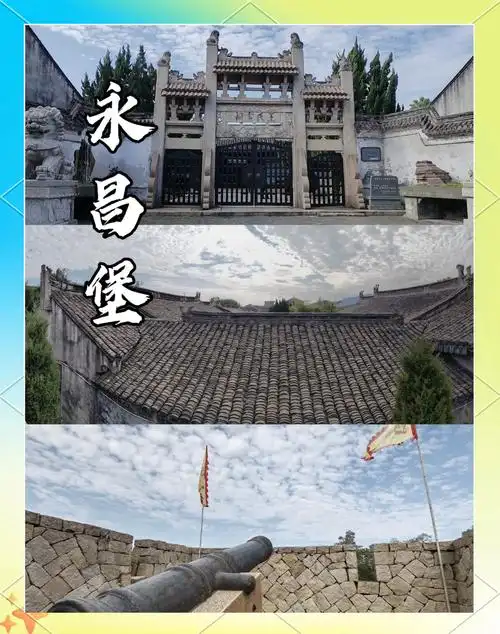 **Historical Context:** Yongchang Fort was erected in 1558, during the reign of the Jiajing Emperor, when wokou—pirates operating from Japanese islands and Chinese coastal bases—devastated trade routes from Shanghai to Guangzhou. Comparable in spirit to the English sea-fortress of Deal or the Scottish coastal bastions built against French raiders, Yongchang is unique because it was not built by the imperial military but by the Wang clan pooling their own resources. This act of communal self-defense illustrates how Ming China, weakened by corruption and overstretched garrisons, forced local communities to take protection into their own hands.
**Architecture:** The rectangular fortress stretches 778 meters north-to-south and 445 meters east-to-west, its perimeter walls rising between 5.6 and 8 meters high—roughly the height of a two-storey house. Four fortified gates, twelve watchtowers, a surrounding moat, and twin internal canals create a self-sufficient military-civilian community. The stonework evokes the sober functionality of Carcassonne in France, though on a more intimate scale. Visitors can still walk the entire rampart circuit, gazing across the surrounding paddy fields and modern Wenzhou suburbs.
**Cultural Significance:** Inside the walls lies a remarkable concentration of intact Ming-Qing architecture, including the imposing Wang Clan Ancestral Hall, the Duting Residence, and Zhuangyuan Residence—homes of imperial examination graduates. The Wang Family Ethics Museum, sometimes nicknamed the "Forbidden City of Jiangnan," displays centuries of clan codes and anti-pirate chronicles. Together these structures reveal how southern Zhejiang's patrilineal families functioned as economic, defensive, and educational micro-states, much like the great merchant clans of Renaissance Venice.
**Practical Visit Info:** Admission is free year-round. Drivers should navigate to either the East Gate (Dongmen) or West Gate (Ximen); both have free parking. Bus services reach Yongzhong Sub-district in Longwan District, followed by a short walk. On-site signage is bilingual but sparse, and English narration is unavailable—booking a multilingual guide in advance is strongly recommended. Comfortable walking shoes and water are essential, as cobbled lanes can be uneven.
**Why Visit:** Yongchang delivers an unvarnished encounter with a period of history rarely accessible to Western visitors. Unlike the polished grandeur of the Great Wall, it feels lived-in and intimate—a genuine 16th-century community frozen in time yet still breathing through its descendants. For travelers seeking an off-the-beaten-path cultural treasure beyond Shanghai's Bund or Suzhou's canals, Yongchang offers authentic atmosphere, evocative scenery, and a compelling story of human resilience against the sea.
**Historical Context:** Yongchang Fort was erected in 1558, during the reign of the Jiajing Emperor, when wokou—pirates operating from Japanese islands and Chinese coastal bases—devastated trade routes from Shanghai to Guangzhou. Comparable in spirit to the English sea-fortress of Deal or the Scottish coastal bastions built against French raiders, Yongchang is unique because it was not built by the imperial military but by the Wang clan pooling their own resources. This act of communal self-defense illustrates how Ming China, weakened by corruption and overstretched garrisons, forced local communities to take protection into their own hands.
**Architecture:** The rectangular fortress stretches 778 meters north-to-south and 445 meters east-to-west, its perimeter walls rising between 5.6 and 8 meters high—roughly the height of a two-storey house. Four fortified gates, twelve watchtowers, a surrounding moat, and twin internal canals create a self-sufficient military-civilian community. The stonework evokes the sober functionality of Carcassonne in France, though on a more intimate scale. Visitors can still walk the entire rampart circuit, gazing across the surrounding paddy fields and modern Wenzhou suburbs.
**Cultural Significance:** Inside the walls lies a remarkable concentration of intact Ming-Qing architecture, including the imposing Wang Clan Ancestral Hall, the Duting Residence, and Zhuangyuan Residence—homes of imperial examination graduates. The Wang Family Ethics Museum, sometimes nicknamed the "Forbidden City of Jiangnan," displays centuries of clan codes and anti-pirate chronicles. Together these structures reveal how southern Zhejiang's patrilineal families functioned as economic, defensive, and educational micro-states, much like the great merchant clans of Renaissance Venice.
**Practical Visit Info:** Admission is free year-round. Drivers should navigate to either the East Gate (Dongmen) or West Gate (Ximen); both have free parking. Bus services reach Yongzhong Sub-district in Longwan District, followed by a short walk. On-site signage is bilingual but sparse, and English narration is unavailable—booking a multilingual guide in advance is strongly recommended. Comfortable walking shoes and water are essential, as cobbled lanes can be uneven.
**Why Visit:** Yongchang delivers an unvarnished encounter with a period of history rarely accessible to Western visitors. Unlike the polished grandeur of the Great Wall, it feels lived-in and intimate—a genuine 16th-century community frozen in time yet still breathing through its descendants. For travelers seeking an off-the-beaten-path cultural treasure beyond Shanghai's Bund or Suzhou's canals, Yongchang offers authentic atmosphere, evocative scenery, and a compelling story of human resilience against the sea.