Qingyuan Museum
⭐ 3.80
No. 18, Zhongshan Road, Qingcheng District, Qingyuan City, Guangdong Province, China
 **Historical Context**
Established in 1982 and elevated to municipal status in 1988, the museum moved into its current home in 2004. While modest by global standards, it documents a remarkable stretch of human history, from the bronze-age Yue peoples—ancestors of communities stretching into modern Vietnam and Thailand—to the layered cultural exchanges that shaped Lingnan over three millennia. For visitors familiar with European tribal museums like the Celtic collections in Switzerland or Hallstatt-era displays in Austria, Qingyuan offers a parallel glimpse into a parallel ancient world, one where river valleys nurtured distinct civilizations long before imperial unification.
**Architecture and Scale**
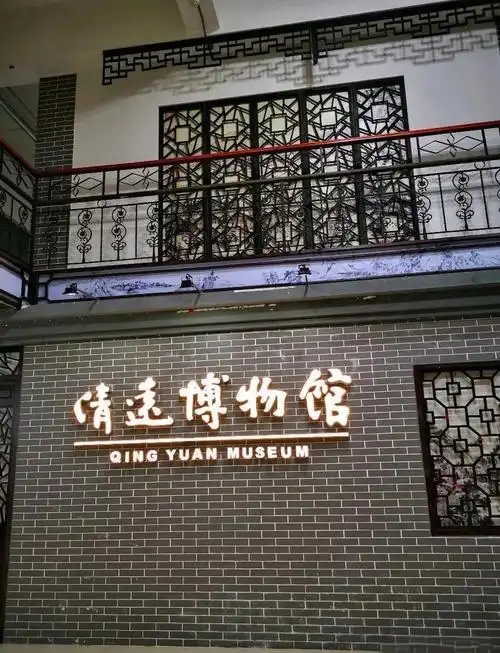
Occupying a 1,205-square-meter site near the Qingyuan municipal government, the two-story building covers 2,729 square meters of floor space. The ground floor houses rotating temporary exhibitions, while the upper level contains the permanent galleries and a multipurpose service area. The architecture is functional rather than monumental, but the clean sightlines, climate-controlled interiors, and well-paced visitor flow rival many small European municipal museums such as those found in regional French or German towns.
**Cultural Significance**
The permanent exhibition unfolds in three thematic chapters: local history, archaeological discoveries, and Yao ethnic minority heritage. Highlights include fragmentary dinosaur fossil evidence linking Qingyuan to the broader Mesozoic fossil beds of southern China, bronzes reflecting Yue bronze-casting traditions, blue-and-white porcelain tracing trade connections with maritime Southeast Asia, and exquisite Yao textiles and ceremonial long drums that echo the intangible heritage of highland communities stretching across southern China and into mainland Southeast Asia. Periodic special exhibitions and hands-on activities such as mock archaeological digs keep the experience lively.
**Practical Visit Information**
Entry is free, but visitors must reserve a timed slot through the museum's WeChat public account and present a QR code at the door. Opening hours run Tuesday through Sunday from 9:00 a.m. to 5:30 p.m., with final admission at 5:00 p.m.; the museum closes on Mondays except during public holidays. Allow 90 minutes to two hours for a relaxed visit. Buses 101 and 107 stop at Tin Ka Ping Middle School, a brief walk from the entrance, and free parking is available on-site.
**Why Visit**
This is a cultural-experience venue rather than a thrill-ride attraction, ideal for travelers building a slow-paced itinerary around Qingyuan's old town walls, the scenic Bei River waterfront, or nearby hot springs. Pair it with a river cruise for a full day that balances gentle natural beauty with quiet historical immersion—perfect for families with school-age children, lifelong learners, and anyone who prefers depth over dazzle.
**Historical Context**
Established in 1982 and elevated to municipal status in 1988, the museum moved into its current home in 2004. While modest by global standards, it documents a remarkable stretch of human history, from the bronze-age Yue peoples—ancestors of communities stretching into modern Vietnam and Thailand—to the layered cultural exchanges that shaped Lingnan over three millennia. For visitors familiar with European tribal museums like the Celtic collections in Switzerland or Hallstatt-era displays in Austria, Qingyuan offers a parallel glimpse into a parallel ancient world, one where river valleys nurtured distinct civilizations long before imperial unification.
**Architecture and Scale**
Occupying a 1,205-square-meter site near the Qingyuan municipal government, the two-story building covers 2,729 square meters of floor space. The ground floor houses rotating temporary exhibitions, while the upper level contains the permanent galleries and a multipurpose service area. The architecture is functional rather than monumental, but the clean sightlines, climate-controlled interiors, and well-paced visitor flow rival many small European municipal museums such as those found in regional French or German towns.
**Cultural Significance**
The permanent exhibition unfolds in three thematic chapters: local history, archaeological discoveries, and Yao ethnic minority heritage. Highlights include fragmentary dinosaur fossil evidence linking Qingyuan to the broader Mesozoic fossil beds of southern China, bronzes reflecting Yue bronze-casting traditions, blue-and-white porcelain tracing trade connections with maritime Southeast Asia, and exquisite Yao textiles and ceremonial long drums that echo the intangible heritage of highland communities stretching across southern China and into mainland Southeast Asia. Periodic special exhibitions and hands-on activities such as mock archaeological digs keep the experience lively.
**Practical Visit Information**
Entry is free, but visitors must reserve a timed slot through the museum's WeChat public account and present a QR code at the door. Opening hours run Tuesday through Sunday from 9:00 a.m. to 5:30 p.m., with final admission at 5:00 p.m.; the museum closes on Mondays except during public holidays. Allow 90 minutes to two hours for a relaxed visit. Buses 101 and 107 stop at Tin Ka Ping Middle School, a brief walk from the entrance, and free parking is available on-site.
**Why Visit**
This is a cultural-experience venue rather than a thrill-ride attraction, ideal for travelers building a slow-paced itinerary around Qingyuan's old town walls, the scenic Bei River waterfront, or nearby hot springs. Pair it with a river cruise for a full day that balances gentle natural beauty with quiet historical immersion—perfect for families with school-age children, lifelong learners, and anyone who prefers depth over dazzle.