Jiujiang Museum
⭐ 4.40
No. 18, Yuliang South Road, Xunyang District, Jiujiang City, Jiangxi Province, China
 Straddling the middle reaches of the Yangtze—China's equivalent of the Rhine or Danube as a continental trade artery—Jiujiang has been a cultural crossroads for well over two millennia. The museum's nine themed galleries trace this layered past chronologically, beginning with the Bronze Age copper mines of Ruichang's Tongling site, where smelting traditions flourished as early as those of ancient Cyprus or the Iberian peninsula. Visitors then move through the bustling streets of imperial Xunyang, the city's heyday as a literary retreat immortalized in Tang dynasty poetry, and its later transformation into a treaty port open to foreign commerce in the late nineteenth century.
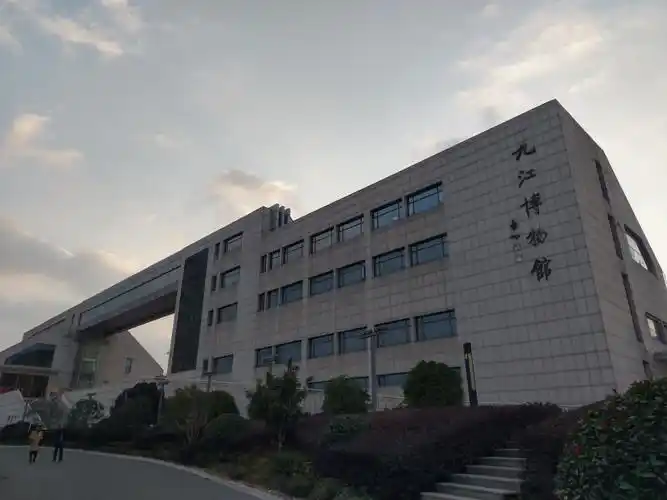
Housed in a sweeping modern complex of some 18,000 square meters within the Bali Lake New District Cultural Park, the museum was designed to engage the senses as much as the intellect. Its exhibition halls, totaling roughly 10,000 square meters, feature generous ceiling heights, thoughtful daylighting, and intuitive circulation. Carefully reconstructed period zones—including an immersive Republican-era streetscape and a living heritage corridor showcasing intangible folk crafts—create a tangible sense of stepping back in time. Backed by the UNESCO-listed slopes of Mount Lu and overlooking the Yangtze, the building itself bridges landscape and history.
The museum's signature flourish lies in weaving digital innovation with traditional artifacts. The "Nine Streams Cloud" immersive hall deploys naked-eye 3D and dynamic sand-table projections to dramatize geological evolution and the rise of the ancient city, while prized ceramics—rich cobalt-blue glazes and flamboyant furnace-transmutation wares that recall the technical ambitions of Meissen or Delft—share the spotlight with bronze ritual vessels, calligraphy, and folk objects. The result balances scholarly depth with showmanship, inviting both specialists and casual visitors to linger.
Social programming is woven throughout the experience. Junior docent training, themed puzzle quests, DIY rubbing workshops, and evening youth performances transform the galleries into an interactive classroom. A dedicated children's hands-on zone and a photogenic cultural-creative shop near the exit—ideal for 360-degree video souvenirs—reinforce a "learn-through-play" ethos that resonates strongly with family audiences.
Plan your visit strategically: the museum closes on Mondays, so midweek mornings before 10 a.m. or afternoons after 3 p.m. offer the most relaxed experience. Allow two to three hours to do the collection justice. Free guided tours run on a published schedule, accessible via the official Jiujiang Museum WeChat account. The interior is fully air-conditioned, so a light layer is advisable, and comfortable shoes are essential for exploring the interactive spaces. Pairing the museum with a cable-car ascent of Mount Lu makes for an unforgettable day.
For travelers who have savored the V&A in London or the Pergamon in Berlin, the Jiujiang Museum offers something refreshingly different: a regional story of global consequence, told through a confident marriage of antiquity and cutting-edge display. Few places outside major capitals deliver such a polished, technology-driven introduction to a single city's soul—and nowhere else frames the Yangtze and one of China's most poetically revered mountains quite so directly.
Straddling the middle reaches of the Yangtze—China's equivalent of the Rhine or Danube as a continental trade artery—Jiujiang has been a cultural crossroads for well over two millennia. The museum's nine themed galleries trace this layered past chronologically, beginning with the Bronze Age copper mines of Ruichang's Tongling site, where smelting traditions flourished as early as those of ancient Cyprus or the Iberian peninsula. Visitors then move through the bustling streets of imperial Xunyang, the city's heyday as a literary retreat immortalized in Tang dynasty poetry, and its later transformation into a treaty port open to foreign commerce in the late nineteenth century.
Housed in a sweeping modern complex of some 18,000 square meters within the Bali Lake New District Cultural Park, the museum was designed to engage the senses as much as the intellect. Its exhibition halls, totaling roughly 10,000 square meters, feature generous ceiling heights, thoughtful daylighting, and intuitive circulation. Carefully reconstructed period zones—including an immersive Republican-era streetscape and a living heritage corridor showcasing intangible folk crafts—create a tangible sense of stepping back in time. Backed by the UNESCO-listed slopes of Mount Lu and overlooking the Yangtze, the building itself bridges landscape and history.
The museum's signature flourish lies in weaving digital innovation with traditional artifacts. The "Nine Streams Cloud" immersive hall deploys naked-eye 3D and dynamic sand-table projections to dramatize geological evolution and the rise of the ancient city, while prized ceramics—rich cobalt-blue glazes and flamboyant furnace-transmutation wares that recall the technical ambitions of Meissen or Delft—share the spotlight with bronze ritual vessels, calligraphy, and folk objects. The result balances scholarly depth with showmanship, inviting both specialists and casual visitors to linger.
Social programming is woven throughout the experience. Junior docent training, themed puzzle quests, DIY rubbing workshops, and evening youth performances transform the galleries into an interactive classroom. A dedicated children's hands-on zone and a photogenic cultural-creative shop near the exit—ideal for 360-degree video souvenirs—reinforce a "learn-through-play" ethos that resonates strongly with family audiences.
Plan your visit strategically: the museum closes on Mondays, so midweek mornings before 10 a.m. or afternoons after 3 p.m. offer the most relaxed experience. Allow two to three hours to do the collection justice. Free guided tours run on a published schedule, accessible via the official Jiujiang Museum WeChat account. The interior is fully air-conditioned, so a light layer is advisable, and comfortable shoes are essential for exploring the interactive spaces. Pairing the museum with a cable-car ascent of Mount Lu makes for an unforgettable day.
For travelers who have savored the V&A in London or the Pergamon in Berlin, the Jiujiang Museum offers something refreshingly different: a regional story of global consequence, told through a confident marriage of antiquity and cutting-edge display. Few places outside major capitals deliver such a polished, technology-driven introduction to a single city's soul—and nowhere else frames the Yangtze and one of China's most poetically revered mountains quite so directly.