Feilai Gorge Scenic Area
⭐ 4.00
Feilai Gorge Scenic Area, Feilai Gorge Town, Qingcheng District, Qingyuan City, Guangdong Province, China
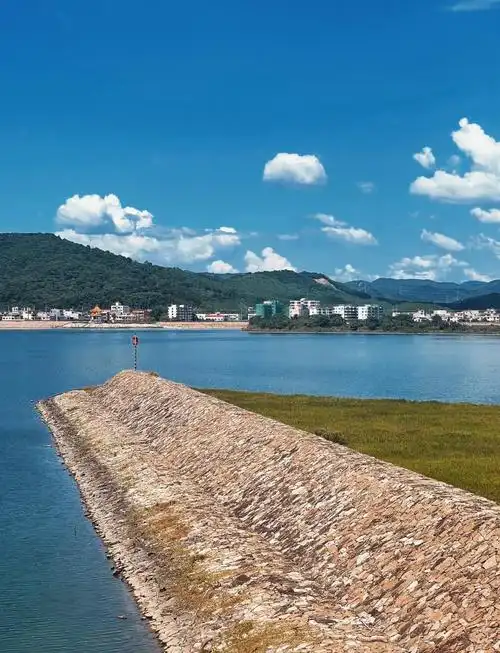 The 1,500-year-old Feilai Temple, perched along the gorge's cliffs, was founded in 520 AD during the Southern Dynasties—contemporary with the reign of Byzantine Emperor Justinian and the early medieval kingdoms of post-Roman Europe. Comparable in age to some of Ireland's earliest Christian monasteries, it ranks among Lingnan's three great ancient Buddhist temples and has remained an active place of worship for fifteen centuries. The gorge itself served as a vital transportation corridor in southern China, where merchants, monks, and officials navigated treacherous waters between the Pearl River Delta and the northern highlands, leaving behind an extraordinary collection of over 70 cliff inscriptions containing 300 classical poems.
Built into the mountainside and overlooking the river, Feilai Temple complex cascades down the slope in traditional Chinese Buddhist layout, with halls connected by stone stairways and surrounded by ancient trees. The adjacent Feixia Ancient Caves feature meditation chambers and pavilions carved into the cliffs, echoing the cave monastery traditions of India's Ajanta or Turkey's Cappadocia, though on a more modest scale. Stone inscriptions and calligraphy etched into the gorge walls over the centuries transform the canyon itself into an open-air museum, where Tang poetry, Song dynasty verses, and Qing-era commentaries coexist with the natural rock formations.
Feilai Gorge occupies a unique place in southern Chinese culture, embodying the fusion of Confucian literati tradition, Buddhist devotion, and nature worship that defined classical Chinese landscape appreciation. The 72 peaks—each with its own legend and name—inspired generations of scholars seeking inspiration, much as Romantic poets flocked to the Swiss Alps or Germany's Rhine Valley in the 18th and 19th centuries. The continuous preservation of religious practice alongside poetic heritage makes this site unusually rich for understanding Lingnan regional culture, distinct from the better-known Buddhist centers of central and northern China.
Dominating the gorge's downstream end, the Feilai Gorge Water Conservancy Project represents a triumph of contemporary Chinese infrastructure, designed to withstand floods occurring once every 300 years. Visitors can walk right up to the massive floodgates and navigation locks, observing engineering on a scale that rivals Europe's grand hydroelectric schemes such as those along the Danube or Scandinavia's mountain dams. The project transformed the river into a "high gorge with flat lake" formation during high water—visually similar to Switzerland's Lake Lucerne nestled among peaks—while exposing dramatic cliff pools and rock formations during the dry season.
The main scenic area and hydroelectric dam are open free of charge year-round, though entrance to Feilai Temple's interior halls and the popular canyon rafting experience require separate tickets. The site spans considerable distance with attractions scattered along both banks, making self-driving the most practical option—roughly one hour from either Guangzhou or downtown Qingyuan. Spring and autumn offer the most atmospheric conditions, when mist softens the peaks into ink-wash paintings; summer brings heat but also the thrilling Feixia Creek rafting adventure, with drops of up to 20 meters over a 90-minute course. Boat tours through the "Little Three Gorges" sections of Zhenyang, Mangzai, and Xianglu operate seasonally.
Few places in southern China combine so seamlessly the trinity of dramatic natural scenery, living religious heritage, and modern engineering spectacle within such easy reach of a major metropolitan area. Travelers seeking an accessible alternative to the crowded Yangtze Three Gorges cruise will find here a more intimate scale, equally breathtaking vistas, and the bonus of authentic cultural depth. Whether watching sunset light trace the cliff faces, listening to temple bells echo across the water, or drifting beneath ancient inscriptions, visitors encounter a layered landscape where fifteen centuries of human history meet timeless geological grandeur—all within an hour's escape from the bustle of the Pearl River Delta.
The 1,500-year-old Feilai Temple, perched along the gorge's cliffs, was founded in 520 AD during the Southern Dynasties—contemporary with the reign of Byzantine Emperor Justinian and the early medieval kingdoms of post-Roman Europe. Comparable in age to some of Ireland's earliest Christian monasteries, it ranks among Lingnan's three great ancient Buddhist temples and has remained an active place of worship for fifteen centuries. The gorge itself served as a vital transportation corridor in southern China, where merchants, monks, and officials navigated treacherous waters between the Pearl River Delta and the northern highlands, leaving behind an extraordinary collection of over 70 cliff inscriptions containing 300 classical poems.
Built into the mountainside and overlooking the river, Feilai Temple complex cascades down the slope in traditional Chinese Buddhist layout, with halls connected by stone stairways and surrounded by ancient trees. The adjacent Feixia Ancient Caves feature meditation chambers and pavilions carved into the cliffs, echoing the cave monastery traditions of India's Ajanta or Turkey's Cappadocia, though on a more modest scale. Stone inscriptions and calligraphy etched into the gorge walls over the centuries transform the canyon itself into an open-air museum, where Tang poetry, Song dynasty verses, and Qing-era commentaries coexist with the natural rock formations.
Feilai Gorge occupies a unique place in southern Chinese culture, embodying the fusion of Confucian literati tradition, Buddhist devotion, and nature worship that defined classical Chinese landscape appreciation. The 72 peaks—each with its own legend and name—inspired generations of scholars seeking inspiration, much as Romantic poets flocked to the Swiss Alps or Germany's Rhine Valley in the 18th and 19th centuries. The continuous preservation of religious practice alongside poetic heritage makes this site unusually rich for understanding Lingnan regional culture, distinct from the better-known Buddhist centers of central and northern China.
Dominating the gorge's downstream end, the Feilai Gorge Water Conservancy Project represents a triumph of contemporary Chinese infrastructure, designed to withstand floods occurring once every 300 years. Visitors can walk right up to the massive floodgates and navigation locks, observing engineering on a scale that rivals Europe's grand hydroelectric schemes such as those along the Danube or Scandinavia's mountain dams. The project transformed the river into a "high gorge with flat lake" formation during high water—visually similar to Switzerland's Lake Lucerne nestled among peaks—while exposing dramatic cliff pools and rock formations during the dry season.
The main scenic area and hydroelectric dam are open free of charge year-round, though entrance to Feilai Temple's interior halls and the popular canyon rafting experience require separate tickets. The site spans considerable distance with attractions scattered along both banks, making self-driving the most practical option—roughly one hour from either Guangzhou or downtown Qingyuan. Spring and autumn offer the most atmospheric conditions, when mist softens the peaks into ink-wash paintings; summer brings heat but also the thrilling Feixia Creek rafting adventure, with drops of up to 20 meters over a 90-minute course. Boat tours through the "Little Three Gorges" sections of Zhenyang, Mangzai, and Xianglu operate seasonally.
Few places in southern China combine so seamlessly the trinity of dramatic natural scenery, living religious heritage, and modern engineering spectacle within such easy reach of a major metropolitan area. Travelers seeking an accessible alternative to the crowded Yangtze Three Gorges cruise will find here a more intimate scale, equally breathtaking vistas, and the bonus of authentic cultural depth. Whether watching sunset light trace the cliff faces, listening to temple bells echo across the water, or drifting beneath ancient inscriptions, visitors encounter a layered landscape where fifteen centuries of human history meet timeless geological grandeur—all within an hour's escape from the bustle of the Pearl River Delta.