Shenzhen Bay Port
⭐ 3.50
Shenzhen Bay Port, Nanshan District, Shenzhen City, Guangdong Province, China
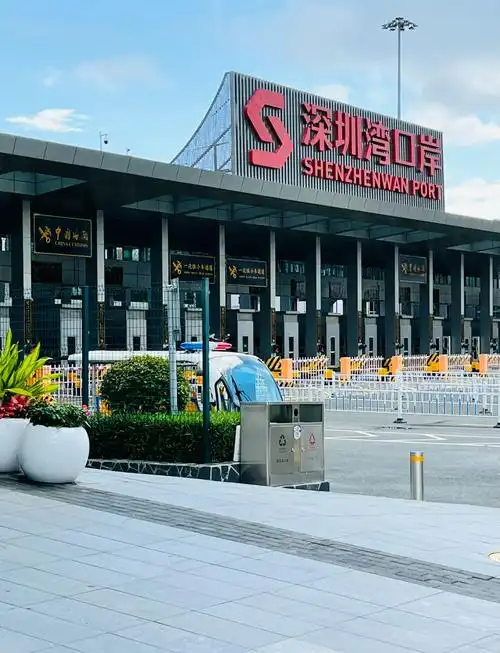 Opened in 2007, Shenzhen Bay Port represents one of the most ambitious infrastructure projects of 21st-century China, embodying the "one country, two systems" principle that has defined the territory since its 1997 return to Chinese sovereignty—much as Berlin's Checkpoint Charlie once symbolized Cold War division and later reunification. Spanning 117.9 hectares of reclaimed land, the port handles up to 60,000 passengers and 58,700 vehicles daily, serving as a vital artery in the Greater Bay Area initiative that links eleven cities across southern China.
The port's architecture is a study in sleek contemporary design, featuring long horizontal lines, glass curtain walls, and sweeping canopies that shelter lanes for buses, cars, and pedestrians. Where medieval European checkpoints like the Tower of London emphasized defense and intimidation, Shenzhen Bay Port celebrates openness and flow. The streamlined terminal buildings are linked to the dramatic Shenzhen Bay Bridge, a six-lane cable-stayed span stretching 1.85 kilometers across the deep-water channel to the New Territories of Hong Kong—an engineering feat comparable in ambition to Denmark's Great Belt Bridge.
Beyond its functional role, the port has become a cultural symbol of the dynamic relationship between Shenzhen and Hong Kong. Where Shenzhen grew from a sleepy fishing village into a megacity of 17 million in just four decades, Hong Kong has long served as Asia's financial capital. Visitors standing at this crossing can literally watch this dialogue unfold, as license plates shift from mainland Chinese to Hong Kong registrations. The adjacent Shenzhen Bay Park, with its 15-kilometer coastal promenade, mangroves, and migratory bird habitats, transforms a transit point into a destination for eco-tourism.
Practical visits are straightforward. The port is served by Shenzhen Metro Line 13, with a dedicated station adjacent to the passenger terminal, and numerous bus routes connect to Nanshan and Futian districts. International visitors need valid visas or eligible entry permits, and Hong Kong residents can use automated e-gates. Most travelers simply pass through, but those with time can spend a couple of hours exploring the surrounding waterfront park, watching the sunset paint the bridge in gold, or cycling along the coastal path.
So why pause at a border crossing? Because Shenzhen Bay Port is one of the few places on Earth where you can physically straddle one of history's most fascinating urban experiments while enjoying a sea breeze. It offers a rare glimpse into how mobility, architecture, and geopolitics converge in modern Asia. For the curious traveler, it is less a checkpoint and more a living monument to the relentless momentum of the Pearl River Delta.
Opened in 2007, Shenzhen Bay Port represents one of the most ambitious infrastructure projects of 21st-century China, embodying the "one country, two systems" principle that has defined the territory since its 1997 return to Chinese sovereignty—much as Berlin's Checkpoint Charlie once symbolized Cold War division and later reunification. Spanning 117.9 hectares of reclaimed land, the port handles up to 60,000 passengers and 58,700 vehicles daily, serving as a vital artery in the Greater Bay Area initiative that links eleven cities across southern China.
The port's architecture is a study in sleek contemporary design, featuring long horizontal lines, glass curtain walls, and sweeping canopies that shelter lanes for buses, cars, and pedestrians. Where medieval European checkpoints like the Tower of London emphasized defense and intimidation, Shenzhen Bay Port celebrates openness and flow. The streamlined terminal buildings are linked to the dramatic Shenzhen Bay Bridge, a six-lane cable-stayed span stretching 1.85 kilometers across the deep-water channel to the New Territories of Hong Kong—an engineering feat comparable in ambition to Denmark's Great Belt Bridge.
Beyond its functional role, the port has become a cultural symbol of the dynamic relationship between Shenzhen and Hong Kong. Where Shenzhen grew from a sleepy fishing village into a megacity of 17 million in just four decades, Hong Kong has long served as Asia's financial capital. Visitors standing at this crossing can literally watch this dialogue unfold, as license plates shift from mainland Chinese to Hong Kong registrations. The adjacent Shenzhen Bay Park, with its 15-kilometer coastal promenade, mangroves, and migratory bird habitats, transforms a transit point into a destination for eco-tourism.
Practical visits are straightforward. The port is served by Shenzhen Metro Line 13, with a dedicated station adjacent to the passenger terminal, and numerous bus routes connect to Nanshan and Futian districts. International visitors need valid visas or eligible entry permits, and Hong Kong residents can use automated e-gates. Most travelers simply pass through, but those with time can spend a couple of hours exploring the surrounding waterfront park, watching the sunset paint the bridge in gold, or cycling along the coastal path.
So why pause at a border crossing? Because Shenzhen Bay Port is one of the few places on Earth where you can physically straddle one of history's most fascinating urban experiments while enjoying a sea breeze. It offers a rare glimpse into how mobility, architecture, and geopolitics converge in modern Asia. For the curious traveler, it is less a checkpoint and more a living monument to the relentless momentum of the Pearl River Delta.