Dapeng Fortress
⭐ 3.80
Dapeng Fortress, Dapeng New District, Shenzhen, Guangdong, China
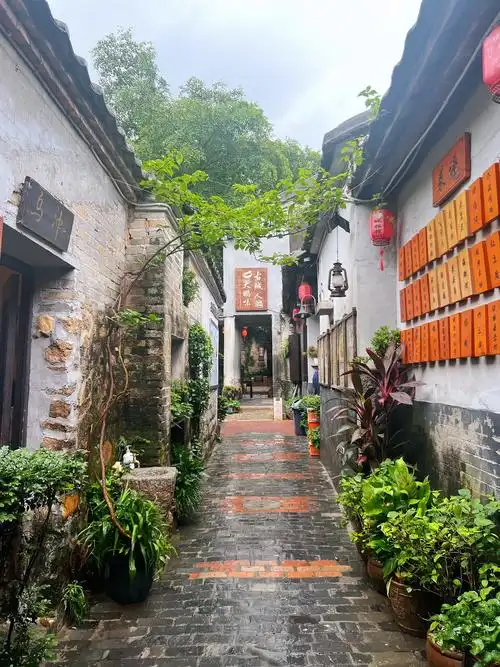 Founded in 1394 during the Ming Hongwu era, Dapeng Fortress anchored the empire's southern maritime defenses for over three centuries, much like the bastioned fortifications of Vauban along the French coast served Louis XIV. By the Opium Wars of the 19th century, it had become the first landfall where British forces struck Guangdong, marking a pivotal rupture in China's encounter with the industrial West. Designated a nationally protected heritage site in 2001, it remains Shenzhen's sole "Historic and Cultural Village," offering a counterpoint to the city's skyscraper skyline.
The fortress spans roughly 100,000 square meters within earthen ramparts, with three of its original gate towers still legible to visitors. Its compact urban plan, organized around a cruciform street grid linking mansions, ancestral halls, and humble dwellings, recalls the walled towns of Tuscany such as San Gimignano, though executed in grey brick and sweeping upturned eaves typical of Lingnan architecture. The Zhenwei General's Mansion is the architectural centerpiece, an exceptionally well-preserved Qing dynasty residence, while the ingeniously engineered ten-arch granary nearby showcases how military pragmatism fused with regional craftsmanship.
Culturally, Dapeng Fortress is a living crossroads where garrison culture met Hakka migrants from the northeast and Tanka boat people from the South China Sea. Folk traditions including Dapeng mountain songs and Qingjiao purification rituals have earned provincial intangible heritage status, and performances often coincide with festivals. Unlike many sanitized heritage parks, residents still inhabit the old quarter, meaning visitors encounter authentic local life: laundry drying over alleyways, elderly neighbors playing mahjong, and smoke curling from family kitchens.
Admission to the open streets is free and unrestricted, allowing flexible exploration of two to three hours, though individual venues including the General's Mansion and the Coastal Defense Museum typically operate from 9:00 to 17:00 and may close on Mondays, with some requiring advance booking or a small ticket. Bilingual signage is common, but English proficiency among shopkeepers is limited, so a translation app is advisable. The optimal visit begins after 3 p.m., when afternoon light softens over the ancient rooftops and temperatures become comfortable.
From the south gate tower, the panoramic composition of grey tiles set against the turquoise bay rivals views from Dubrovnik's city walls, though with a distinctly subtropical character. The nearby Jiaochangwei beach, a ten-minute walk away, offers sunset viewing and seafood dining, while Dongshan Temple provides a spiritual complement. Spring and autumn deliver the most pleasant climate, and the atmospheric lanes make this a favorite destination for traditional hanfu photography. Driving visitors should note that May through October weekends require advance vehicle permits via the Shenzhen Traffic Police WeChat account; those using public transport can take Metro Line 8 to Xichong Station, then transfer to bus E91 directly to the site.
Founded in 1394 during the Ming Hongwu era, Dapeng Fortress anchored the empire's southern maritime defenses for over three centuries, much like the bastioned fortifications of Vauban along the French coast served Louis XIV. By the Opium Wars of the 19th century, it had become the first landfall where British forces struck Guangdong, marking a pivotal rupture in China's encounter with the industrial West. Designated a nationally protected heritage site in 2001, it remains Shenzhen's sole "Historic and Cultural Village," offering a counterpoint to the city's skyscraper skyline.
The fortress spans roughly 100,000 square meters within earthen ramparts, with three of its original gate towers still legible to visitors. Its compact urban plan, organized around a cruciform street grid linking mansions, ancestral halls, and humble dwellings, recalls the walled towns of Tuscany such as San Gimignano, though executed in grey brick and sweeping upturned eaves typical of Lingnan architecture. The Zhenwei General's Mansion is the architectural centerpiece, an exceptionally well-preserved Qing dynasty residence, while the ingeniously engineered ten-arch granary nearby showcases how military pragmatism fused with regional craftsmanship.
Culturally, Dapeng Fortress is a living crossroads where garrison culture met Hakka migrants from the northeast and Tanka boat people from the South China Sea. Folk traditions including Dapeng mountain songs and Qingjiao purification rituals have earned provincial intangible heritage status, and performances often coincide with festivals. Unlike many sanitized heritage parks, residents still inhabit the old quarter, meaning visitors encounter authentic local life: laundry drying over alleyways, elderly neighbors playing mahjong, and smoke curling from family kitchens.
Admission to the open streets is free and unrestricted, allowing flexible exploration of two to three hours, though individual venues including the General's Mansion and the Coastal Defense Museum typically operate from 9:00 to 17:00 and may close on Mondays, with some requiring advance booking or a small ticket. Bilingual signage is common, but English proficiency among shopkeepers is limited, so a translation app is advisable. The optimal visit begins after 3 p.m., when afternoon light softens over the ancient rooftops and temperatures become comfortable.
From the south gate tower, the panoramic composition of grey tiles set against the turquoise bay rivals views from Dubrovnik's city walls, though with a distinctly subtropical character. The nearby Jiaochangwei beach, a ten-minute walk away, offers sunset viewing and seafood dining, while Dongshan Temple provides a spiritual complement. Spring and autumn deliver the most pleasant climate, and the atmospheric lanes make this a favorite destination for traditional hanfu photography. Driving visitors should note that May through October weekends require advance vehicle permits via the Shenzhen Traffic Police WeChat account; those using public transport can take Metro Line 8 to Xichong Station, then transfer to bus E91 directly to the site.