Hongshan Food Street
⭐ 3.80
Hongshan Food Street, Zhangdian District, Zibo City, Shandong Province, China
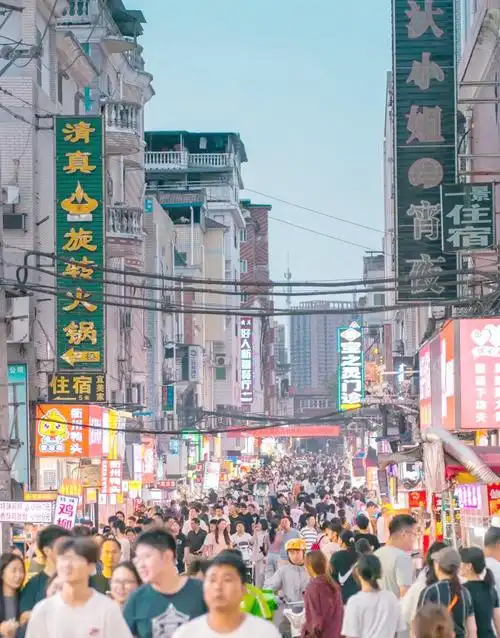 Badaju—"Eight Great Bureaus"—takes its name from the eight state-run supply depots that once anchored this corner of Zhangdian during China's planned-economy era, when collective provisioning shaped daily life from the 1950s through the 1980s. The market growing around those warehouses became the neighborhood's unofficial pantry for generations. When Zibo's distinctive tabletop-grill barbecue exploded across Chinese social media in 2023, the street seized its moment, morphing overnight from a modest grocery lane into a national culinary landmark. Picture a Chinese cousin to Naples' Spanish Quarter stalls or Madrid's Mercado de San Miguel—louder, smokier, and run by grandmothers with spatula-wielding authority.
The undisputed star is Zibo barbecue, famous for a ritual diners perform themselves: thin griddle-topped tables arrive piled with raw skewers, and guests grill the meat over a small charcoal brazier before wrapping each piece in a soft wheat pancake with scallions and sweet bean paste—more interactive than Turkish ocakbaşı grills and far cheaper. Beyond skewers, vendors hawk golden "fried-pot pancakes" cut into crackling strips, chewy purple-rice cakes, and Boshan su guo, a layered earthenware stew packed with pork, tofu, and preserved vegetables recalling French pot-au-feu in its homey ambition. A full tasting crawl costs under ¥50 (about $7 USD).
What makes Badaju genuinely special isn't just the food but an atmosphere of unguarded warmth. Stall owners, often third-generation vendors, greet regulars and tourists with the blunt hospitality northern China is famous for—no upselling, no inflated tourist prices. The sight of office workers in dress shoes standing shoulder-to-shoulder with backpackers and elderly neighbors in identical queues captures a side of contemporary China rarely seen in glossy guides: a mid-sized industrial city where tradition, community, and viral modernity coexist without pretense. It's a living tableau of small-city soul.
The market sits near the intersection of Gongqingtuan Road and Dongyi Road in Zhangdian District, easily reached by bus (alight at "Badaju" stop) or a cheap rideshare from central Zibo. It opens all day, with peak action from 9:00 AM to 5:00 PM and dedicated barbecue stalls firing until late night. Weekends at lunchtime become shoulder-to-shoulder affairs; aim for weekday mornings or early evenings for breathing space. Most vendors accept WeChat Pay and Alipay—set up these apps beforehand or bring small cash, as cards are rarely taken.
Dress casually and bring appetite, not fine-dining expectations—expect plastic stools, communal tables, and charcoal smoke seasoning your hair. In summer, pack sunscreen and water; shaded seating is limited. First-timers should order the classic combination: pork belly skewers, thin pancake, scallion, and sweet bean sauce, then add Boshan fried pork for textural contrast. Photograph respectfully—avoid pointing lenses directly at grills or blocking diners—and be ready to share tight spaces. Before leaving, pick up vacuum-packed Zhoucun sesame biscuits or jars of Boshan su guo to extend the flavor journey home; both travel well and make conversation-starting souvenirs from a city you will never forget once you've eaten there.
Badaju—"Eight Great Bureaus"—takes its name from the eight state-run supply depots that once anchored this corner of Zhangdian during China's planned-economy era, when collective provisioning shaped daily life from the 1950s through the 1980s. The market growing around those warehouses became the neighborhood's unofficial pantry for generations. When Zibo's distinctive tabletop-grill barbecue exploded across Chinese social media in 2023, the street seized its moment, morphing overnight from a modest grocery lane into a national culinary landmark. Picture a Chinese cousin to Naples' Spanish Quarter stalls or Madrid's Mercado de San Miguel—louder, smokier, and run by grandmothers with spatula-wielding authority.
The undisputed star is Zibo barbecue, famous for a ritual diners perform themselves: thin griddle-topped tables arrive piled with raw skewers, and guests grill the meat over a small charcoal brazier before wrapping each piece in a soft wheat pancake with scallions and sweet bean paste—more interactive than Turkish ocakbaşı grills and far cheaper. Beyond skewers, vendors hawk golden "fried-pot pancakes" cut into crackling strips, chewy purple-rice cakes, and Boshan su guo, a layered earthenware stew packed with pork, tofu, and preserved vegetables recalling French pot-au-feu in its homey ambition. A full tasting crawl costs under ¥50 (about $7 USD).
What makes Badaju genuinely special isn't just the food but an atmosphere of unguarded warmth. Stall owners, often third-generation vendors, greet regulars and tourists with the blunt hospitality northern China is famous for—no upselling, no inflated tourist prices. The sight of office workers in dress shoes standing shoulder-to-shoulder with backpackers and elderly neighbors in identical queues captures a side of contemporary China rarely seen in glossy guides: a mid-sized industrial city where tradition, community, and viral modernity coexist without pretense. It's a living tableau of small-city soul.
The market sits near the intersection of Gongqingtuan Road and Dongyi Road in Zhangdian District, easily reached by bus (alight at "Badaju" stop) or a cheap rideshare from central Zibo. It opens all day, with peak action from 9:00 AM to 5:00 PM and dedicated barbecue stalls firing until late night. Weekends at lunchtime become shoulder-to-shoulder affairs; aim for weekday mornings or early evenings for breathing space. Most vendors accept WeChat Pay and Alipay—set up these apps beforehand or bring small cash, as cards are rarely taken.
Dress casually and bring appetite, not fine-dining expectations—expect plastic stools, communal tables, and charcoal smoke seasoning your hair. In summer, pack sunscreen and water; shaded seating is limited. First-timers should order the classic combination: pork belly skewers, thin pancake, scallion, and sweet bean sauce, then add Boshan fried pork for textural contrast. Photograph respectfully—avoid pointing lenses directly at grills or blocking diners—and be ready to share tight spaces. Before leaving, pick up vacuum-packed Zhoucun sesame biscuits or jars of Boshan su guo to extend the flavor journey home; both travel well and make conversation-starting souvenirs from a city you will never forget once you've eaten there.