Zibo Park
⭐ 3.20
Zhangdian District, Zibo, Shandong, China
 Zibo itself is no ordinary Chinese city—it served as the ancient capital of the powerful Qi State during the Eastern Zhou Dynasty (770–221 BCE), a period roughly contemporary with classical Athens and the Roman Republic. As the cradle of Qi culture, Zibo hosted some of China's earliest industrial ceramics production, a legacy still celebrated today. Zibo People's Park, founded in 1960 and originally called Zhangdian Park, occupies a quieter corner of this storied metropolis. Imagine it as Zibo's answer to Hyde Park or Central Park: a democratic public space that has watched the city reinvent itself across six dramatic decades.
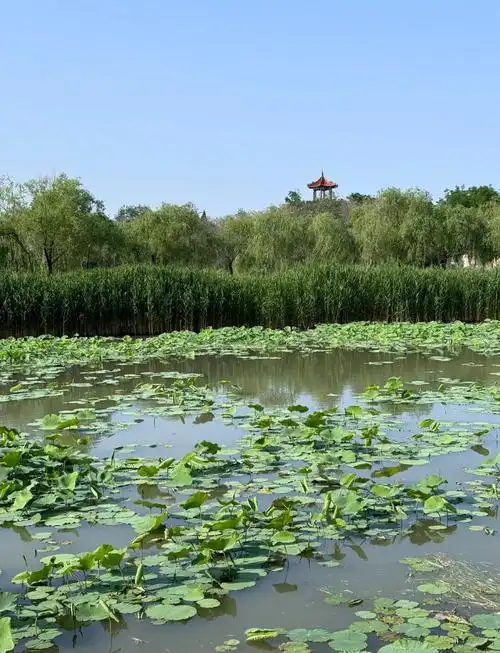
The park's layout follows a classical Chinese planning principle translated as "one heart, two rings, twelve scenes." At the center lies a serene artificial lake, while two concentric walking paths encircle the grounds and link twelve themed viewing points. This geometry recalls the precision of Versailles, though on a far more intimate, human scale. Dedicated botanical zones showcase peonies—China's unofficial national flower, beloved since the Tang Dynasty—alongside fragrant plum orchards. The seasonal rotation ensures something is always in bloom, from delicate winter plum blossoms to spectacular late-spring peony displays.
Beyond its natural charms, the park functions as an outdoor cultural gallery. A series of bas-relief walls winds along the main loop, narrating Zibo's two-thousand-year story in stone—a narrative technique familiar to anyone who has admired Trajan's Column in Rome. A traditional Chinese opera stage hosts regular performances of local Shandong theater styles, where elderly residents gather over tea to enjoy regional folk music and storytelling. For travelers seeking authentic everyday China rather than curated monuments, this unpretentious cultural programming offers more insight than any guidebook highlight reel.
The park is entirely free, with no ticket or reservation required—a refreshing contrast to many European heritage sites. It is fully wheelchair accessible, and multiple bus routes serve the nearby intersections of Liuquan Road and Gongqingtuan West Road. Facilities include fitness equipment stations catering to all ages, a modest children's playground, and abundant benches shaded by willows along the lakeshore. Public restrooms and small vendors selling tea and snacks are scattered throughout, though bringing your own water is advisable during summer months when temperatures climb above 35°C.
Plan your visit for early morning or late afternoon to avoid the midday heat and to witness the park at its most atmospheric. Mornings bring the rhythmic pulse of locals practicing tai chi, fan dancing, and group aerobics—a uniquely Chinese morning ritual as photogenic as a Venetian passeggiata. Evenings reward visitors with golden light reflecting off the lake and cooling breezes carrying the scent of lotus. One to two hours is sufficient for a relaxed circuit, though photography enthusiasts could easily linger longer in the willow-shaded corners.
What makes Zibo People's Park genuinely worthwhile for international visitors is its unvarnished authenticity. This is not a tourist-trapped attraction but a living neighborhood park where three generations of Zibo residents have courted, exercised, and gathered. Pair your visit with the nearby Zibo Ceramics and Glass Museum to appreciate the region's renowned porcelain heritage—Zibo has been called China's "Northern Porcelain Capital" since antiquity—or continue to Qisheng Lake Park for a more modern landscaped experience. Together, they reveal a city that honors its ancient past while remaining refreshingly rooted in the present.
Zibo itself is no ordinary Chinese city—it served as the ancient capital of the powerful Qi State during the Eastern Zhou Dynasty (770–221 BCE), a period roughly contemporary with classical Athens and the Roman Republic. As the cradle of Qi culture, Zibo hosted some of China's earliest industrial ceramics production, a legacy still celebrated today. Zibo People's Park, founded in 1960 and originally called Zhangdian Park, occupies a quieter corner of this storied metropolis. Imagine it as Zibo's answer to Hyde Park or Central Park: a democratic public space that has watched the city reinvent itself across six dramatic decades.
The park's layout follows a classical Chinese planning principle translated as "one heart, two rings, twelve scenes." At the center lies a serene artificial lake, while two concentric walking paths encircle the grounds and link twelve themed viewing points. This geometry recalls the precision of Versailles, though on a far more intimate, human scale. Dedicated botanical zones showcase peonies—China's unofficial national flower, beloved since the Tang Dynasty—alongside fragrant plum orchards. The seasonal rotation ensures something is always in bloom, from delicate winter plum blossoms to spectacular late-spring peony displays.
Beyond its natural charms, the park functions as an outdoor cultural gallery. A series of bas-relief walls winds along the main loop, narrating Zibo's two-thousand-year story in stone—a narrative technique familiar to anyone who has admired Trajan's Column in Rome. A traditional Chinese opera stage hosts regular performances of local Shandong theater styles, where elderly residents gather over tea to enjoy regional folk music and storytelling. For travelers seeking authentic everyday China rather than curated monuments, this unpretentious cultural programming offers more insight than any guidebook highlight reel.
The park is entirely free, with no ticket or reservation required—a refreshing contrast to many European heritage sites. It is fully wheelchair accessible, and multiple bus routes serve the nearby intersections of Liuquan Road and Gongqingtuan West Road. Facilities include fitness equipment stations catering to all ages, a modest children's playground, and abundant benches shaded by willows along the lakeshore. Public restrooms and small vendors selling tea and snacks are scattered throughout, though bringing your own water is advisable during summer months when temperatures climb above 35°C.
Plan your visit for early morning or late afternoon to avoid the midday heat and to witness the park at its most atmospheric. Mornings bring the rhythmic pulse of locals practicing tai chi, fan dancing, and group aerobics—a uniquely Chinese morning ritual as photogenic as a Venetian passeggiata. Evenings reward visitors with golden light reflecting off the lake and cooling breezes carrying the scent of lotus. One to two hours is sufficient for a relaxed circuit, though photography enthusiasts could easily linger longer in the willow-shaded corners.
What makes Zibo People's Park genuinely worthwhile for international visitors is its unvarnished authenticity. This is not a tourist-trapped attraction but a living neighborhood park where three generations of Zibo residents have courted, exercised, and gathered. Pair your visit with the nearby Zibo Ceramics and Glass Museum to appreciate the region's renowned porcelain heritage—Zibo has been called China's "Northern Porcelain Capital" since antiquity—or continue to Qisheng Lake Park for a more modern landscaped experience. Together, they reveal a city that honors its ancient past while remaining refreshingly rooted in the present.