Zibo Yiwu Small Commodity City
⭐ 2.00
Yiwu Small Commodity City, Zhangdian District, Zibo City, Shandong Province, China
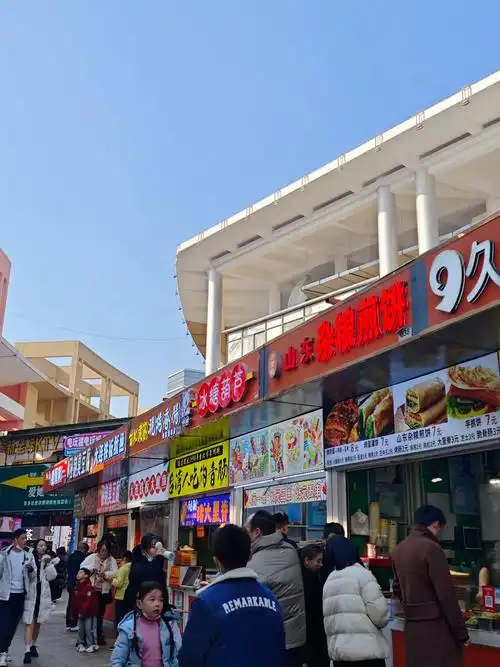 China's network of commodity megamarkets traces back to the reform era of the 1980s, when the original Yiwu market in Zhejiang reinvented itself into a global trading powerhouse. This Zibo outpost, opened in 2004 by Zhejiang-based investors, represents that same template transplanted to a different provincial market—comparable in scale and atmosphere to a regional Grand Bazaar or the wholesale alleys of Naples, but unmistakably Chinese. It serves not just Zibo's 4.7 million residents but a wider swath of central Shandong, functioning as the connective tissue between manufacturers and the small retailers that stock neighbourhood shops across the region.
The architecture follows the classic Chinese wholesale-market formula: a vast, utilitarian block organised vertically by category. The first floor is dominated by clothing, knitwear, and textiles; the second floor houses toys, gifts, and stationery; the third concentrates hardware, tools, and household chemicals. Internal arteries crisscross the halls, ferrying trolleys stacked high with merchandise. Practical amenities are integrated seamlessly—logistics centres for shipping, food courts, a children's play area, and ample parking. The aesthetic is deliberately unpretentious: bright fluorescent lighting, metal shelving, and shouted price negotiations that echo off concrete ceilings, creating an atmosphere closer to a working warehouse than a retail destination.
For visitors interested in contemporary China beyond the postcard temples and bullet-train stations, the market offers a rare window into the mechanics of small-city commerce. Weekdays draw roughly 20,000 to 30,000 shoppers; holidays swell that figure to 50,000 or 60,000. The daily choreography of bargained wholesale transactions reveals the social logic of price negotiation that has animated Chinese market culture for generations. It is, in essence, a living museum of the trading instincts that drove the ancient Silk Road caravans—rebuilt in concrete, LED lighting, and QR codes.
The market sits at 268 Huaguang Road in Zhangdian district, easily reached by taxi or local bus from central Zibo. Operating hours run roughly 9 a.m. to 5 p.m. Most vendors cater to bulk buyers, and single-item retail can be tricky—visitors uninterested in hauling a wholesale carton will find the experience more anthropological than acquisitive. Cashless payment via WeChat Pay or Alipay is universal, so set those up on your phone before arriving. Photography is permitted in common areas, but always ask before pointing your lens at individual stalls or merchandise. Crucially, do not confuse this venue with the far larger Yiwu International Trade City in Zhejiang—a common mix-up even for Chinese travellers.
Visit on a weekday morning between 9:30 and 11:30 a.m. to catch the market in a calmer, more conversational mood. Head straight to the second floor if you want the most colourful browsing experience—toy wholesalers and gift vendors display their wares with theatrical flair. Half a day is sufficient for most curious visitors; the surrounding Huaguang Road commercial strip offers plenty of lunch options once you emerge. Dress casually, wear comfortable walking shoes, and approach the visit as an immersive cultural field trip rather than a shopping spree.
What makes this place worth a detour for a Western tourist is precisely its lack of tourist polish. There is no entry fee, no audio guide, no curated route—only the raw, multilayered hum of a regional economy in motion. For travellers who enjoy places like Bangkok's Chatuchak, Istanbul's Spice Bazaar before the cruise ships arrive, or Mexico City's La Merced, Zibo's commodity market delivers that same ethnographic thrill: a chance to witness Chinese commerce in its natural habitat, far from the curated experience of Beijing's Wangfujing or Shanghai's Nanjing Road.
China's network of commodity megamarkets traces back to the reform era of the 1980s, when the original Yiwu market in Zhejiang reinvented itself into a global trading powerhouse. This Zibo outpost, opened in 2004 by Zhejiang-based investors, represents that same template transplanted to a different provincial market—comparable in scale and atmosphere to a regional Grand Bazaar or the wholesale alleys of Naples, but unmistakably Chinese. It serves not just Zibo's 4.7 million residents but a wider swath of central Shandong, functioning as the connective tissue between manufacturers and the small retailers that stock neighbourhood shops across the region.
The architecture follows the classic Chinese wholesale-market formula: a vast, utilitarian block organised vertically by category. The first floor is dominated by clothing, knitwear, and textiles; the second floor houses toys, gifts, and stationery; the third concentrates hardware, tools, and household chemicals. Internal arteries crisscross the halls, ferrying trolleys stacked high with merchandise. Practical amenities are integrated seamlessly—logistics centres for shipping, food courts, a children's play area, and ample parking. The aesthetic is deliberately unpretentious: bright fluorescent lighting, metal shelving, and shouted price negotiations that echo off concrete ceilings, creating an atmosphere closer to a working warehouse than a retail destination.
For visitors interested in contemporary China beyond the postcard temples and bullet-train stations, the market offers a rare window into the mechanics of small-city commerce. Weekdays draw roughly 20,000 to 30,000 shoppers; holidays swell that figure to 50,000 or 60,000. The daily choreography of bargained wholesale transactions reveals the social logic of price negotiation that has animated Chinese market culture for generations. It is, in essence, a living museum of the trading instincts that drove the ancient Silk Road caravans—rebuilt in concrete, LED lighting, and QR codes.
The market sits at 268 Huaguang Road in Zhangdian district, easily reached by taxi or local bus from central Zibo. Operating hours run roughly 9 a.m. to 5 p.m. Most vendors cater to bulk buyers, and single-item retail can be tricky—visitors uninterested in hauling a wholesale carton will find the experience more anthropological than acquisitive. Cashless payment via WeChat Pay or Alipay is universal, so set those up on your phone before arriving. Photography is permitted in common areas, but always ask before pointing your lens at individual stalls or merchandise. Crucially, do not confuse this venue with the far larger Yiwu International Trade City in Zhejiang—a common mix-up even for Chinese travellers.
Visit on a weekday morning between 9:30 and 11:30 a.m. to catch the market in a calmer, more conversational mood. Head straight to the second floor if you want the most colourful browsing experience—toy wholesalers and gift vendors display their wares with theatrical flair. Half a day is sufficient for most curious visitors; the surrounding Huaguang Road commercial strip offers plenty of lunch options once you emerge. Dress casually, wear comfortable walking shoes, and approach the visit as an immersive cultural field trip rather than a shopping spree.
What makes this place worth a detour for a Western tourist is precisely its lack of tourist polish. There is no entry fee, no audio guide, no curated route—only the raw, multilayered hum of a regional economy in motion. For travellers who enjoy places like Bangkok's Chatuchak, Istanbul's Spice Bazaar before the cruise ships arrive, or Mexico City's La Merced, Zibo's commodity market delivers that same ethnographic thrill: a chance to witness Chinese commerce in its natural habitat, far from the curated experience of Beijing's Wangfujing or Shanghai's Nanjing Road.