Yan Wenjiang Temple
⭐ 3.60
Yan Wenjiang Temple, Zhangdian District, Zibo, Shandong, China
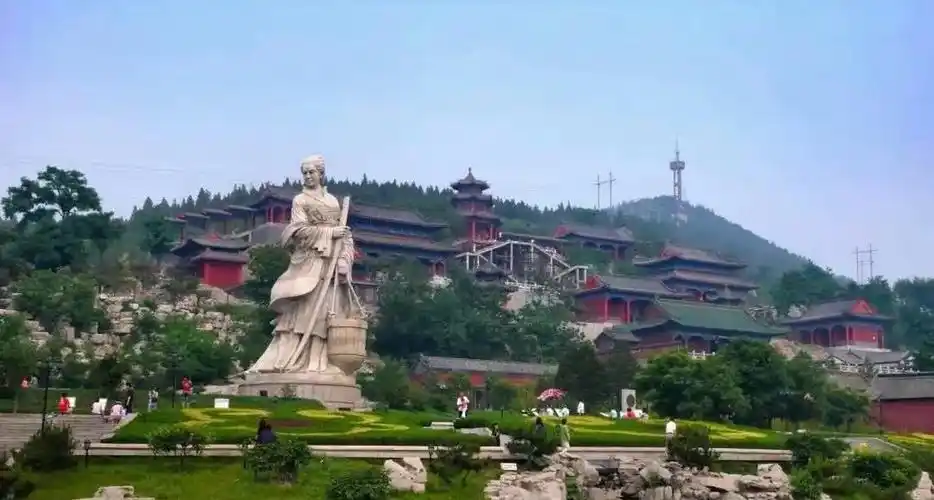 Built in 557 AD during the chaotic final years of the Northern Zhou dynasty—an age roughly contemporary with the rise of the Byzantine Empire under Justinian—Yan Wenjiang Temple predates many of Europe's most cherished medieval structures. Originally known as the Lingquan Temple, it was renamed centuries later to honor a legendary filial daughter-in-law from the Spring and Autumn period whose devotion reportedly caused a miraculous spring to gush forth. Designated a nationally protected cultural site in 2006, the temple offers Western visitors a window into a continuous tradition of Chinese religious and domestic architecture spanning well over a millennium, comparable in longevity to England's Canterbury Cathedral or Germany's Trier Cathedral.
The architectural heart of the complex is the astonishing Beamless Hall, a Tang-dynasty masterpiece reconstructed in 764 AD during the golden age of Chinese Buddhism and cosmopolitan Silk Road exchange. Built entirely through ingenious cantilevered bracket sets without a single supporting pillar, it parallels Europe's Romanesque experimentation with stone vaulting—particularly the early experiments seen in places like Speyer's crypt—yet achieves a lightness and organic warmth that only seasoned Chinese joiners could produce. The temple unfolds across four courtyards following a strict central axis, encompassing more than seventy halls, gates, and pavilions that constitute the largest and best-preserved Ming-Qing era building ensemble in the entire Boshan region.
Beyond its physical beauty, the temple pulses with profound cultural meaning rooted in Confucian ideals of filial piety—a virtue that Western visitors may recognize from ancient Roman emphasis on pietas or the familial duties celebrated in Homer's epics. According to legend, Yan Wenjiang's selfless devotion to her in-laws moved heaven and earth to release a healing spring, which today feeds the Xiaofu River. The annual temple fair held on the 28th day of the fourth lunar month celebrates this legacy and has earned recognition as an intangible cultural heritage, drawing pilgrims and performers who keep these ancient traditions vibrantly alive.
Practical planning is refreshingly straightforward for international visitors. Located at 26 Quanshui Road, Shentou Village, Boshan District, the site covers roughly 3,900 square meters and can be comfortably explored in one to one and a half hours. Opening hours typically run from 8:30 AM to 4:30 PM, with last admission at 4:00 PM, while entrance fees remain delightfully modest at just 10 to 20 yuan. Self-driving and taxi drop-offs work best; navigation apps reliably locate the temple under its Chinese name. Morning visits are strongly recommended, especially in summer, when the shaded courtyards offer cool respite and golden light filters beautifully through ancient wooden lattices.
For travelers seeking depth beyond China's headline attractions, Yan Wenjiang Temple rewards those who linger. After exploring, visitors can stroll onward to the adjacent Yanshan Park or venture into Boshan's old town for its celebrated regional cuisine—a perfect half-day itinerary. Unlike the grandeur of Beijing's Forbidden City or the spiritual drama of Tibet's monasteries, this humble Shandong shrine delivers something rarer: intimate communion with a living tradition, where 1,400-year-old timber, sacred spring water, and enduring family values converge in quiet splendor.
Built in 557 AD during the chaotic final years of the Northern Zhou dynasty—an age roughly contemporary with the rise of the Byzantine Empire under Justinian—Yan Wenjiang Temple predates many of Europe's most cherished medieval structures. Originally known as the Lingquan Temple, it was renamed centuries later to honor a legendary filial daughter-in-law from the Spring and Autumn period whose devotion reportedly caused a miraculous spring to gush forth. Designated a nationally protected cultural site in 2006, the temple offers Western visitors a window into a continuous tradition of Chinese religious and domestic architecture spanning well over a millennium, comparable in longevity to England's Canterbury Cathedral or Germany's Trier Cathedral.
The architectural heart of the complex is the astonishing Beamless Hall, a Tang-dynasty masterpiece reconstructed in 764 AD during the golden age of Chinese Buddhism and cosmopolitan Silk Road exchange. Built entirely through ingenious cantilevered bracket sets without a single supporting pillar, it parallels Europe's Romanesque experimentation with stone vaulting—particularly the early experiments seen in places like Speyer's crypt—yet achieves a lightness and organic warmth that only seasoned Chinese joiners could produce. The temple unfolds across four courtyards following a strict central axis, encompassing more than seventy halls, gates, and pavilions that constitute the largest and best-preserved Ming-Qing era building ensemble in the entire Boshan region.
Beyond its physical beauty, the temple pulses with profound cultural meaning rooted in Confucian ideals of filial piety—a virtue that Western visitors may recognize from ancient Roman emphasis on pietas or the familial duties celebrated in Homer's epics. According to legend, Yan Wenjiang's selfless devotion to her in-laws moved heaven and earth to release a healing spring, which today feeds the Xiaofu River. The annual temple fair held on the 28th day of the fourth lunar month celebrates this legacy and has earned recognition as an intangible cultural heritage, drawing pilgrims and performers who keep these ancient traditions vibrantly alive.
Practical planning is refreshingly straightforward for international visitors. Located at 26 Quanshui Road, Shentou Village, Boshan District, the site covers roughly 3,900 square meters and can be comfortably explored in one to one and a half hours. Opening hours typically run from 8:30 AM to 4:30 PM, with last admission at 4:00 PM, while entrance fees remain delightfully modest at just 10 to 20 yuan. Self-driving and taxi drop-offs work best; navigation apps reliably locate the temple under its Chinese name. Morning visits are strongly recommended, especially in summer, when the shaded courtyards offer cool respite and golden light filters beautifully through ancient wooden lattices.
For travelers seeking depth beyond China's headline attractions, Yan Wenjiang Temple rewards those who linger. After exploring, visitors can stroll onward to the adjacent Yanshan Park or venture into Boshan's old town for its celebrated regional cuisine—a perfect half-day itinerary. Unlike the grandeur of Beijing's Forbidden City or the spiritual drama of Tibet's monasteries, this humble Shandong shrine delivers something rarer: intimate communion with a living tradition, where 1,400-year-old timber, sacred spring water, and enduring family values converge in quiet splendor.