Donglin Temple
⭐ 4.20
No. 150, Donglin Street, Zhujing Town, Jinshan District, Shanghai, China
 **A Living Legacy of the Yuan Dynasty**
Founded in 1308 during the reign of Emperor Huizong's grandson of the Mongol Yuan Dynasty—roughly contemporary with the late Plantagenets in England—Donglin Temple predates the Black Death and the Hundred Years' War. Originally a humble Guanyin Hall, it has weathered seven centuries of dynastic upheaval, from Ming prosperity to Qing decline and the tumult of modern China. The temple's remarkable 2007 renovation transformed it into a nationally celebrated AAAA site, bridging medieval origins with twenty-first-century ambition.
**Architecture That Defies Convention**
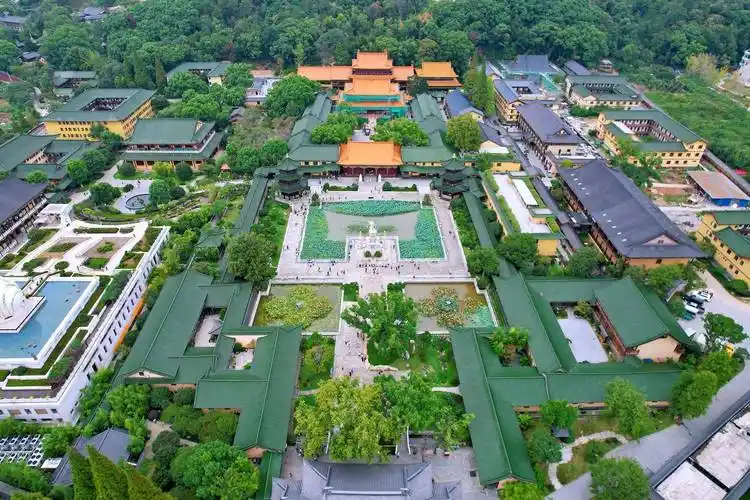
Where most Buddhist temples emulate the restrained elegance of Kyoto's Kinkaku-ji or Beijing's Lama Temple, Donglin explodes convention. The entire complex resembles a colossal gilded mountain rising from the suburbs—a hallucinatory vision closer to Minas Tirith than to any traditional monastery. Walk through the towering 20-meter "Thousand-Buddha Gate," where 999 copper Guanyin reliefs form the sacred character for "Buddha." Inside, a breathtaking 34.1-meter Guanyin with a thousand arms soars toward vaulted ceilings, while the 5.4-meter cloisonné Shancai童子 gleams at the heart of the Golden Lotus Pool.
**Sacred Artistry and Hidden Symbolism**
Beyond spectacle lies profound craftsmanship. The "Spirit Rain Guanyin," carved from 1.8 tons of precious Hetian jade, ranks among the temple's most venerated treasures. Ascend through the mystical Five-Buddha Crown pavilion, where esoteric symbolism intertwines—Buddha's nose becomes Guanyin, the ears transform into dragons. From the summit, panoramic views stretch across Zhujing Town and surrounding rice paddies.
**Cultural Significance**
Donglin embodies contemporary Chinese Buddhism's revival, where devotional tradition merges with showmanship to attract new generations. It serves as both an active place of worship, with fervent incense offerings on lunar first and fifteenth days, and a cultural showcase demonstrating how ancient faiths can reinvent themselves for the modern age.
**Planning Your Visit**
Admission to the main grounds is free; a combined ticket for the Guanyin Pavilion and Five-Buddha Crown costs just 30 yuan. The temple opens daily from 8:00 AM to 4:30 PM (last entry 4:00 PM), with special 5:00 AM openings on the first and fifteenth days of the lunar month. Allow 90 minutes to two hours. No metro reaches the site directly—take Line 1 to Lianhua Road Station, then transfer to the Lianzhu Special Line bus, or drive (parking is convenient).
**Why It's Worth the Detour**
Temple fatigue is a real risk in China, but Donglin delivers genuine astonishment. The recommended route—Spirit Wall, Three Bridges, Thousand-Buddha Gate, Golden Lotus Pool, Yuantong Hall, Guanyin Pavilion, Five-Buddha Crown—must be followed top-down, and buying the joint ticket is essential or you'll miss the crown's spectacular vistas. Visit on a weekday to avoid crowds, wear sturdy non-slip shoes, and bring a light jacket (the crown's summit is windswept). Don't leave without sampling the temple's renowned vegetarian noodle house—arguably the most soul-warming meal in Shanghai's suburbs.
**A Living Legacy of the Yuan Dynasty**
Founded in 1308 during the reign of Emperor Huizong's grandson of the Mongol Yuan Dynasty—roughly contemporary with the late Plantagenets in England—Donglin Temple predates the Black Death and the Hundred Years' War. Originally a humble Guanyin Hall, it has weathered seven centuries of dynastic upheaval, from Ming prosperity to Qing decline and the tumult of modern China. The temple's remarkable 2007 renovation transformed it into a nationally celebrated AAAA site, bridging medieval origins with twenty-first-century ambition.
**Architecture That Defies Convention**
Where most Buddhist temples emulate the restrained elegance of Kyoto's Kinkaku-ji or Beijing's Lama Temple, Donglin explodes convention. The entire complex resembles a colossal gilded mountain rising from the suburbs—a hallucinatory vision closer to Minas Tirith than to any traditional monastery. Walk through the towering 20-meter "Thousand-Buddha Gate," where 999 copper Guanyin reliefs form the sacred character for "Buddha." Inside, a breathtaking 34.1-meter Guanyin with a thousand arms soars toward vaulted ceilings, while the 5.4-meter cloisonné Shancai童子 gleams at the heart of the Golden Lotus Pool.
**Sacred Artistry and Hidden Symbolism**
Beyond spectacle lies profound craftsmanship. The "Spirit Rain Guanyin," carved from 1.8 tons of precious Hetian jade, ranks among the temple's most venerated treasures. Ascend through the mystical Five-Buddha Crown pavilion, where esoteric symbolism intertwines—Buddha's nose becomes Guanyin, the ears transform into dragons. From the summit, panoramic views stretch across Zhujing Town and surrounding rice paddies.
**Cultural Significance**
Donglin embodies contemporary Chinese Buddhism's revival, where devotional tradition merges with showmanship to attract new generations. It serves as both an active place of worship, with fervent incense offerings on lunar first and fifteenth days, and a cultural showcase demonstrating how ancient faiths can reinvent themselves for the modern age.
**Planning Your Visit**
Admission to the main grounds is free; a combined ticket for the Guanyin Pavilion and Five-Buddha Crown costs just 30 yuan. The temple opens daily from 8:00 AM to 4:30 PM (last entry 4:00 PM), with special 5:00 AM openings on the first and fifteenth days of the lunar month. Allow 90 minutes to two hours. No metro reaches the site directly—take Line 1 to Lianhua Road Station, then transfer to the Lianzhu Special Line bus, or drive (parking is convenient).
**Why It's Worth the Detour**
Temple fatigue is a real risk in China, but Donglin delivers genuine astonishment. The recommended route—Spirit Wall, Three Bridges, Thousand-Buddha Gate, Golden Lotus Pool, Yuantong Hall, Guanyin Pavilion, Five-Buddha Crown—must be followed top-down, and buying the joint ticket is essential or you'll miss the crown's spectacular vistas. Visit on a weekday to avoid crowds, wear sturdy non-slip shoes, and bring a light jacket (the crown's summit is windswept). Don't leave without sampling the temple's renowned vegetarian noodle house—arguably the most soul-warming meal in Shanghai's suburbs.