Dongpo Academy
⭐ 3.20
Dongpo Road, Qiongshan District, Haikou City, Hainan Province, China
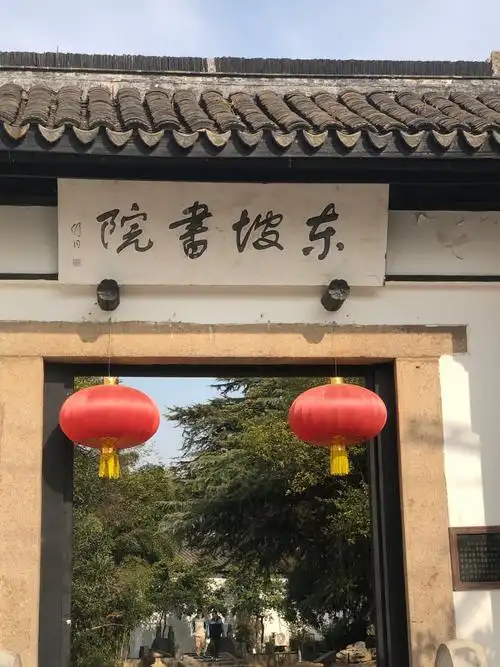 **Historical Context:** In 1097, the brilliant Song dynasty poet-official Su Shi (known as Su Dongpo), once a minister at the imperial court in Kaifeng, was banished to the remote island of Hainan following the political "Wutai Poetry Case," a literary purge comparable to Ovid's exile from Rome. Arriving in his sixties, he settled in the Qiongzhou (modern Haikou) region, where he established one of the island's first academies, taught local students, and helped transform Hainan from a backwater into a culturally vibrant frontier, earning him the title "Hainan's First Cultural Pioneer." The shrine preserves this remarkable chapter, when a literary giant reshaped the edge of the Chinese empire.
**Architecture:** The surviving complex reflects Qing dynasty reconstruction in classic symmetrical shrine layout, centered on the Su Gong Hall and flanked by covered walkways, spirit walls, and stele galleries reminiscent of small European cloister gardens in scale and serenity. Two legendary wells, the Fusu Spring and Xixin Spring, are said to have provided Su with drinking water and remain flowing today; the Fusu Spring is celebrated among the "Eight Ancient Scenes of Qiongzhou." Mature banyan and camphor trees shade the courtyard, where carved stone tablets and calligraphic plaques from later dynasties create a layered palimpsest of remembrance.
**Cultural Significance:** As the principal early-period memorial to Su Dongpo's exile, this site complements the better-known Dongpo Academy in Danzhou, forming a two-part pilgrimage route that traces the poet's three years on Hainan. Together with the Five Lords Hall honoring Tang-era loyalists, it anchors Haikou's identity as a guardian of frontier Chinese civilization, paralleling how sites like Edinburgh's literary memorials preserve Scotland's intellectual heritage.
**Practical Information:** The shrine sits at No. 169 Haifu Road, Qiongshan District, inside the Wugong Temple scenic area, easily reached by public bus or taxi from central Haikou. Opening hours run roughly 8:00–17:30 daily, though Monday closures for maintenance are common, so phone ahead. Entry to the Wugong Temple complex is free but requires advance reservation; foreign visitors should book through a hotel concierge or tour operator and carry passports for verification.
**Why Visit:** For Western travelers intrigued by the cross-cultural resonance of exile literature, think of this as Hainan's equivalent of a Petrarch or Dante memorial site, a quiet garden where one of Asia's greatest poets taught, wrote, and endured banishment. Allow 60–90 minutes to combine it with the Five Lords Hall, and if your itinerary permits, consider a day trip to Danzhou's larger Dongpo Academy (about 120 km west) for the complete picture of Su's transformative years on the island.
**Historical Context:** In 1097, the brilliant Song dynasty poet-official Su Shi (known as Su Dongpo), once a minister at the imperial court in Kaifeng, was banished to the remote island of Hainan following the political "Wutai Poetry Case," a literary purge comparable to Ovid's exile from Rome. Arriving in his sixties, he settled in the Qiongzhou (modern Haikou) region, where he established one of the island's first academies, taught local students, and helped transform Hainan from a backwater into a culturally vibrant frontier, earning him the title "Hainan's First Cultural Pioneer." The shrine preserves this remarkable chapter, when a literary giant reshaped the edge of the Chinese empire.
**Architecture:** The surviving complex reflects Qing dynasty reconstruction in classic symmetrical shrine layout, centered on the Su Gong Hall and flanked by covered walkways, spirit walls, and stele galleries reminiscent of small European cloister gardens in scale and serenity. Two legendary wells, the Fusu Spring and Xixin Spring, are said to have provided Su with drinking water and remain flowing today; the Fusu Spring is celebrated among the "Eight Ancient Scenes of Qiongzhou." Mature banyan and camphor trees shade the courtyard, where carved stone tablets and calligraphic plaques from later dynasties create a layered palimpsest of remembrance.
**Cultural Significance:** As the principal early-period memorial to Su Dongpo's exile, this site complements the better-known Dongpo Academy in Danzhou, forming a two-part pilgrimage route that traces the poet's three years on Hainan. Together with the Five Lords Hall honoring Tang-era loyalists, it anchors Haikou's identity as a guardian of frontier Chinese civilization, paralleling how sites like Edinburgh's literary memorials preserve Scotland's intellectual heritage.
**Practical Information:** The shrine sits at No. 169 Haifu Road, Qiongshan District, inside the Wugong Temple scenic area, easily reached by public bus or taxi from central Haikou. Opening hours run roughly 8:00–17:30 daily, though Monday closures for maintenance are common, so phone ahead. Entry to the Wugong Temple complex is free but requires advance reservation; foreign visitors should book through a hotel concierge or tour operator and carry passports for verification.
**Why Visit:** For Western travelers intrigued by the cross-cultural resonance of exile literature, think of this as Hainan's equivalent of a Petrarch or Dante memorial site, a quiet garden where one of Asia's greatest poets taught, wrote, and endured banishment. Allow 60–90 minutes to combine it with the Five Lords Hall, and if your itinerary permits, consider a day trip to Danzhou's larger Dongpo Academy (about 120 km west) for the complete picture of Su's transformative years on the island.