Mencius Temple and Mencius Mansion
⭐ 4.20
Mencius Temple and Mencius Mansion, Zoucheng, Jining, Shandong, China
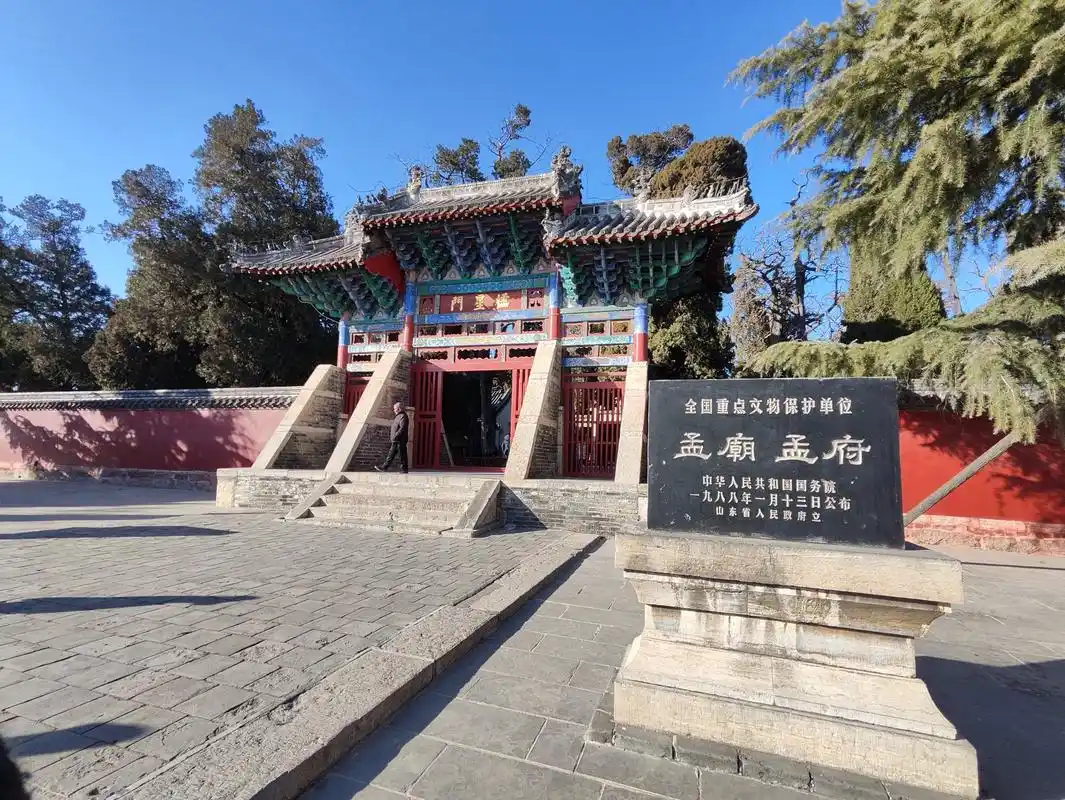 Mencius (Mengzi) was the most influential philosopher after Confucius himself, much as Plato built upon Socrates in ancient Greece. His dialogues, compiled by disciples after his death, shaped Chinese, Korean, Japanese, and Vietnamese governance and ethics for over two thousand years—roughly the span from Aristotle to the Renaissance. The temple was first raised in 1037 CE during the Northern Song dynasty, when the imperial court elevated him to "Second Sage." Today's structures largely date from a major 1684 Qing reconstruction under Emperor Kangxi, China's contemporary of Louis XIV, who sponsored a wave of Confucian restorations across the empire.
The temple unfolds across five sequential courtyards in strict axial symmetry, recalling the formal processional logic of a Roman temple precinct or Versailles. The Hall of the Second Sage anchors the site, its green-glazed tile roof and grove of tall stone columns projecting unmistakable imperial dignity. The adjacent mansion follows a seven-courtyard plan: front courtyards functioned as administrative offices where the hereditary Mencius descendants handled local justice, while rear courtyards served as private family quarters—China's most intact surviving example of this combined "office-behind-home" arrangement.
The temple preserves more than 280 stone steles spanning Han-dynasty portrait stones to imperial edicts, with calligraphy prized by scholars for over a thousand years. Among the 300-plus ancient cypresses and scholar trees, some planted during the Song and Yuan dynasties, natural wonders such as the "Ancient Cypress Embracing Pagoda Tree" reflect the Chinese reverence for trees as living monuments. Visitors can participate in coming-of-age rituals including the First Writing Ceremony and Confucian Apprentice Ceremony, traditions still enacted in Chinese schools today.
A combined ticket covers both sites, which sit one street apart in southern Zoucheng—roughly a 90-minute drive or 25-minute high-speed train ride from Qufu. Allow two to three hours for the full visit. Spring (April–May) and autumn (October–November) offer the mildest weather and the most photogenic foliage. Arrive at opening (around 8:00 AM) or on weekday mornings to avoid peak crowds. The grounds feature extensive flagstone paths with limited shade, so wear flat, comfortable shoes, carry water, and book an English-speaking guide through the official scenic area website in advance.
While Qufu's Confucius Temple, Cemetery, and Mansion draw millions of visitors annually, Zoucheng remains refreshingly uncrowded—comparable, perhaps, to visiting Verona instead of Rome. For travelers tracing the philosophical roots of East Asian civilization, or seeking deeper insight into the Confucian ethics that shaped Korea, Japan, and Vietnam for centuries, this is the contemplative counterpoint to Qufu's grand spectacle. It rewards those willing to slow down, walk the cypress-shaded paths, and absorb an atmosphere that has welcomed scholars, imperial officials, and pilgrims for nearly nine hundred years. Pair it with a day in Qufu for the complete Confucian pilgrimage.
Mencius (Mengzi) was the most influential philosopher after Confucius himself, much as Plato built upon Socrates in ancient Greece. His dialogues, compiled by disciples after his death, shaped Chinese, Korean, Japanese, and Vietnamese governance and ethics for over two thousand years—roughly the span from Aristotle to the Renaissance. The temple was first raised in 1037 CE during the Northern Song dynasty, when the imperial court elevated him to "Second Sage." Today's structures largely date from a major 1684 Qing reconstruction under Emperor Kangxi, China's contemporary of Louis XIV, who sponsored a wave of Confucian restorations across the empire.
The temple unfolds across five sequential courtyards in strict axial symmetry, recalling the formal processional logic of a Roman temple precinct or Versailles. The Hall of the Second Sage anchors the site, its green-glazed tile roof and grove of tall stone columns projecting unmistakable imperial dignity. The adjacent mansion follows a seven-courtyard plan: front courtyards functioned as administrative offices where the hereditary Mencius descendants handled local justice, while rear courtyards served as private family quarters—China's most intact surviving example of this combined "office-behind-home" arrangement.
The temple preserves more than 280 stone steles spanning Han-dynasty portrait stones to imperial edicts, with calligraphy prized by scholars for over a thousand years. Among the 300-plus ancient cypresses and scholar trees, some planted during the Song and Yuan dynasties, natural wonders such as the "Ancient Cypress Embracing Pagoda Tree" reflect the Chinese reverence for trees as living monuments. Visitors can participate in coming-of-age rituals including the First Writing Ceremony and Confucian Apprentice Ceremony, traditions still enacted in Chinese schools today.
A combined ticket covers both sites, which sit one street apart in southern Zoucheng—roughly a 90-minute drive or 25-minute high-speed train ride from Qufu. Allow two to three hours for the full visit. Spring (April–May) and autumn (October–November) offer the mildest weather and the most photogenic foliage. Arrive at opening (around 8:00 AM) or on weekday mornings to avoid peak crowds. The grounds feature extensive flagstone paths with limited shade, so wear flat, comfortable shoes, carry water, and book an English-speaking guide through the official scenic area website in advance.
While Qufu's Confucius Temple, Cemetery, and Mansion draw millions of visitors annually, Zoucheng remains refreshingly uncrowded—comparable, perhaps, to visiting Verona instead of Rome. For travelers tracing the philosophical roots of East Asian civilization, or seeking deeper insight into the Confucian ethics that shaped Korea, Japan, and Vietnam for centuries, this is the contemplative counterpoint to Qufu's grand spectacle. It rewards those willing to slow down, walk the cypress-shaded paths, and absorb an atmosphere that has welcomed scholars, imperial officials, and pilgrims for nearly nine hundred years. Pair it with a day in Qufu for the complete Confucian pilgrimage.