Jining Museum
⭐ 4.50
Rencheng District, Jining City, Shandong Province, China
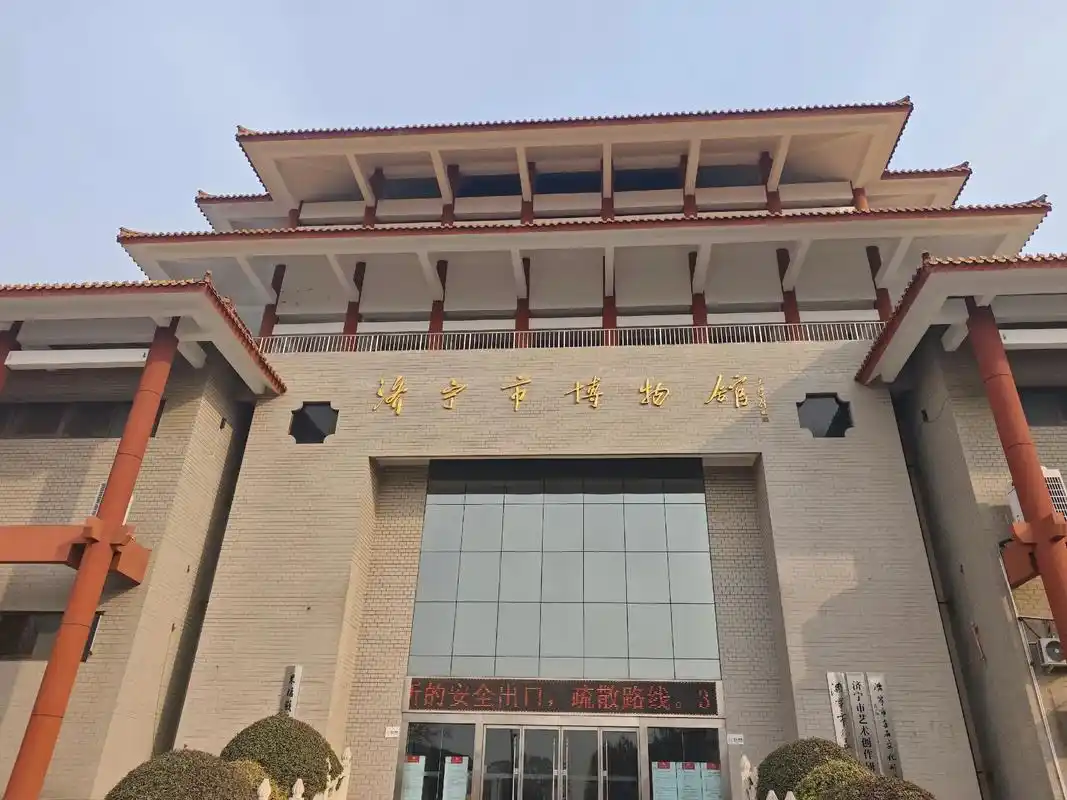 Jining has long worn two crowns as the "Hometown of Confucius and Mencius" and the "Capital of the Grand Canal," a cultural pedigree that places it alongside places like Assisi or Florence in the depth of accumulated heritage. The museum's 160,000-strong collection spans Neolithic pottery to revolutionary-era documents, but its true pride lies in Han dynasty (206 BCE–220 CE) steles and pictorial stones—an era roughly contemporary with the Roman Empire. The saying "half of China's Han steles are in Jining" hints at why scholars from across East Asia make pilgrimages here.
The museum's split personality mirrors Jining's own. The Guhua Road campus sits inside a preserved historic quarter, where a Northern Song iron tower from the Chongjue Temple—among the tallest of its kind still standing in China—rises beside a Ming dynasty drum-and-bell tower (Shengyuan Lou). The newer Taibai Lake branch, opened in 2019, is a soaring modern hall with column-free galleries, museum-grade climate control, and LED lighting that makes the ancient steles and bronze vessels glow as if freshly carved.
The permanent exhibition "Eternal Jining" unfolds in five sweeping chapters: Origins of Civilization, Confucian Legacy, Grand Canal Heritage, the Poetry of Li and Du (after the Tang poets Li Bai and Du Fu, both linked to the region), and the Water Margin legends. The Han pictorial stones—carved funeral slabs depicting feasts, hunts, and mythic scenes—are a stone-age equivalent of Trajan's Column, recording daily life two millennia ago with vivid immediacy. Canal-era artifacts, meanwhile, recall Jining's role as a bustling waterborne gateway linking Beijing to Hangzhou.
Both branches are free, though visitors should reserve in advance via the official WeChat account or register on site. Opening hours run Tuesday through Sunday, 9:00 a.m. to 5:30 p.m., with last entry at 4:30 p.m.; the museum closes on Mondays except during national holidays. Multilingual signage and free weekend afternoon docent talks assist foreign guests, while smart audio guides can be rented at the service desk. Allow three to four hours for the new building alone.
Visitors pressed for time should head straight to the Taibai Lake branch for the comprehensive permanent collection and well-designed interactive zones, popular with families and photographers. Those seeking atmosphere can linger at the Guhua Road site, where ancient trees, brick courtyards, and the iron pagoda create a museum-without-walls ambiance. Before your visit, explore the official VR digital gallery online—a handy primer that helps first-time visitors recognize key treasures on arrival.
Jining has long worn two crowns as the "Hometown of Confucius and Mencius" and the "Capital of the Grand Canal," a cultural pedigree that places it alongside places like Assisi or Florence in the depth of accumulated heritage. The museum's 160,000-strong collection spans Neolithic pottery to revolutionary-era documents, but its true pride lies in Han dynasty (206 BCE–220 CE) steles and pictorial stones—an era roughly contemporary with the Roman Empire. The saying "half of China's Han steles are in Jining" hints at why scholars from across East Asia make pilgrimages here.
The museum's split personality mirrors Jining's own. The Guhua Road campus sits inside a preserved historic quarter, where a Northern Song iron tower from the Chongjue Temple—among the tallest of its kind still standing in China—rises beside a Ming dynasty drum-and-bell tower (Shengyuan Lou). The newer Taibai Lake branch, opened in 2019, is a soaring modern hall with column-free galleries, museum-grade climate control, and LED lighting that makes the ancient steles and bronze vessels glow as if freshly carved.
The permanent exhibition "Eternal Jining" unfolds in five sweeping chapters: Origins of Civilization, Confucian Legacy, Grand Canal Heritage, the Poetry of Li and Du (after the Tang poets Li Bai and Du Fu, both linked to the region), and the Water Margin legends. The Han pictorial stones—carved funeral slabs depicting feasts, hunts, and mythic scenes—are a stone-age equivalent of Trajan's Column, recording daily life two millennia ago with vivid immediacy. Canal-era artifacts, meanwhile, recall Jining's role as a bustling waterborne gateway linking Beijing to Hangzhou.
Both branches are free, though visitors should reserve in advance via the official WeChat account or register on site. Opening hours run Tuesday through Sunday, 9:00 a.m. to 5:30 p.m., with last entry at 4:30 p.m.; the museum closes on Mondays except during national holidays. Multilingual signage and free weekend afternoon docent talks assist foreign guests, while smart audio guides can be rented at the service desk. Allow three to four hours for the new building alone.
Visitors pressed for time should head straight to the Taibai Lake branch for the comprehensive permanent collection and well-designed interactive zones, popular with families and photographers. Those seeking atmosphere can linger at the Guhua Road site, where ancient trees, brick courtyards, and the iron pagoda create a museum-without-walls ambiance. Before your visit, explore the official VR digital gallery online—a handy primer that helps first-time visitors recognize key treasures on arrival.