Xunyang Tower
⭐ 3.80
Xunyang Riverbank, Xunyang District, Jiujiang City, Jiangxi Province, China
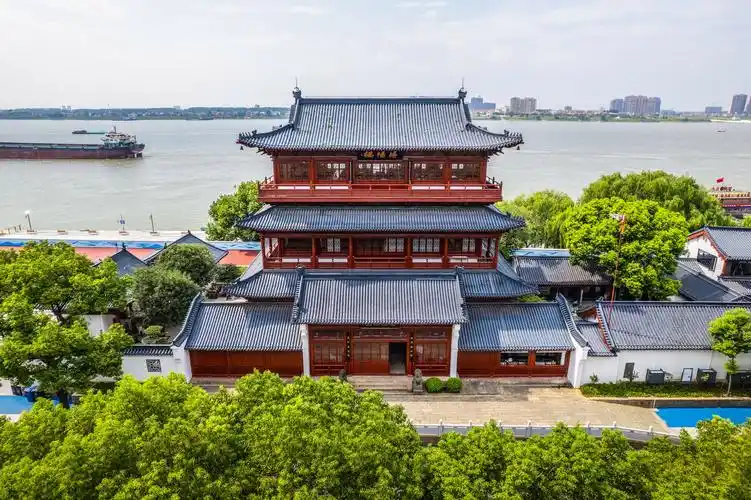 Xunyang Tower's origins fade into antiquity, though the present structure dates to a 1987 reconstruction in authentic Song Dynasty style. The original rose during an era when China was one of the world's most sophisticated civilizations—roughly contemporary with the Norman Conquest in Europe. Its fame rests largely on "Water Margin," one of China's Four Great Classical Novels, comparable in cultural stature to Europe's Arthurian legends. Within the novel, the tower becomes the dramatic stage where Song Jiang, condemned to exile in Jiangzhou, defies his fate by inscribing a rebellious poem—an act of literary defiance resonating across centuries.
The tower employs the ingenious "bright three, dark four" structural concept—a Song Dynasty hallmark that maximizes interior space while maintaining elegant proportions. Externally, three tiered eaves with upturned flying corners rest upon a stately hip-and-gable roof. Standing 21 meters tall, it preserves the dignified silhouette of medieval Chinese riverside pavilions. The bold characters of the "Xunyang Tower" name plaque were inscribed by Zhao Puchu, one of modern China's most revered Buddhist scholars and calligraphers. Like Venice's waterfront palazzos, the building's riverside elevation creates a commanding presence along the Yangtze waterfront.
Beyond its architectural charm, Xunyang Tower embodies a remarkable fusion of literary traditions. It simultaneously evokes the rebellious spirit of the Water Margin outlaws and the melancholy of exiled Tang-Song poets who passed through Jiangzhou. Standing on the upper terrace, visitors gaze over the same waters that inspired Bai Juyi's immortal "Pipa Xing"—the Tang Dynasty poem bidding farewell to a musician along "Xunyang river's moonlit night." This rare layering of folk-literature heroism and high-literature sentiment makes the tower a comprehensive window into the Chinese literary imagination, much as the Tower of London compresses a millennium of British history into a single site.
Inside, the tower unfolds as a thematic journey through Water Margin lore. The ground floor greets visitors with vivid glazed-tile murals depicting key novel scenes, while the second floor recreates a Song Dynasty tavern complete with period furnishings and regular storytelling performances. The third floor houses the tower's masterpiece: China's only complete set of 108 handcrafted porcelain figures from Jingdezhen—China's "porcelain capital," often called the Florence of the East for its ceramic artistry. Each outlaw hero is rendered with remarkable individuality. The fourth floor offers a tranquil tea house and covered observation corridor for absorbing sweeping Yangtze vistas.
Admission is refreshingly affordable at approximately 20 yuan for adults, with discounts for students and seniors—typically half-price with valid identification. The tower is open daily from 9:00 a.m. to 8:30 p.m. The late afternoon is optimal: arrive about two hours before sunset, climb through the exhibits, then ascend to the top floor as the sun descends, painting the river in amber light and illuminating the great Jiujiang Bridge. Allow 60–90 minutes for a complete visit. The on-site gift shop carries lovely but slightly pricey Water Margin-themed souvenirs. River breezes can be strong, so bring a light jacket even in summer.
Xunyang Tower is best experienced as part of a "Yangtze Culture Trail." Combine your visit with the nearby Pipa Pavilion, commemorating Bai Juyi's poignant poem, and the historic Suojiang Tower, creating a half-day cultural loop tracing two thousand years of Jiangnan literary heritage on foot. Few places in China offer such an accessible encounter with the country's most beloved outlaw novel, paired with commanding river views and Tang Dynasty poetry connections. For travelers seeking an authentic cultural experience beyond Beijing and Shanghai, Xunyang Tower delivers an intimate, story-rich encounter with classical China's soul.
Xunyang Tower's origins fade into antiquity, though the present structure dates to a 1987 reconstruction in authentic Song Dynasty style. The original rose during an era when China was one of the world's most sophisticated civilizations—roughly contemporary with the Norman Conquest in Europe. Its fame rests largely on "Water Margin," one of China's Four Great Classical Novels, comparable in cultural stature to Europe's Arthurian legends. Within the novel, the tower becomes the dramatic stage where Song Jiang, condemned to exile in Jiangzhou, defies his fate by inscribing a rebellious poem—an act of literary defiance resonating across centuries.
The tower employs the ingenious "bright three, dark four" structural concept—a Song Dynasty hallmark that maximizes interior space while maintaining elegant proportions. Externally, three tiered eaves with upturned flying corners rest upon a stately hip-and-gable roof. Standing 21 meters tall, it preserves the dignified silhouette of medieval Chinese riverside pavilions. The bold characters of the "Xunyang Tower" name plaque were inscribed by Zhao Puchu, one of modern China's most revered Buddhist scholars and calligraphers. Like Venice's waterfront palazzos, the building's riverside elevation creates a commanding presence along the Yangtze waterfront.
Beyond its architectural charm, Xunyang Tower embodies a remarkable fusion of literary traditions. It simultaneously evokes the rebellious spirit of the Water Margin outlaws and the melancholy of exiled Tang-Song poets who passed through Jiangzhou. Standing on the upper terrace, visitors gaze over the same waters that inspired Bai Juyi's immortal "Pipa Xing"—the Tang Dynasty poem bidding farewell to a musician along "Xunyang river's moonlit night." This rare layering of folk-literature heroism and high-literature sentiment makes the tower a comprehensive window into the Chinese literary imagination, much as the Tower of London compresses a millennium of British history into a single site.
Inside, the tower unfolds as a thematic journey through Water Margin lore. The ground floor greets visitors with vivid glazed-tile murals depicting key novel scenes, while the second floor recreates a Song Dynasty tavern complete with period furnishings and regular storytelling performances. The third floor houses the tower's masterpiece: China's only complete set of 108 handcrafted porcelain figures from Jingdezhen—China's "porcelain capital," often called the Florence of the East for its ceramic artistry. Each outlaw hero is rendered with remarkable individuality. The fourth floor offers a tranquil tea house and covered observation corridor for absorbing sweeping Yangtze vistas.
Admission is refreshingly affordable at approximately 20 yuan for adults, with discounts for students and seniors—typically half-price with valid identification. The tower is open daily from 9:00 a.m. to 8:30 p.m. The late afternoon is optimal: arrive about two hours before sunset, climb through the exhibits, then ascend to the top floor as the sun descends, painting the river in amber light and illuminating the great Jiujiang Bridge. Allow 60–90 minutes for a complete visit. The on-site gift shop carries lovely but slightly pricey Water Margin-themed souvenirs. River breezes can be strong, so bring a light jacket even in summer.
Xunyang Tower is best experienced as part of a "Yangtze Culture Trail." Combine your visit with the nearby Pipa Pavilion, commemorating Bai Juyi's poignant poem, and the historic Suojiang Tower, creating a half-day cultural loop tracing two thousand years of Jiangnan literary heritage on foot. Few places in China offer such an accessible encounter with the country's most beloved outlaw novel, paired with commanding river views and Tang Dynasty poetry connections. For travelers seeking an authentic cultural experience beyond Beijing and Shanghai, Xunyang Tower delivers an intimate, story-rich encounter with classical China's soul.