Confucius Mansion
⭐ 4.50
Confucius Mansion, Qufu, Jining, Shandong Province, China
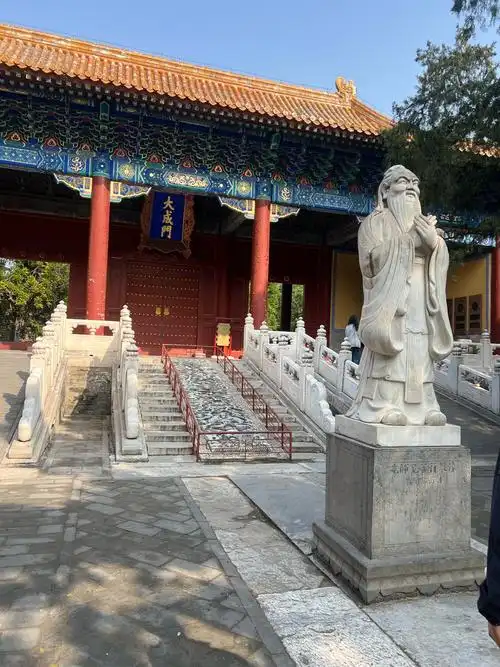 The Kong Fu traces its origins to 1038 during the Northern Song dynasty, though the present complex was established in 1377 and expanded throughout the Ming and Qing eras, reaching its final form by the 18th century. Imagine a residence that has housed one family continuously for nearly a thousand years—longer than the Habsburgs ruled Austria or the Tudors sat on the English throne. Designated a UNESCO World Heritage Site in 1994, the mansion offers Western visitors a rare window into the unbroken lineage of a single aristocratic house, where the descendants of China's most revered philosopher administered their vast hereditary estates and wielded ceremonial authority second only to the emperor himself.
The architecture follows a strict axial layout of nine successive courtyards divided into eastern, central, and western routes, embodying the Confucian principle of "hall in front, residence behind." The central axis houses the administrative zone, where the Duke held court—comparable in function to a European prince-bishop's palace. The imposing Hall of Great Affairs, where judgments were rendered and imperial edicts received, conveys the same gravitas as the great chambers of a Renaissance palazzo. A particularly fascinating detail is the Chongguang Gate, a ceremonial portal opened only for imperial visits, a hierarchy marker not unlike the restricted sovereign entrances of European royal courts.
The inner residential quarters reveal the private world of the Confucian elite, with the Front Upper Chamber and Rear Hall Tower serving as family living spaces. The inner gate bears a remarkable mural known as the "Greed-Aversion Painting," depicting a mythical beast that supposedly dies when it consumes too much—a vivid Confucian warning against corruption that resonates with moral allegories found in European cathedral art. To the east, the Baoben Hall serves as the family ancestral temple, while the western route contains scholarly retreats and tranquil gardens, including the celebrated "Five Cypresses Embracing a Scholar Tree," a botanical curiosity that has stood for centuries.
The mansion's collection is staggering: Shang and Zhou dynasty bronze ritual vessels gifted by Emperor Qianlong, the only known Yuan dynasty Seven-Ridge Crown in existence, over ten thousand items of Ming and Qing clothing and accessories, and the Kong Family Archives—more than 300,000 documents spanning four centuries, making it the most complete private archive in China and a resource comparable in scope to the Vatican Secret Archives. These holdings illuminate daily life, land management, and ceremonial life in imperial China.
For practical planning, expect to pay around 60–75 yuan for entry, or 150 yuan for a combined ticket covering all Three Confucian Sites. Allow two to three hours for the mansion alone, or a full day if combining with the adjacent Confucius Temple and the Confucius Museum nearby. English audio guides are available, though hiring a knowledgeable local guide greatly enriches the experience by explaining the ritual symbolism embedded in every doorway and courtyard. Wear comfortable shoes, speak softly out of respect for this sacred site, and note that photography is restricted in certain inner chambers. The mansion sits within walking distance of the Confucius Temple in Qufu's old town, making it easy to combine into a full day of Confucian heritage exploration.
The Kong Fu traces its origins to 1038 during the Northern Song dynasty, though the present complex was established in 1377 and expanded throughout the Ming and Qing eras, reaching its final form by the 18th century. Imagine a residence that has housed one family continuously for nearly a thousand years—longer than the Habsburgs ruled Austria or the Tudors sat on the English throne. Designated a UNESCO World Heritage Site in 1994, the mansion offers Western visitors a rare window into the unbroken lineage of a single aristocratic house, where the descendants of China's most revered philosopher administered their vast hereditary estates and wielded ceremonial authority second only to the emperor himself.
The architecture follows a strict axial layout of nine successive courtyards divided into eastern, central, and western routes, embodying the Confucian principle of "hall in front, residence behind." The central axis houses the administrative zone, where the Duke held court—comparable in function to a European prince-bishop's palace. The imposing Hall of Great Affairs, where judgments were rendered and imperial edicts received, conveys the same gravitas as the great chambers of a Renaissance palazzo. A particularly fascinating detail is the Chongguang Gate, a ceremonial portal opened only for imperial visits, a hierarchy marker not unlike the restricted sovereign entrances of European royal courts.
The inner residential quarters reveal the private world of the Confucian elite, with the Front Upper Chamber and Rear Hall Tower serving as family living spaces. The inner gate bears a remarkable mural known as the "Greed-Aversion Painting," depicting a mythical beast that supposedly dies when it consumes too much—a vivid Confucian warning against corruption that resonates with moral allegories found in European cathedral art. To the east, the Baoben Hall serves as the family ancestral temple, while the western route contains scholarly retreats and tranquil gardens, including the celebrated "Five Cypresses Embracing a Scholar Tree," a botanical curiosity that has stood for centuries.
The mansion's collection is staggering: Shang and Zhou dynasty bronze ritual vessels gifted by Emperor Qianlong, the only known Yuan dynasty Seven-Ridge Crown in existence, over ten thousand items of Ming and Qing clothing and accessories, and the Kong Family Archives—more than 300,000 documents spanning four centuries, making it the most complete private archive in China and a resource comparable in scope to the Vatican Secret Archives. These holdings illuminate daily life, land management, and ceremonial life in imperial China.
For practical planning, expect to pay around 60–75 yuan for entry, or 150 yuan for a combined ticket covering all Three Confucian Sites. Allow two to three hours for the mansion alone, or a full day if combining with the adjacent Confucius Temple and the Confucius Museum nearby. English audio guides are available, though hiring a knowledgeable local guide greatly enriches the experience by explaining the ritual symbolism embedded in every doorway and courtyard. Wear comfortable shoes, speak softly out of respect for this sacred site, and note that photography is restricted in certain inner chambers. The mansion sits within walking distance of the Confucius Temple in Qufu's old town, making it easy to combine into a full day of Confucian heritage exploration.