Confucian Temple
⭐ 3.80
Shou County, Huainan, Anhui, China
 **A Living Testament to Confucian Heritage**
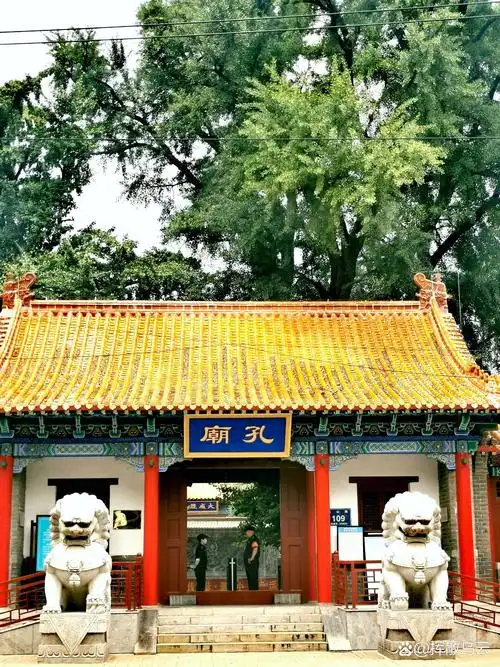
Founded during the Tang Dynasty and relocated to its present site in 1324 during the Yuan Dynasty, Shou County Confucius Temple has been repaired or expanded 42 times across the Yuan, Ming, Qing, and Republican eras. While the original Confucian Temple in Qufu—Confucius's birthplace—anchors the global Confucian legacy, this provincial complex parallels the architectural ambitions of Europe's medieval cathedral schools, reflecting how both Eastern and Western civilizations constructed monumental spaces to enshrine learning. The existing structures primarily date to the Ming and Qing dynasties, roughly contemporary with Europe's Renaissance through Baroque periods.
**Architectural Grandeur and Symmetry**
Spanning over 20,000 square meters and oriented along a classic north-south axis, the temple follows strict principles of bilateral symmetry. Visitors pass through a sequence of five courtyards, encountering the Lingxing Gate, the Pan Pool symbolizing scholarly purity, the grand Da Cheng Hall with its impressive double-eaved hip-and-gable roof, and the Minglun Hall of Ethics. The so-called "Three Arches and Three Gates," featuring elegantly crafted Ming-era wooden bracket sets and upturned eaves, evoke the orderly grandeur of European Renaissance civic palaces while showcasing master craftsmanship.
**The Legendary Twin Ginkgo Trees**
At the heart of the temple stand two extraordinary ginkgo trees, planted side by side during the Yuan Dynasty—legend tells of one female and one male, faithfully watching over each other for seven centuries. Still vigorous and luxuriant, they transform the courtyard into a shimmering sea of gold each late autumn when their fan-shaped leaves carpet the ground. Such living monuments rival Europe's ancient oaks in longevity, while the Pan Pool's elegant single-arch stone bridge—once walked by scholars praying for examination success—adds a contemplative, almost European-garden-like serenity.
**Cultural Significance and Living Traditions**
As a vital vessel of Confucian culture, the temple hosts year-round activities including the traditional First Writing Ceremony for young students, intangible cultural heritage performances, and calligraphy exhibitions. It serves as Anhui Province's Patriotism Education Base. Hundreds of inscribed steles and wooden plaques throughout the complex preserve invaluable records of ancient educational rituals. Like Europe's medieval universities—Bologna, Oxford, Paris—this site represents a continuous tradition of learning spanning nearly seven centuries, where the wisdom of Confucius continues to shape contemporary Chinese values.
**Planning Your Visit**
The temple is open free of charge, generally 7:00-17:00 in summer and 8:30-16:30 in winter. Some halls may close temporarily for restoration, so call ahead (0564-4022130). Located inside Shou County's ancient walled city, it lies about 40 minutes' drive from Huainan city center. For a richer experience, combine your visit with the adjacent Ming-dynasty city walls—among China's best-preserved fortifications—and the Shouxian Museum. Allow 1.5 hours, or up to two hours during special exhibitions.
**Essential Tips for Visitors**
Early morning (8:30-10:30) and late afternoon (15:00-17:00) offer the softest light and thinnest crowds. Late October to mid-November delivers spectacular golden ginkgo foliage, a photographer's paradise, while late spring brings families seeking exam blessings. Wear comfortable flat shoes on the cobblestone streets and bring water. As this is a sacred Confucian site, observe respectful behavior: avoid stepping on door thresholds, refrain from loud conversation, and do not touch artifacts. Foreign visitors are warmly welcomed, and the experience offers an authentic, uncrowded alternative to Qufu's more famous temple.
**A Living Testament to Confucian Heritage**
Founded during the Tang Dynasty and relocated to its present site in 1324 during the Yuan Dynasty, Shou County Confucius Temple has been repaired or expanded 42 times across the Yuan, Ming, Qing, and Republican eras. While the original Confucian Temple in Qufu—Confucius's birthplace—anchors the global Confucian legacy, this provincial complex parallels the architectural ambitions of Europe's medieval cathedral schools, reflecting how both Eastern and Western civilizations constructed monumental spaces to enshrine learning. The existing structures primarily date to the Ming and Qing dynasties, roughly contemporary with Europe's Renaissance through Baroque periods.
**Architectural Grandeur and Symmetry**
Spanning over 20,000 square meters and oriented along a classic north-south axis, the temple follows strict principles of bilateral symmetry. Visitors pass through a sequence of five courtyards, encountering the Lingxing Gate, the Pan Pool symbolizing scholarly purity, the grand Da Cheng Hall with its impressive double-eaved hip-and-gable roof, and the Minglun Hall of Ethics. The so-called "Three Arches and Three Gates," featuring elegantly crafted Ming-era wooden bracket sets and upturned eaves, evoke the orderly grandeur of European Renaissance civic palaces while showcasing master craftsmanship.
**The Legendary Twin Ginkgo Trees**
At the heart of the temple stand two extraordinary ginkgo trees, planted side by side during the Yuan Dynasty—legend tells of one female and one male, faithfully watching over each other for seven centuries. Still vigorous and luxuriant, they transform the courtyard into a shimmering sea of gold each late autumn when their fan-shaped leaves carpet the ground. Such living monuments rival Europe's ancient oaks in longevity, while the Pan Pool's elegant single-arch stone bridge—once walked by scholars praying for examination success—adds a contemplative, almost European-garden-like serenity.
**Cultural Significance and Living Traditions**
As a vital vessel of Confucian culture, the temple hosts year-round activities including the traditional First Writing Ceremony for young students, intangible cultural heritage performances, and calligraphy exhibitions. It serves as Anhui Province's Patriotism Education Base. Hundreds of inscribed steles and wooden plaques throughout the complex preserve invaluable records of ancient educational rituals. Like Europe's medieval universities—Bologna, Oxford, Paris—this site represents a continuous tradition of learning spanning nearly seven centuries, where the wisdom of Confucius continues to shape contemporary Chinese values.
**Planning Your Visit**
The temple is open free of charge, generally 7:00-17:00 in summer and 8:30-16:30 in winter. Some halls may close temporarily for restoration, so call ahead (0564-4022130). Located inside Shou County's ancient walled city, it lies about 40 minutes' drive from Huainan city center. For a richer experience, combine your visit with the adjacent Ming-dynasty city walls—among China's best-preserved fortifications—and the Shouxian Museum. Allow 1.5 hours, or up to two hours during special exhibitions.
**Essential Tips for Visitors**
Early morning (8:30-10:30) and late afternoon (15:00-17:00) offer the softest light and thinnest crowds. Late October to mid-November delivers spectacular golden ginkgo foliage, a photographer's paradise, while late spring brings families seeking exam blessings. Wear comfortable flat shoes on the cobblestone streets and bring water. As this is a sacred Confucian site, observe respectful behavior: avoid stepping on door thresholds, refrain from loud conversation, and do not touch artifacts. Foreign visitors are warmly welcomed, and the experience offers an authentic, uncrowded alternative to Qufu's more famous temple.