Lushan Botanical Garden
⭐ 3.50
Laishan District, Yantai City, Shandong Province, China
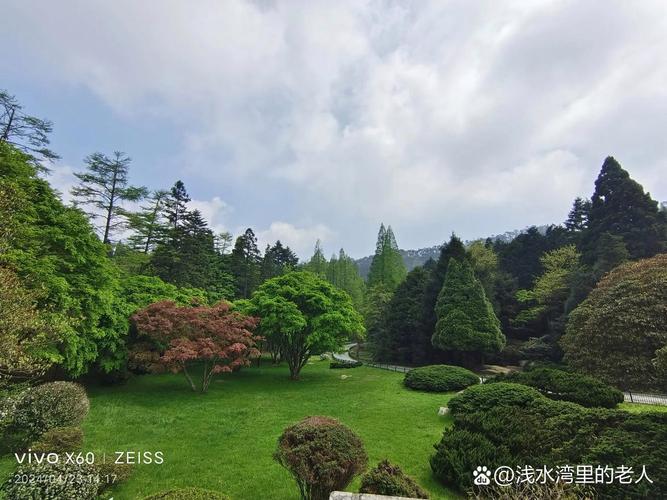 Founded in 1934 by pioneering botanists Hu Xiansu (Hu Hsen-Hsu) and Qin Renchang, Lushan Botanical Garden holds the distinction of being the first subalpine botanical garden in China and one of the earliest of its kind in Asia. Established during a remarkable era when Chinese scientists were building modern research institutions, it predates many European alpine gardens in formal status. Think of it as China's equivalent of Switzerland's Schynige Platte Alpine Garden or Austria's famous Alpine Garden on the Grossglockner—both created to study high-elevation flora, though Lushan's nearly nine decades of continuous research give it a uniquely mature character.
The garden stretches across multiple themed sections, including a conifer arboretum, rock garden, and the celebrated Rhododendron Garden, which showcases over 300 azalea varieties that explode in color during late spring. Visitors are greeted by groves of dawn redwood (Metasequoia), the legendary "living fossil" once thought extinct until its rediscovery in China in the 1940s, alongside stately golden larches and century-old ginkgo trees. This living museum echoes the conservation spirit of Britain's Kew Gardens while remaining firmly rooted in Chinese botanical heritage.
Each season transforms the landscape dramatically: spring brings cascading rhododendrons and peach blossoms, summer offers cool highland air beneath lush fern canopies, autumn ignites the hillsides in crimson maple and golden larch, and winter cloaks the evergreens in striking rime and snow. From mid-November onward, the garden becomes one of Lushan's premier destinations for fall foliage viewing—a tradition that draws parallels with New England's leaf-peeping culture, though framed by the misty peaks of China's sacred Mount Lu.
As part of the Chinese Academy of Sciences, the garden plays a vital role in ex-situ conservation across the Yangtze River basin, safeguarding numerous threatened species through dedicated programs. Clear plant labels, interpretive signage, and well-maintained educational facilities make it an ideal venue for guided nature walks, student field trips, and amateur botanists seeking to deepen their understanding of East Asian plant diversity.
Practical visiting information: entry to the botanical garden is included with the Lushan Scenic Area pass—no separate ticket required. Plan for 1.5 to 2 hours on site, and consider combining your visit with the nearby Hanpokou Viewing Platform, a 15-minute walk away, where you can gaze out across the vast Poyang Lake, China's largest freshwater lake. Wear sturdy non-slip hiking shoes, bring a light jacket for cooler mountain temperatures, and note that all fires are strictly prohibited under forest fire prevention regulations.
Founded in 1934 by pioneering botanists Hu Xiansu (Hu Hsen-Hsu) and Qin Renchang, Lushan Botanical Garden holds the distinction of being the first subalpine botanical garden in China and one of the earliest of its kind in Asia. Established during a remarkable era when Chinese scientists were building modern research institutions, it predates many European alpine gardens in formal status. Think of it as China's equivalent of Switzerland's Schynige Platte Alpine Garden or Austria's famous Alpine Garden on the Grossglockner—both created to study high-elevation flora, though Lushan's nearly nine decades of continuous research give it a uniquely mature character.
The garden stretches across multiple themed sections, including a conifer arboretum, rock garden, and the celebrated Rhododendron Garden, which showcases over 300 azalea varieties that explode in color during late spring. Visitors are greeted by groves of dawn redwood (Metasequoia), the legendary "living fossil" once thought extinct until its rediscovery in China in the 1940s, alongside stately golden larches and century-old ginkgo trees. This living museum echoes the conservation spirit of Britain's Kew Gardens while remaining firmly rooted in Chinese botanical heritage.
Each season transforms the landscape dramatically: spring brings cascading rhododendrons and peach blossoms, summer offers cool highland air beneath lush fern canopies, autumn ignites the hillsides in crimson maple and golden larch, and winter cloaks the evergreens in striking rime and snow. From mid-November onward, the garden becomes one of Lushan's premier destinations for fall foliage viewing—a tradition that draws parallels with New England's leaf-peeping culture, though framed by the misty peaks of China's sacred Mount Lu.
As part of the Chinese Academy of Sciences, the garden plays a vital role in ex-situ conservation across the Yangtze River basin, safeguarding numerous threatened species through dedicated programs. Clear plant labels, interpretive signage, and well-maintained educational facilities make it an ideal venue for guided nature walks, student field trips, and amateur botanists seeking to deepen their understanding of East Asian plant diversity.
Practical visiting information: entry to the botanical garden is included with the Lushan Scenic Area pass—no separate ticket required. Plan for 1.5 to 2 hours on site, and consider combining your visit with the nearby Hanpokou Viewing Platform, a 15-minute walk away, where you can gaze out across the vast Poyang Lake, China's largest freshwater lake. Wear sturdy non-slip hiking shoes, bring a light jacket for cooler mountain temperatures, and note that all fires are strictly prohibited under forest fire prevention regulations.