Longmen Mountain Scenic Area
⭐ 4.80
Longmen Mountain Scenic Area, Luolong District, Luoyang City, Henan Province, China
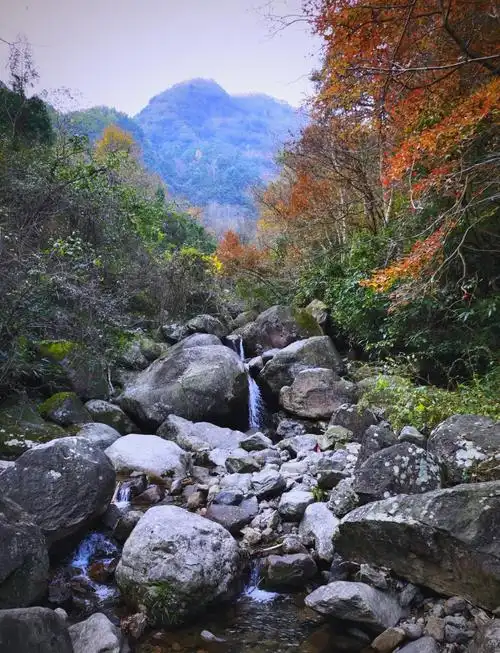 Begun in 493 AD under Emperor Xiaowen of the Northern Wei dynasty—just seventeen years after the fall of Rome—the Longmen Grottoes chronicle the cultural awakening of early medieval China. Work continued through the Tang dynasty, spanning an era contemporary with Charlemagne and the rise of Islamic civilization. The site takes its poetic name from the twin limestone ridges that frame the Yi River like massive gateway pillars, once called "Yi阙" (the Gate of Yi). The dramatic setting, reminiscent of a sandstone Mont-Saint-Michel rising above its tidal flats, amplifies the spiritual grandeur of the carvings.
The artistic and spiritual heart of the complex is the Fengxian Temple on the western cliff, a ninth-century outdoor chapel whose centerpiece is the colossal Vairocana Buddha. Standing 17.14 meters tall—roughly the height of Michelangelo's David multiplied by ten—her serene features are traditionally attributed to the patronage of Empress Wu Zetian, China's only female emperor. Surrounding her are nine disciples, guardians, and heavenly kings carved in high relief, achieving a classical ideal of harmony comparable to the Parthenon's pediment sculptures.
The western cliff also houses the celebrated "Twenty Pieces of Longmen," a canonical collection of Northern Wei calligraphy carved into cave walls. Just as Chartres Cathedral preserves the pinnacle of French Gothic architecture, these inscriptions represent the golden age of Chinese epigraphic art. Nearby caves such as Binyang, Guyang, Wanfo, and Lianhua display a continuous evolution of Buddhist iconography, from the elongated, ethereal figures of early dynasties to the fuller, more humanistic forms of the Tang.
Across the river, the smaller eastern cliffs offer more mature Tang-era sculpture in a quieter setting. The historic Xiangshan Temple, founded by imperial decree in 738 AD, provides panoramic views comparable to those from a Tuscan hilltop monastery, while the adjacent Baiyuan Garden cradles the tomb of the beloved Tang poet Bai Juyi. Pine groves, bamboo clusters, and stone inscriptions make this a fitting literary complement to the religious art across the water.
Practical planning enhances any visit. The site is easily reached—a ten-minute taxi ride from Longmen High-Speed Railway Station or direct buses from central Luoyang. Tickets cost approximately 90 yuan in peak season (60 yuan off-season) and require advance online reservation with a passport or ID number. Arrive between 8 and 10 AM for soft light ideal for photographing the great Buddha's face; allow three to four hours for the full circuit and wear sturdy shoes, as many stairways climb the cliff terraces. No flash photography is permitted inside the caves, and visitors should refrain from touching the sculptures.
Begun in 493 AD under Emperor Xiaowen of the Northern Wei dynasty—just seventeen years after the fall of Rome—the Longmen Grottoes chronicle the cultural awakening of early medieval China. Work continued through the Tang dynasty, spanning an era contemporary with Charlemagne and the rise of Islamic civilization. The site takes its poetic name from the twin limestone ridges that frame the Yi River like massive gateway pillars, once called "Yi阙" (the Gate of Yi). The dramatic setting, reminiscent of a sandstone Mont-Saint-Michel rising above its tidal flats, amplifies the spiritual grandeur of the carvings.
The artistic and spiritual heart of the complex is the Fengxian Temple on the western cliff, a ninth-century outdoor chapel whose centerpiece is the colossal Vairocana Buddha. Standing 17.14 meters tall—roughly the height of Michelangelo's David multiplied by ten—her serene features are traditionally attributed to the patronage of Empress Wu Zetian, China's only female emperor. Surrounding her are nine disciples, guardians, and heavenly kings carved in high relief, achieving a classical ideal of harmony comparable to the Parthenon's pediment sculptures.
The western cliff also houses the celebrated "Twenty Pieces of Longmen," a canonical collection of Northern Wei calligraphy carved into cave walls. Just as Chartres Cathedral preserves the pinnacle of French Gothic architecture, these inscriptions represent the golden age of Chinese epigraphic art. Nearby caves such as Binyang, Guyang, Wanfo, and Lianhua display a continuous evolution of Buddhist iconography, from the elongated, ethereal figures of early dynasties to the fuller, more humanistic forms of the Tang.
Across the river, the smaller eastern cliffs offer more mature Tang-era sculpture in a quieter setting. The historic Xiangshan Temple, founded by imperial decree in 738 AD, provides panoramic views comparable to those from a Tuscan hilltop monastery, while the adjacent Baiyuan Garden cradles the tomb of the beloved Tang poet Bai Juyi. Pine groves, bamboo clusters, and stone inscriptions make this a fitting literary complement to the religious art across the water.
Practical planning enhances any visit. The site is easily reached—a ten-minute taxi ride from Longmen High-Speed Railway Station or direct buses from central Luoyang. Tickets cost approximately 90 yuan in peak season (60 yuan off-season) and require advance online reservation with a passport or ID number. Arrive between 8 and 10 AM for soft light ideal for photographing the great Buddha's face; allow three to four hours for the full circuit and wear sturdy shoes, as many stairways climb the cliff terraces. No flash photography is permitted inside the caves, and visitors should refrain from touching the sculptures.