Luoyang Ancient City Wall
⭐ 3.60
Luoyang Ancient City Wall, Old Town District, Luoyang City, Henan Province, China
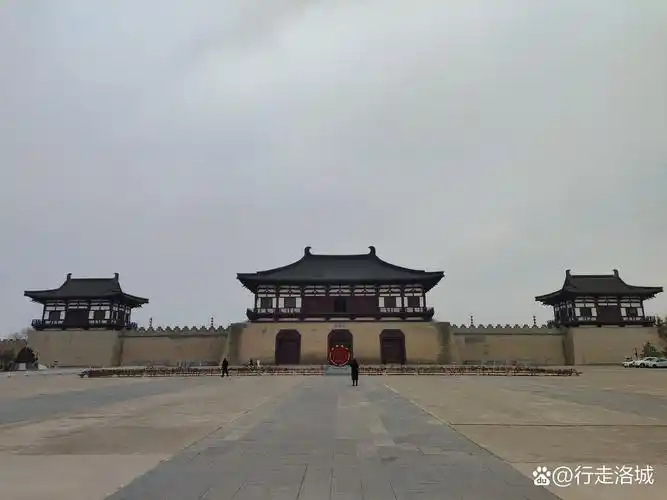 Straddling the Luo River in Henan province, Luoyang served as the capital of 13 successive dynasties from the Eastern Zhou (770 BC) through the early Tang, making it the Chinese equivalent of a city stacked with the political memories of Rome, Constantinople, and Paris combined. While Xi'an offers a single, walkable Ming-era wall, Luoyang's fortification legacy survives in shards: the Han-Wei capital, founded in the Western Zhou era and abandoned after the Tang unification, anchored the eastern terminus of the Silk Road and is now a UNESCO World Heritage tentative site. Standing on these earthen remnants, you read history the way you might in the Roman Forum or at Hadrian's Wall, less polished, more honest about time's erosions.
The architecture itself tells the story of changing tastes and technologies. The Han-Wei walls extend roughly 14 kilometers around the former palace city with north, east, and west sections still rising five to seven meters in raw, unbricked rammed earth, a technique that predates Rome's opus caementicium but served the same defensive purpose. By contrast, the Lijing Gate tower, rebuilt in 2002 in a sweeping Ming-Qing timber-frame style, soars 11.7 meters and serves as the visual anchor of the old town. The Sui-Tang Ruins Park uses marked earthen platforms and evening digital projections to recreate grand ceremonial gates planned by the famed Tang master builder Yu Wenkai, whose gridded imperial capital rivaled Chang'an, Constantinople, and Abbasid Baghdad in population and prestige.
Culturally, these fragments anchor China's pre-modern identity. The Han-Wei site became a key node in the 2014 Silk Roads UNESCO nomination, physically linking China to the Mediterranean trade networks that brought glassware west and horses east. Han-Wei itself is protected as a Major National Historical Site, while Lijing Gate has evolved into Luoyang's nightly social heart, where locals gather for street food under the lantern-lit tower.
For practical planning, Lijing Gate is the easiest entry point: tickets run 30-45 yuan, and the tower sits at the start of the old town's famed Cross Street snack strip. The Sui-Tang Yingtianmen and Dingdingmen ruin parks are largely free to enter and showcase Tang-era foundations. The Han-Wei ruins lie about 15 kilometers east in Yanshi district; they charge no fee but require a taxi, ride-hail, or local bus, and offer nothing in the way of cafés or shade. Visit before 10 a.m. or after 4 p.m. in summer, and wear sturdy flat shoes, as the rammed-earth surfaces are uneven.
Time-pressed travelers should arrive at Lijing Gate near sunset, watch the old town lights flicker on, then descend into the lantern-lit lanes for water-boiled lamb and mungbean vermicelli. History devotees should devote a full half-day to the Han-Wei ruins with a guide or guidebook in hand, as the bare earth tells its story only to attentive eyes. Photography fans wearing hanfu will find the illuminated Wenfeng Pagoda in Luoyi Ancient City a particularly rewarding night backdrop.
Straddling the Luo River in Henan province, Luoyang served as the capital of 13 successive dynasties from the Eastern Zhou (770 BC) through the early Tang, making it the Chinese equivalent of a city stacked with the political memories of Rome, Constantinople, and Paris combined. While Xi'an offers a single, walkable Ming-era wall, Luoyang's fortification legacy survives in shards: the Han-Wei capital, founded in the Western Zhou era and abandoned after the Tang unification, anchored the eastern terminus of the Silk Road and is now a UNESCO World Heritage tentative site. Standing on these earthen remnants, you read history the way you might in the Roman Forum or at Hadrian's Wall, less polished, more honest about time's erosions.
The architecture itself tells the story of changing tastes and technologies. The Han-Wei walls extend roughly 14 kilometers around the former palace city with north, east, and west sections still rising five to seven meters in raw, unbricked rammed earth, a technique that predates Rome's opus caementicium but served the same defensive purpose. By contrast, the Lijing Gate tower, rebuilt in 2002 in a sweeping Ming-Qing timber-frame style, soars 11.7 meters and serves as the visual anchor of the old town. The Sui-Tang Ruins Park uses marked earthen platforms and evening digital projections to recreate grand ceremonial gates planned by the famed Tang master builder Yu Wenkai, whose gridded imperial capital rivaled Chang'an, Constantinople, and Abbasid Baghdad in population and prestige.
Culturally, these fragments anchor China's pre-modern identity. The Han-Wei site became a key node in the 2014 Silk Roads UNESCO nomination, physically linking China to the Mediterranean trade networks that brought glassware west and horses east. Han-Wei itself is protected as a Major National Historical Site, while Lijing Gate has evolved into Luoyang's nightly social heart, where locals gather for street food under the lantern-lit tower.
For practical planning, Lijing Gate is the easiest entry point: tickets run 30-45 yuan, and the tower sits at the start of the old town's famed Cross Street snack strip. The Sui-Tang Yingtianmen and Dingdingmen ruin parks are largely free to enter and showcase Tang-era foundations. The Han-Wei ruins lie about 15 kilometers east in Yanshi district; they charge no fee but require a taxi, ride-hail, or local bus, and offer nothing in the way of cafés or shade. Visit before 10 a.m. or after 4 p.m. in summer, and wear sturdy flat shoes, as the rammed-earth surfaces are uneven.
Time-pressed travelers should arrive at Lijing Gate near sunset, watch the old town lights flicker on, then descend into the lantern-lit lanes for water-boiled lamb and mungbean vermicelli. History devotees should devote a full half-day to the Han-Wei ruins with a guide or guidebook in hand, as the bare earth tells its story only to attentive eyes. Photography fans wearing hanfu will find the illuminated Wenfeng Pagoda in Luoyi Ancient City a particularly rewarding night backdrop.