Shimenjian Valley, Mount Lu
⭐ 4.40
Shimenjian, Mount Lu, Lushan City, Jiujiang, Jiangxi Province, China
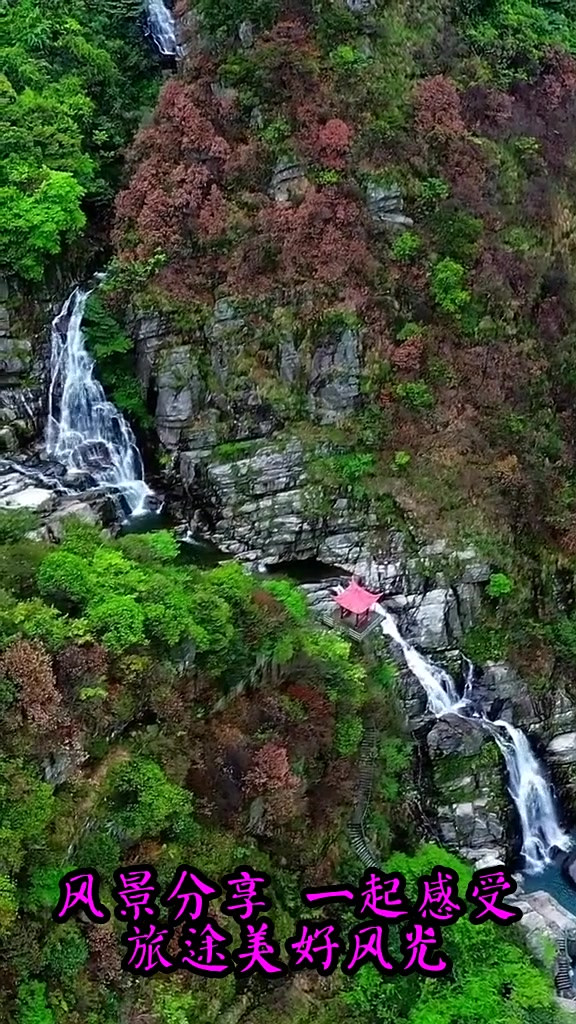 Shimenjian claims the oldest historical record of any waterfall on Mount Lushan, dating back nearly 1,600 years. In the late fourth century—roughly the era of Rome's fall—the revered monk Huiyuan founded the Dragon Spring Hermitage here and gave his first sermons on Pure Land Buddhism. This school later rivaled Zen as China's most influential Buddhist tradition, eventually spreading to Japan. During the early seventeenth century, the Ming dynasty travel writer Xu Xiake—often called a Chinese Alexander von Humboldt—spent weeks exploring the gorge, leaving vivid descriptions in his celebrated "Travel Diaries" that visitors can still trace today.
The valley itself reads like an open-air textbook of Quaternary glaciation. U-shaped troughs, ice-cut steps, arêtes, and striated boulders bear witness to ice sheets that ground across eastern China roughly two million years ago—features geologists compare directly to glaciated valleys in the Swiss Alps or Norway's fjords. These landforms make Shimenjian one of the few sites in East Asia where visitors can literally read the movements of vanished glaciers in the bedrock. Dense forests of ancient boxwood and rare ferns carpet the slopes, turning the gorge into a living laboratory for both geology and ecology.
The centerpiece is the 120-meter cascade that thunders from Iron Ship Peak into the Green Dragon Pool below. In the rainy season from April through July, the falls roar with a force that shakes the canyon walls; by winter they thin to delicate silver threads. The gorge narrows dramatically at "One-Line Sky," where the cliffs squeeze together so tightly that hikers must turn sideways to pass. A swaying suspension bridge spans the chasm, and flat boulders offer natural grandstands for catching the spray. Compared with Norway's waterfalls or Switzerland's Lauterbrunnen, Shimenjian feels intimate rather than monumental—more valley chapel than cathedral.
Beyond Huiyuan and Xu Xiake, the cliffs carry a quieter archive: Ming dynasty inscriptions carved into the rockface, weathered Buddhist reliefs, and the remains of hermitages clinging to the ledges. Walking the trail, you pass stone tablets honoring poets who came here to meditate on impermanence—much as Romantic-era writers sought the sublime in Alpine gorges. The pairing of wild nature with contemplative scholarship has made Shimenjian a touchstone in Chinese landscape poetry for centuries, and its atmosphere still rewards those willing to slow down.
The site is open daily from 7:00 a.m. to 6:00 p.m., and most visitors spend between 90 minutes and three hours exploring. Entrance costs around 40 yuan at the lower gate and 45 yuan at the upper gate; travelers who already hold a Mount Lushan ticket enter free within seven days. From the resort town of Guling atop the mountain, a sightseeing bus descends directly to the upper entrance—a smart option for tired legs. Adventurous travelers can instead approach from below via Saiyang, climbing up through tea terraces. The site scores 4.4 out of 5 from over a thousand visitor reviews.
Arrive between 7:00 and 9:00 a.m., when morning light slants softly through the gorge, the falls run full from overnight rains, and crowds are thin. Wear sturdy non-slip shoes, carry at least a liter of water, and pack a few energy bars—the trail is uneven and exposed in places. Swimming is forbidden in the plunge pools, and rain
Shimenjian claims the oldest historical record of any waterfall on Mount Lushan, dating back nearly 1,600 years. In the late fourth century—roughly the era of Rome's fall—the revered monk Huiyuan founded the Dragon Spring Hermitage here and gave his first sermons on Pure Land Buddhism. This school later rivaled Zen as China's most influential Buddhist tradition, eventually spreading to Japan. During the early seventeenth century, the Ming dynasty travel writer Xu Xiake—often called a Chinese Alexander von Humboldt—spent weeks exploring the gorge, leaving vivid descriptions in his celebrated "Travel Diaries" that visitors can still trace today.
The valley itself reads like an open-air textbook of Quaternary glaciation. U-shaped troughs, ice-cut steps, arêtes, and striated boulders bear witness to ice sheets that ground across eastern China roughly two million years ago—features geologists compare directly to glaciated valleys in the Swiss Alps or Norway's fjords. These landforms make Shimenjian one of the few sites in East Asia where visitors can literally read the movements of vanished glaciers in the bedrock. Dense forests of ancient boxwood and rare ferns carpet the slopes, turning the gorge into a living laboratory for both geology and ecology.
The centerpiece is the 120-meter cascade that thunders from Iron Ship Peak into the Green Dragon Pool below. In the rainy season from April through July, the falls roar with a force that shakes the canyon walls; by winter they thin to delicate silver threads. The gorge narrows dramatically at "One-Line Sky," where the cliffs squeeze together so tightly that hikers must turn sideways to pass. A swaying suspension bridge spans the chasm, and flat boulders offer natural grandstands for catching the spray. Compared with Norway's waterfalls or Switzerland's Lauterbrunnen, Shimenjian feels intimate rather than monumental—more valley chapel than cathedral.
Beyond Huiyuan and Xu Xiake, the cliffs carry a quieter archive: Ming dynasty inscriptions carved into the rockface, weathered Buddhist reliefs, and the remains of hermitages clinging to the ledges. Walking the trail, you pass stone tablets honoring poets who came here to meditate on impermanence—much as Romantic-era writers sought the sublime in Alpine gorges. The pairing of wild nature with contemplative scholarship has made Shimenjian a touchstone in Chinese landscape poetry for centuries, and its atmosphere still rewards those willing to slow down.
The site is open daily from 7:00 a.m. to 6:00 p.m., and most visitors spend between 90 minutes and three hours exploring. Entrance costs around 40 yuan at the lower gate and 45 yuan at the upper gate; travelers who already hold a Mount Lushan ticket enter free within seven days. From the resort town of Guling atop the mountain, a sightseeing bus descends directly to the upper entrance—a smart option for tired legs. Adventurous travelers can instead approach from below via Saiyang, climbing up through tea terraces. The site scores 4.4 out of 5 from over a thousand visitor reviews.
Arrive between 7:00 and 9:00 a.m., when morning light slants softly through the gorge, the falls run full from overnight rains, and crowds are thin. Wear sturdy non-slip shoes, carry at least a liter of water, and pack a few energy bars—the trail is uneven and exposed in places. Swimming is forbidden in the plunge pools, and rain