Sui-Tang City Ruins Botanical Garden
⭐ 4.60
Sui-Tang City Ruins Botanical Garden, Luoyang City, Henan Province, China
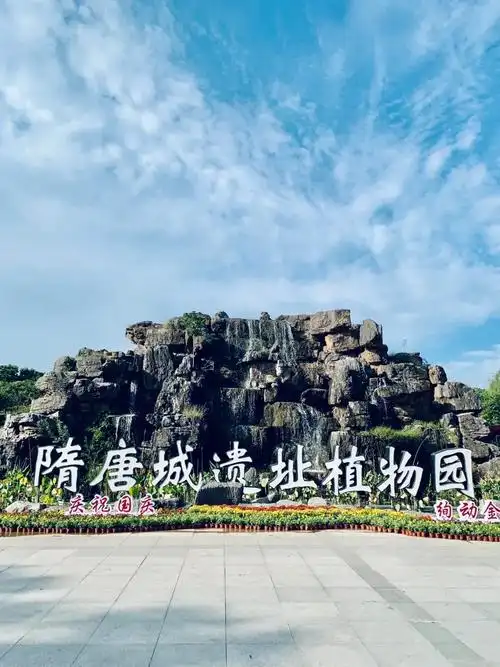 When the Tang Dynasty (618–907 CE) made Luoyang an auxiliary capital, the city ranked alongside Constantinople and Baghdad as one of the world's great metropolises. Its ward-and-avenue grid, known as the li-fang system, was a sophisticated urban planning achievement roughly contemporary with Charlemagne's Europe. The botanical garden preserves fragments of this grand design, including the dragon-scale canal that once watered imperial pleasure grounds. Walking these paths today means retracing an urban blueprint that shaped a civilization of perhaps 80 million people, making this site a living museum of Chinese city-building on par with what visitors might experience amid the ruins of ancient Rome.
The garden's 17 specialized sections unfold across the original Tang road network, with the ancient thoroughfares still defining visitor circulation. At its heart lies the Thousand-Form Peony Garden, a showcase of more than 1,200 peony cultivars—roughly twice the variety on display at any single European botanical institution. Surrounding this floral centerpiece, the Wild Water Garden recreates wetland habitats with lotus and reeds, while bamboo groves and plum orchards offer seasonal variety. What distinguishes this site from conventional botanical gardens, such as London's Kew or Paris's Jardin des Plantes, is the visible archaeological layer beneath: exposed Tang-era roadbeds and canal walls that remind visitors they walk atop imperial history.
Peonies, called the "king of flowers" in Chinese tradition, have been cultivated in Luoyang for over 1,500 years, first planted here during the Sui Dynasty. The annual Peony Festival, held from late March through early May, transforms the garden into a destination comparable to Holland's tulip season or Japan's cherry blossom celebrations. Yet this site offers more than floral display: it embodies a uniquely Chinese approach to heritage conservation, where living cultural landscapes merge with archaeological preservation. The tradition of "Luoyang peony viewing" inspired Tang poets and court painters much as roses inspired European Romantic gardens and Impressionist canvases.
The garden opens daily from 7:00 AM to 7:00 PM, with summer hours extending to 10:00 PM. Entry is free except during the Peony Festival, when ticket prices vary by bloom stage: 40 yuan for early blooms, 50 yuan for peak bloom, and 30 yuan for late-season flowers. The most convenient access is via Metro Line 2 to Sui-Tang Garden Station (Exit D), followed by a 200-meter walk to the West Gate. The site is also a short walk from Luoyang Museum across the northern entrance, making a combined cultural visit effortless.
Peak peony bloom occurs from early to mid-April, though herbaceous peonies follow in May, while August brings lotus season and autumn delivers brilliant dawn redwood and ginkgo foliage. Visitors should aim for early morning or late afternoon to escape both heat and crowds. A recommended route enters the West Gate and proceeds through the Thousand-Form Peony Garden, then the Wild Water Garden, follows the Dragon-Scale Canal ruins, and concludes at the bamboo and plum groves. Comfortable shoes are essential given the expansive grounds, along with sun protection and water.
Few places in the world allow visitors to admire 1,200 peony varieties while simultaneously contemplating an urban plan nearly 1,400 years old. This botanical garden delivers a uniquely layered experience: the aesthetic pleasure of Chinese garden traditions, the architectural wonder of Tang-era civil engineering, and the rare privilege of walking through a living archaeological site. Combined with the nearby Luoyang Museum and easy access via metro, it offers international travelers an accessible yet profound encounter with one of history's most influential civilizations, far from the more trodden tourist paths of Beijing and Shanghai.
When the Tang Dynasty (618–907 CE) made Luoyang an auxiliary capital, the city ranked alongside Constantinople and Baghdad as one of the world's great metropolises. Its ward-and-avenue grid, known as the li-fang system, was a sophisticated urban planning achievement roughly contemporary with Charlemagne's Europe. The botanical garden preserves fragments of this grand design, including the dragon-scale canal that once watered imperial pleasure grounds. Walking these paths today means retracing an urban blueprint that shaped a civilization of perhaps 80 million people, making this site a living museum of Chinese city-building on par with what visitors might experience amid the ruins of ancient Rome.
The garden's 17 specialized sections unfold across the original Tang road network, with the ancient thoroughfares still defining visitor circulation. At its heart lies the Thousand-Form Peony Garden, a showcase of more than 1,200 peony cultivars—roughly twice the variety on display at any single European botanical institution. Surrounding this floral centerpiece, the Wild Water Garden recreates wetland habitats with lotus and reeds, while bamboo groves and plum orchards offer seasonal variety. What distinguishes this site from conventional botanical gardens, such as London's Kew or Paris's Jardin des Plantes, is the visible archaeological layer beneath: exposed Tang-era roadbeds and canal walls that remind visitors they walk atop imperial history.
Peonies, called the "king of flowers" in Chinese tradition, have been cultivated in Luoyang for over 1,500 years, first planted here during the Sui Dynasty. The annual Peony Festival, held from late March through early May, transforms the garden into a destination comparable to Holland's tulip season or Japan's cherry blossom celebrations. Yet this site offers more than floral display: it embodies a uniquely Chinese approach to heritage conservation, where living cultural landscapes merge with archaeological preservation. The tradition of "Luoyang peony viewing" inspired Tang poets and court painters much as roses inspired European Romantic gardens and Impressionist canvases.
The garden opens daily from 7:00 AM to 7:00 PM, with summer hours extending to 10:00 PM. Entry is free except during the Peony Festival, when ticket prices vary by bloom stage: 40 yuan for early blooms, 50 yuan for peak bloom, and 30 yuan for late-season flowers. The most convenient access is via Metro Line 2 to Sui-Tang Garden Station (Exit D), followed by a 200-meter walk to the West Gate. The site is also a short walk from Luoyang Museum across the northern entrance, making a combined cultural visit effortless.
Peak peony bloom occurs from early to mid-April, though herbaceous peonies follow in May, while August brings lotus season and autumn delivers brilliant dawn redwood and ginkgo foliage. Visitors should aim for early morning or late afternoon to escape both heat and crowds. A recommended route enters the West Gate and proceeds through the Thousand-Form Peony Garden, then the Wild Water Garden, follows the Dragon-Scale Canal ruins, and concludes at the bamboo and plum groves. Comfortable shoes are essential given the expansive grounds, along with sun protection and water.
Few places in the world allow visitors to admire 1,200 peony varieties while simultaneously contemplating an urban plan nearly 1,400 years old. This botanical garden delivers a uniquely layered experience: the aesthetic pleasure of Chinese garden traditions, the architectural wonder of Tang-era civil engineering, and the rare privilege of walking through a living archaeological site. Combined with the nearby Luoyang Museum and easy access via metro, it offers international travelers an accessible yet profound encounter with one of history's most influential civilizations, far from the more trodden tourist paths of Beijing and Shanghai.