Jiguan Cave
⭐ 4.20
Jiguan Cave, Henan Province, China
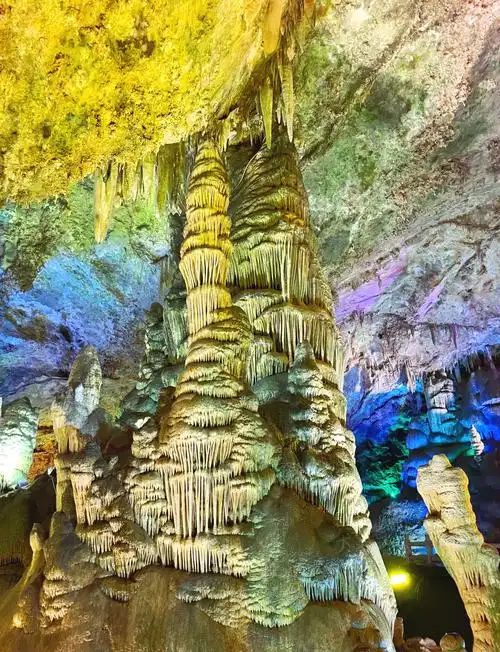 Carved by ancient seas and shaped over half a billion years by patient groundwater, Jiguan Cave is a textbook example of karst geology. Think of it as a younger sibling to America's Carlsbad Caverns or Slovenia's Postojna Cave, though on a more intimate scale. The cave system descends through five levels with a total vertical drop of 138 meters, and visitors trace only the uppermost, most decorated chambers. Stalactites, stalagmites, stone columns, and cascading draperies crowd every chamber—each one grown at roughly one centimeter per century, making every formation a six-million-year-old artwork. The site's scientific value is considerable, and guides can explain the hydrological forces that sculpted every twist.
What truly sets Jiguan apart from warmer-climate caves is its remarkable microclimate: a steady 18°C (64°F) and comfortable humidity year-round. In summer, the cave breathes cool, damp air that justifies its nickname "Nature's Great Air Conditioner"; in winter, it feels almost Mediterranean. Bring a light jacket even in July—the chill catches many visitors off guard. The flat, non-slip walkways are accessible to virtually everyone, from grandparents to small children, and the full route typically takes 60 to 90 minutes at a relaxed pace. Compared to squeezing through narrow European show caves, the spacious galleries here feel almost indulgent.
The eight themed halls—Jade Pillar Pool, Overflowing Colors Hall, the Folded Curtain Palace, Underground River, Gathering Immortals Palace, Jade Pool Palace, Gallery of Hidden Beauties, and Stone Forest Gate—are strung together like rooms in a natural palace. Highlights include the towering 28-meter "First Pillar of China," the slender "Trident of the Sea King" that echoes King Arthur's mythical blade, and whimsical formations named "Eight Immortals Crossing the Sea" and "Crocodile Paying Respects." Carefully designed colored lighting transforms the limestone into glowing amber, jade, and rose, though visitors should skip the flash to protect the delicate mineral sheen. The one-way route keeps crowds flowing and preserves the sense of quiet discovery.
Practical planning is refreshingly straightforward. Jiguan Cave holds a national AAAA rating, with adult tickets around 78 RMB (roughly 11 USD) and daily opening hours from 8 a.m. to 6 p.m. The site sits about 1.5 to 2 hours by car from Luoyang city center, and driving is by far the easiest option, with ample parking at the entrance. Buses run from Luoyang's main long-distance stations but are slower and less frequent. Inside, expect damp, sometimes slippery floors—wear sturdy non-slip shoes and walk, don't run. Photography is welcome but flash-free, and touching the formations is strictly prohibited: oils from skin can permanently stain calcite that took millennia to form.
Jiguan Cave is a perfect pick for families with children, geology enthusiasts, photographers chasing otherworldly light, and travelers seeking refuge from Luoyang's often sweltering summer. Visit between 9 and 11 a.m. to beat the tour-bus rush and enjoy a more contemplative atmosphere. Hiring an on-site guide (or downloading an English audio guide if available) transforms the experience from pretty sightseeing into a genuine lesson in deep time, comparable to the ranger talks at Mammoth Cave in Kentucky. This is not a theme park—there are no rides or interactive games—but for sheer natural spectacle and a refreshing dose of prehistory, it ranks among central China's most rewarding half-day excursions.
[BRIEF]
Tucked into the mountainside of Luanchuan County near Luoyang, Jiguan Cave is one of China's most spectacular karst caverns and a rare find this far north. Formed roughly 600 million years ago, the limestone labyrinth stretches 5,600 meters in total, with 1,800 meters open to visitors along a one-way, gently sloping pathway. Eight themed galleries showcase stalactites and stalagmites that grow only a sliver each century, including the 28-meter "Pillar of China." With a constant year-round temperature of 18°C (64°F), it works as both a summer escape and a year-round geological wonder—a natural air conditioner dressed up as a cathedral of stone.
[DETAILED]
Carved by ancient seas and shaped over half a billion years by patient groundwater, Jiguan Cave is a textbook example of karst geology. Think of it as a younger sibling to America's Carlsbad Caverns or Slovenia's Postojna Cave, though on a more intimate scale. The cave system descends through five levels with a total vertical drop of 138 meters, and visitors trace only the uppermost, most decorated chambers. Stalactites, stalagmites, stone columns, and cascading draperies crowd every chamber—each one grown at roughly one centimeter per century, making every formation a six-million-year-old artwork. The site's scientific value is considerable, and guides can explain the hydrological forces that sculpted every twist.
What truly sets Jiguan apart from warmer-climate caves is its remarkable microclimate: a steady 18°C (64°F) and comfortable humidity year-round. In summer, the cave breathes cool, damp air that justifies its nickname "Nature's Great Air Conditioner"; in winter, it feels almost Mediterranean. Bring a light jacket even in July—the chill catches many visitors off guard. The flat, non-slip walkways are accessible to virtually everyone, from grandparents to small children, and the full route typically takes 60 to 90 minutes at a relaxed pace. Compared to squeezing through narrow European show caves, the spacious galleries here feel almost indulgent.
The eight themed halls—Jade Pillar Pool, Overflowing Colors Hall, the Folded Curtain Palace, Underground River, Gathering Immortals Palace, Jade Pool Palace, Gallery of Hidden Beauties, and Stone Forest Gate—are strung together like rooms in a natural palace. Highlights include the towering 28-meter "First Pillar of China," the slender "Trident of the Sea King" that echoes King Arthur's mythical blade, and whimsical formations named "Eight Immortals Crossing the Sea" and "Crocodile Paying Respects." Carefully designed colored lighting transforms the limestone into glowing amber, jade, and rose, though visitors should skip the flash to protect the delicate mineral sheen. The one-way route keeps crowds flowing and preserves the sense of quiet discovery.
Practical planning is refreshingly straightforward. Jiguan Cave holds a national AAAA rating, with adult tickets around 78 RMB (roughly 11 USD) and daily opening hours from 8 a.m. to 6 p.m. The site sits about 1.5 to 2 hours by car from Luoyang city center, and driving is by far the easiest option, with ample parking at the entrance. Buses run from Luoyang's main long-distance stations but are slower and less frequent. Inside, expect damp, sometimes slippery floors—wear sturdy non-slip shoes and walk, don't run. Photography is welcome but flash-free, and touching the formations is strictly prohibited: oils from skin can permanently stain calcite that took millennia to form.
Jiguan Cave is a perfect pick for families with children, geology enthusiasts, photographers chasing otherworldly light, and travelers seeking refuge from Luoyang's often sweltering summer. Visit between 9 and 11 a.m. to beat the tour-bus rush and enjoy a more contemplative atmosphere. Hiring an on-site guide (or downloading an English audio guide if available) transforms the experience from pretty sightseeing into a genuine lesson in deep time, comparable to the ranger talks at Mammoth Cave in Kentucky. This is not a theme park—there are no rides or interactive games—but for sheer natural spectacle and a refreshing dose of prehistory, it ranks among central China's most rewarding half-day excursions.
Carved by ancient seas and shaped over half a billion years by patient groundwater, Jiguan Cave is a textbook example of karst geology. Think of it as a younger sibling to America's Carlsbad Caverns or Slovenia's Postojna Cave, though on a more intimate scale. The cave system descends through five levels with a total vertical drop of 138 meters, and visitors trace only the uppermost, most decorated chambers. Stalactites, stalagmites, stone columns, and cascading draperies crowd every chamber—each one grown at roughly one centimeter per century, making every formation a six-million-year-old artwork. The site's scientific value is considerable, and guides can explain the hydrological forces that sculpted every twist.
What truly sets Jiguan apart from warmer-climate caves is its remarkable microclimate: a steady 18°C (64°F) and comfortable humidity year-round. In summer, the cave breathes cool, damp air that justifies its nickname "Nature's Great Air Conditioner"; in winter, it feels almost Mediterranean. Bring a light jacket even in July—the chill catches many visitors off guard. The flat, non-slip walkways are accessible to virtually everyone, from grandparents to small children, and the full route typically takes 60 to 90 minutes at a relaxed pace. Compared to squeezing through narrow European show caves, the spacious galleries here feel almost indulgent.
The eight themed halls—Jade Pillar Pool, Overflowing Colors Hall, the Folded Curtain Palace, Underground River, Gathering Immortals Palace, Jade Pool Palace, Gallery of Hidden Beauties, and Stone Forest Gate—are strung together like rooms in a natural palace. Highlights include the towering 28-meter "First Pillar of China," the slender "Trident of the Sea King" that echoes King Arthur's mythical blade, and whimsical formations named "Eight Immortals Crossing the Sea" and "Crocodile Paying Respects." Carefully designed colored lighting transforms the limestone into glowing amber, jade, and rose, though visitors should skip the flash to protect the delicate mineral sheen. The one-way route keeps crowds flowing and preserves the sense of quiet discovery.
Practical planning is refreshingly straightforward. Jiguan Cave holds a national AAAA rating, with adult tickets around 78 RMB (roughly 11 USD) and daily opening hours from 8 a.m. to 6 p.m. The site sits about 1.5 to 2 hours by car from Luoyang city center, and driving is by far the easiest option, with ample parking at the entrance. Buses run from Luoyang's main long-distance stations but are slower and less frequent. Inside, expect damp, sometimes slippery floors—wear sturdy non-slip shoes and walk, don't run. Photography is welcome but flash-free, and touching the formations is strictly prohibited: oils from skin can permanently stain calcite that took millennia to form.
Jiguan Cave is a perfect pick for families with children, geology enthusiasts, photographers chasing otherworldly light, and travelers seeking refuge from Luoyang's often sweltering summer. Visit between 9 and 11 a.m. to beat the tour-bus rush and enjoy a more contemplative atmosphere. Hiring an on-site guide (or downloading an English audio guide if available) transforms the experience from pretty sightseeing into a genuine lesson in deep time, comparable to the ranger talks at Mammoth Cave in Kentucky. This is not a theme park—there are no rides or interactive games—but for sheer natural spectacle and a refreshing dose of prehistory, it ranks among central China's most rewarding half-day excursions.
[BRIEF]
Tucked into the mountainside of Luanchuan County near Luoyang, Jiguan Cave is one of China's most spectacular karst caverns and a rare find this far north. Formed roughly 600 million years ago, the limestone labyrinth stretches 5,600 meters in total, with 1,800 meters open to visitors along a one-way, gently sloping pathway. Eight themed galleries showcase stalactites and stalagmites that grow only a sliver each century, including the 28-meter "Pillar of China." With a constant year-round temperature of 18°C (64°F), it works as both a summer escape and a year-round geological wonder—a natural air conditioner dressed up as a cathedral of stone.
[DETAILED]
Carved by ancient seas and shaped over half a billion years by patient groundwater, Jiguan Cave is a textbook example of karst geology. Think of it as a younger sibling to America's Carlsbad Caverns or Slovenia's Postojna Cave, though on a more intimate scale. The cave system descends through five levels with a total vertical drop of 138 meters, and visitors trace only the uppermost, most decorated chambers. Stalactites, stalagmites, stone columns, and cascading draperies crowd every chamber—each one grown at roughly one centimeter per century, making every formation a six-million-year-old artwork. The site's scientific value is considerable, and guides can explain the hydrological forces that sculpted every twist.
What truly sets Jiguan apart from warmer-climate caves is its remarkable microclimate: a steady 18°C (64°F) and comfortable humidity year-round. In summer, the cave breathes cool, damp air that justifies its nickname "Nature's Great Air Conditioner"; in winter, it feels almost Mediterranean. Bring a light jacket even in July—the chill catches many visitors off guard. The flat, non-slip walkways are accessible to virtually everyone, from grandparents to small children, and the full route typically takes 60 to 90 minutes at a relaxed pace. Compared to squeezing through narrow European show caves, the spacious galleries here feel almost indulgent.
The eight themed halls—Jade Pillar Pool, Overflowing Colors Hall, the Folded Curtain Palace, Underground River, Gathering Immortals Palace, Jade Pool Palace, Gallery of Hidden Beauties, and Stone Forest Gate—are strung together like rooms in a natural palace. Highlights include the towering 28-meter "First Pillar of China," the slender "Trident of the Sea King" that echoes King Arthur's mythical blade, and whimsical formations named "Eight Immortals Crossing the Sea" and "Crocodile Paying Respects." Carefully designed colored lighting transforms the limestone into glowing amber, jade, and rose, though visitors should skip the flash to protect the delicate mineral sheen. The one-way route keeps crowds flowing and preserves the sense of quiet discovery.
Practical planning is refreshingly straightforward. Jiguan Cave holds a national AAAA rating, with adult tickets around 78 RMB (roughly 11 USD) and daily opening hours from 8 a.m. to 6 p.m. The site sits about 1.5 to 2 hours by car from Luoyang city center, and driving is by far the easiest option, with ample parking at the entrance. Buses run from Luoyang's main long-distance stations but are slower and less frequent. Inside, expect damp, sometimes slippery floors—wear sturdy non-slip shoes and walk, don't run. Photography is welcome but flash-free, and touching the formations is strictly prohibited: oils from skin can permanently stain calcite that took millennia to form.
Jiguan Cave is a perfect pick for families with children, geology enthusiasts, photographers chasing otherworldly light, and travelers seeking refuge from Luoyang's often sweltering summer. Visit between 9 and 11 a.m. to beat the tour-bus rush and enjoy a more contemplative atmosphere. Hiring an on-site guide (or downloading an English audio guide if available) transforms the experience from pretty sightseeing into a genuine lesson in deep time, comparable to the ranger talks at Mammoth Cave in Kentucky. This is not a theme park—there are no rides or interactive games—but for sheer natural spectacle and a refreshing dose of prehistory, it ranks among central China's most rewarding half-day excursions.