Plum Blossom Garden
⭐ 3.80
Hailing District, Taizhou City, Jiangsu Province, China
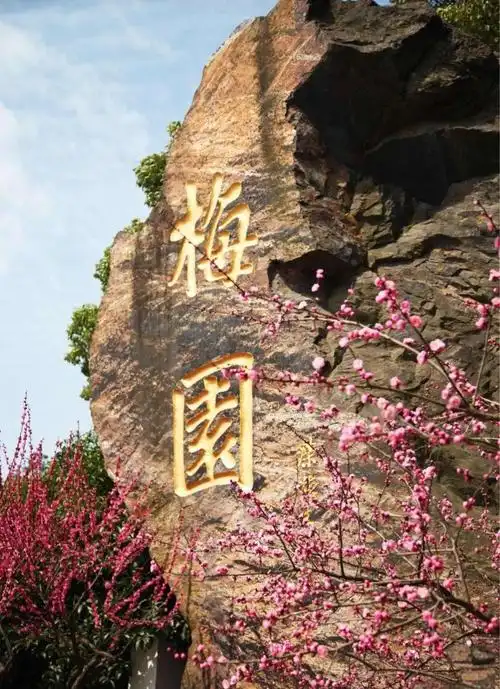 Mei Lanfang (1894–1961) was perhaps the most celebrated Peking opera artist of the twentieth century, much as Laurence Olivier dominated English-language theater in his era. Born to a Taizhou opera family, Mei refined the dan (female-role) tradition and pioneered the "Four Great Beauties" repertoire, including The Drunken Concubine. His international tours in the 1930s made Peking opera known from Moscow to New York. The garden, originally established in the 1980s, commemorates this hometown hero and stands as one of Taizhou's premier cultural landmarks.
Architecturally, the garden is a textbook example of Jiangnan garden design—the same classical school behind Suzhou's celebrated Humble Administrator's Garden. Meandering paths, moon gates, and reflective pools create layered vistas that unfold like scenes on a stage. The white marble seated statue at the entrance was sculpted by Liu Kaiqu, the same artist who created the relief figures on Beijing's Monument to the People's Heroes. The five-pointed Plum Pavilion features exquisite wood carvings depicting five signature Mei Lanfang roles, and opera enthusiasts often gather here to practice their arias.
The park's "Four Excellences"—the Plum Pavilion, the marble statue, a sculpture of Yang Guifei (the legendary Tang dynasty consort), and a stone tablet inscribed with a poem by the Buddhist leader Zhao Puchu—anchor the visual program. The Yang Guifei figure is particularly evocative, capturing the very role Mei made world-famous. Together these elements function almost as a stage set for Mei's artistic legacy, inviting visitors to step into the world of classical Chinese theater.
The on-site Historical Exhibition Hall, divided into five sections under the theme "Plum Blossoms Blooming Across China," uses photographs, original costumes, manuscripts, and multimedia to trace Mei's life and his patriotic refusal to perform for Japanese occupiers during the 1930s. Visitors should download a translation app beforehand, as most signage remains in Chinese, and observe the no-flash photography rule out of respect for the artifacts.
Entry requires a valid ID, with the garden open daily from 08:00 to 17:30 (last entry at 17:00) at no charge. Allow 1.5 to 2 hours for a relaxed visit, given the dense cultural content packed into the modest grounds. Bus routes 1, 2, 3, 22, and 28 stop at "Meiyuan," and taxis can be directed to 90 Yingchun East Road.
The plum blossoms peak in late February through mid-March, transforming the gardens into a fragrant pink-and-white wonderland that justifies a special visit. August offers quieter green scenery and excellent conditions for architectural study or family exploration. From the park's exit, a 10–15 minute walk leads to Taizhou Old Street, where visitors can sample local specialties such as fish-broth noodles and shredded tofu, creating a perfect pairing of cultural sightseeing and culinary discovery.
Mei Lanfang (1894–1961) was perhaps the most celebrated Peking opera artist of the twentieth century, much as Laurence Olivier dominated English-language theater in his era. Born to a Taizhou opera family, Mei refined the dan (female-role) tradition and pioneered the "Four Great Beauties" repertoire, including The Drunken Concubine. His international tours in the 1930s made Peking opera known from Moscow to New York. The garden, originally established in the 1980s, commemorates this hometown hero and stands as one of Taizhou's premier cultural landmarks.
Architecturally, the garden is a textbook example of Jiangnan garden design—the same classical school behind Suzhou's celebrated Humble Administrator's Garden. Meandering paths, moon gates, and reflective pools create layered vistas that unfold like scenes on a stage. The white marble seated statue at the entrance was sculpted by Liu Kaiqu, the same artist who created the relief figures on Beijing's Monument to the People's Heroes. The five-pointed Plum Pavilion features exquisite wood carvings depicting five signature Mei Lanfang roles, and opera enthusiasts often gather here to practice their arias.
The park's "Four Excellences"—the Plum Pavilion, the marble statue, a sculpture of Yang Guifei (the legendary Tang dynasty consort), and a stone tablet inscribed with a poem by the Buddhist leader Zhao Puchu—anchor the visual program. The Yang Guifei figure is particularly evocative, capturing the very role Mei made world-famous. Together these elements function almost as a stage set for Mei's artistic legacy, inviting visitors to step into the world of classical Chinese theater.
The on-site Historical Exhibition Hall, divided into five sections under the theme "Plum Blossoms Blooming Across China," uses photographs, original costumes, manuscripts, and multimedia to trace Mei's life and his patriotic refusal to perform for Japanese occupiers during the 1930s. Visitors should download a translation app beforehand, as most signage remains in Chinese, and observe the no-flash photography rule out of respect for the artifacts.
Entry requires a valid ID, with the garden open daily from 08:00 to 17:30 (last entry at 17:00) at no charge. Allow 1.5 to 2 hours for a relaxed visit, given the dense cultural content packed into the modest grounds. Bus routes 1, 2, 3, 22, and 28 stop at "Meiyuan," and taxis can be directed to 90 Yingchun East Road.
The plum blossoms peak in late February through mid-March, transforming the gardens into a fragrant pink-and-white wonderland that justifies a special visit. August offers quieter green scenery and excellent conditions for architectural study or family exploration. From the park's exit, a 10–15 minute walk leads to Taizhou Old Street, where visitors can sample local specialties such as fish-broth noodles and shredded tofu, creating a perfect pairing of cultural sightseeing and culinary discovery.