Taizhou City Wall Ruins
⭐ 2.80
Hailing District, Taizhou City, Jiangsu Province, China
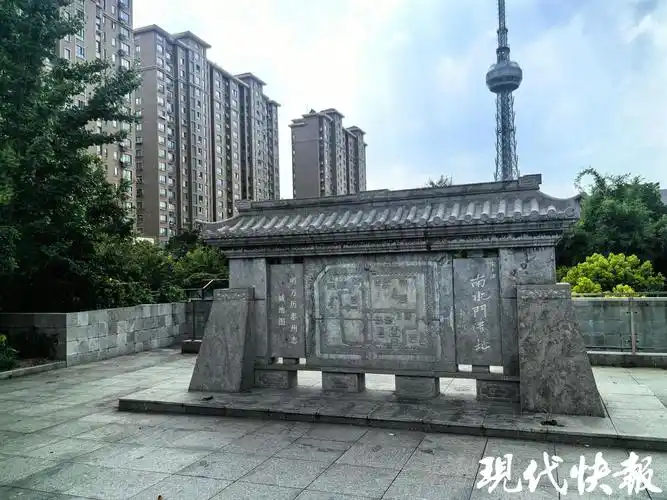 Founded in the Five Dynasties period and rebuilt across the Song, Yuan, Ming, and Qing dynasties, the Taizhou City Wall represents one of the few surviving prefecture-level fortifications in Jiangsu province. Unlike the imposing, fully restored ramparts of Xi'an or even Carcassonne in France, the site preserves its authenticity precisely through incompleteness—offering what scholars call a "living ruin." Excavated ceramics, coins, and inscribed bricks spanning the Tang through Ming eras provide a tangible timeline for understanding how Yangtze Delta cities evolved, comparable to how fragments of Roman walls trace urban growth across the Mediterranean world.
The surviving 81-meter section of rammed earth rises roughly 6.3 meters, its cross-section clearly displaying Song-era tamping techniques in which successive layers of clay were compacted between wooden frames. Nearby, an eight-meter brick-lined culvert demonstrates sophisticated urban drainage—a hydraulic innovation that paralleled similar advances in Song-dynasty Hangzhou and even medieval European cities like Bruges. The runoff engineering reveals how Jianghuai builders managed the region's challenging water table.
The real highlight is the South Water Gate complex, where a Song dynasty brick-and-stone arch survives in remarkable condition. The mixed construction of dressed stone slabs bonded with fired brick reflects the period's transition toward more durable masonry, anticipating Gothic engineering principles in contemporary Europe. Plaques and on-site diagrams explain the gate's dual function: controlling river traffic while serving as a defensive choke point—essentially a medieval lock-and-weir system.
Culturally, the ruins anchor the "city-of-water" identity that defines Taizhou. Together with the Fengcheng River and the elegant Wanghailou Tower, they form a trio where military, civic, and natural landscapes intertwine. After dark, subtle uplighting transforms the earthen profile into a brooding silhouette, compensating for the site's modest scale with genuine atmosphere—a strategy similar to how the ruins of Pompeii captivate visitors more than any modern reconstruction could.
Entry is free and the South Water Gate plaza remains open around the clock; Wanghailou Tower hours run 8:30 AM to 5:00 PM (last ticket 4:30). Reach the site via bus to either the "Wanghailou" or "Fengcheng River Scenic Area" stop. English-speaking guides should be booked through your hotel a day ahead, as on-site interpretation is primarily in Chinese.
Plan at least half a day: examine the rammed-earth stratigraphy and water gate in morning light, ascend Wanghailou's third floor for a panoramic view of the old city grid, then board an evening painted boat to see the wall ruins mirrored in the river against the illuminated tower. Cap the experience with the lively Taizhou Old Street night market—an immersion into the same commercial culture that has animated this water-town crossroads for over a millennium.
Founded in the Five Dynasties period and rebuilt across the Song, Yuan, Ming, and Qing dynasties, the Taizhou City Wall represents one of the few surviving prefecture-level fortifications in Jiangsu province. Unlike the imposing, fully restored ramparts of Xi'an or even Carcassonne in France, the site preserves its authenticity precisely through incompleteness—offering what scholars call a "living ruin." Excavated ceramics, coins, and inscribed bricks spanning the Tang through Ming eras provide a tangible timeline for understanding how Yangtze Delta cities evolved, comparable to how fragments of Roman walls trace urban growth across the Mediterranean world.
The surviving 81-meter section of rammed earth rises roughly 6.3 meters, its cross-section clearly displaying Song-era tamping techniques in which successive layers of clay were compacted between wooden frames. Nearby, an eight-meter brick-lined culvert demonstrates sophisticated urban drainage—a hydraulic innovation that paralleled similar advances in Song-dynasty Hangzhou and even medieval European cities like Bruges. The runoff engineering reveals how Jianghuai builders managed the region's challenging water table.
The real highlight is the South Water Gate complex, where a Song dynasty brick-and-stone arch survives in remarkable condition. The mixed construction of dressed stone slabs bonded with fired brick reflects the period's transition toward more durable masonry, anticipating Gothic engineering principles in contemporary Europe. Plaques and on-site diagrams explain the gate's dual function: controlling river traffic while serving as a defensive choke point—essentially a medieval lock-and-weir system.
Culturally, the ruins anchor the "city-of-water" identity that defines Taizhou. Together with the Fengcheng River and the elegant Wanghailou Tower, they form a trio where military, civic, and natural landscapes intertwine. After dark, subtle uplighting transforms the earthen profile into a brooding silhouette, compensating for the site's modest scale with genuine atmosphere—a strategy similar to how the ruins of Pompeii captivate visitors more than any modern reconstruction could.
Entry is free and the South Water Gate plaza remains open around the clock; Wanghailou Tower hours run 8:30 AM to 5:00 PM (last ticket 4:30). Reach the site via bus to either the "Wanghailou" or "Fengcheng River Scenic Area" stop. English-speaking guides should be booked through your hotel a day ahead, as on-site interpretation is primarily in Chinese.
Plan at least half a day: examine the rammed-earth stratigraphy and water gate in morning light, ascend Wanghailou's third floor for a panoramic view of the old city grid, then board an evening painted boat to see the wall ruins mirrored in the river against the illuminated tower. Cap the experience with the lively Taizhou Old Street night market—an immersion into the same commercial culture that has animated this water-town crossroads for over a millennium.