Urumqi Ancient City Ruins
⭐ 3.20
Urumqi Ancient City Ruins, Tianshan District, Urumqi, Xinjiang Uyghur Autonomous Region, China
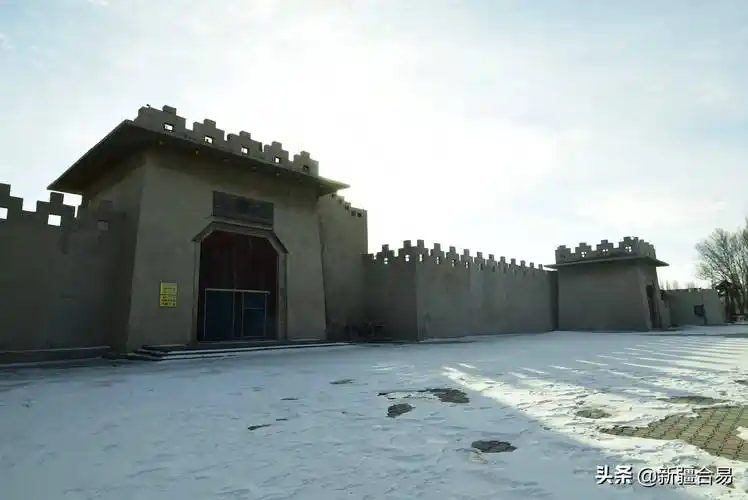 **A Frontier Fortress at the Crossroads of Empires**
Wulapo Ancient City was founded during the Tang Dynasty (618–907 CE), a period roughly contemporary with the rise of the Carolingian Empire in Europe and the early Abbasid Caliphate in the Middle East. At that time, the Chinese court administered vast Central Asian territories, and this fortress served as a critical military garrison on the northern Silk Road—the desert caravan route that linked Chang'an (modern Xi'an) to the Mediterranean world via oasis cities like Kashgar and Samarkand. Scholars believe the site may correspond to the "Wheel Platform City" (Luntai Cheng) celebrated in the frontier verses of Tang poet Cen Shen, whose poems of dust-laden armies and lonely border watches rank alongside the military writings of Rome's Tacitus or the desert lyrics of the Arab poet Imru' al-Qais.
**Architecture of Earth and Endurance**
The fortress showcases classical Chinese rammed-earth construction (hangtu), a building technique shared with the earthen kasbahs of Morocco and the pisé fortifications of southern France. Visitors can trace the rectangular city walls, gate barbicans (wengcheng), flanking defensive bastions known as "horse faces" (mamian), and corner tower foundations—all hallmarks of high Tang military engineering. The warm golden walls glow amber at sunset, their layered cross-sections revealing how each generation raised and reinforced the ramparts. Standing among these ruins evokes the same melancholic grandeur as wandering the Roman walls of Jerash in Jordan or the desert castles of Umayyad Syria.
**Echoes of Silk Road Civilization**
The on-site History Exhibition Hall, opened in 2024, displays 400 square meters of artifacts including Kaiyuan Tongbao coins (the standard currency of the Tang golden age) and lotus-patterned bricks excavated from the site. Digital projections recreate the bustling frontier life of the 8th century, while a dedicated poetry gallery invites visitors to read the verses of Cen Shen and Wang Changling—Tang China's equivalent of frontier bards like Russia's Pushkin or America's frontier chroniclers. The site has been incorporated into China's "Archaeological China" national research program, cementing its status as the founding nucleus of modern Urumqi.
**Planning Your Visit**
Wulapo Ancient City sits in the Tianshan District, about 10 to 17 kilometers south of central Urumqi, near Wulapo Village. Driving is strongly recommended: take the G30 expressway to the Wulapo North toll exit, then continue roughly 6 kilometers. Public transit requires multiple transfers and is impractical for tourists. The site is currently free of charge, and a complete visit—including the exhibition hall and a leisurely walk along the ramparts—takes about 1.5 to 2 hours.
**When to Go and What to Know**
The best seasons are spring (April–May) and autumn (September–October), when temperatures are mild and the desert light is most flattering for photography. Summers can be fiercely hot and sun-intense, while winters bring bitter winds off the Tianshan range. Hiring a licensed Chinese guide or downloading an offline audio tour in advance is highly recommended, as English signage is limited. Visitors should respect the ruins: no climbing the walls, no graffiti, and absolutely no removing stones or artifacts. This is fragile, irreplaceable heritage—treat it with the reverence you would give the Forum of Rome or the temples of Petra.
**A Frontier Fortress at the Crossroads of Empires**
Wulapo Ancient City was founded during the Tang Dynasty (618–907 CE), a period roughly contemporary with the rise of the Carolingian Empire in Europe and the early Abbasid Caliphate in the Middle East. At that time, the Chinese court administered vast Central Asian territories, and this fortress served as a critical military garrison on the northern Silk Road—the desert caravan route that linked Chang'an (modern Xi'an) to the Mediterranean world via oasis cities like Kashgar and Samarkand. Scholars believe the site may correspond to the "Wheel Platform City" (Luntai Cheng) celebrated in the frontier verses of Tang poet Cen Shen, whose poems of dust-laden armies and lonely border watches rank alongside the military writings of Rome's Tacitus or the desert lyrics of the Arab poet Imru' al-Qais.
**Architecture of Earth and Endurance**
The fortress showcases classical Chinese rammed-earth construction (hangtu), a building technique shared with the earthen kasbahs of Morocco and the pisé fortifications of southern France. Visitors can trace the rectangular city walls, gate barbicans (wengcheng), flanking defensive bastions known as "horse faces" (mamian), and corner tower foundations—all hallmarks of high Tang military engineering. The warm golden walls glow amber at sunset, their layered cross-sections revealing how each generation raised and reinforced the ramparts. Standing among these ruins evokes the same melancholic grandeur as wandering the Roman walls of Jerash in Jordan or the desert castles of Umayyad Syria.
**Echoes of Silk Road Civilization**
The on-site History Exhibition Hall, opened in 2024, displays 400 square meters of artifacts including Kaiyuan Tongbao coins (the standard currency of the Tang golden age) and lotus-patterned bricks excavated from the site. Digital projections recreate the bustling frontier life of the 8th century, while a dedicated poetry gallery invites visitors to read the verses of Cen Shen and Wang Changling—Tang China's equivalent of frontier bards like Russia's Pushkin or America's frontier chroniclers. The site has been incorporated into China's "Archaeological China" national research program, cementing its status as the founding nucleus of modern Urumqi.
**Planning Your Visit**
Wulapo Ancient City sits in the Tianshan District, about 10 to 17 kilometers south of central Urumqi, near Wulapo Village. Driving is strongly recommended: take the G30 expressway to the Wulapo North toll exit, then continue roughly 6 kilometers. Public transit requires multiple transfers and is impractical for tourists. The site is currently free of charge, and a complete visit—including the exhibition hall and a leisurely walk along the ramparts—takes about 1.5 to 2 hours.
**When to Go and What to Know**
The best seasons are spring (April–May) and autumn (September–October), when temperatures are mild and the desert light is most flattering for photography. Summers can be fiercely hot and sun-intense, while winters bring bitter winds off the Tianshan range. Hiring a licensed Chinese guide or downloading an offline audio tour in advance is highly recommended, as English signage is limited. Visitors should respect the ruins: no climbing the walls, no graffiti, and absolutely no removing stones or artifacts. This is fragile, irreplaceable heritage—treat it with the reverence you would give the Forum of Rome or the temples of Petra.