Tianning Temple
⭐ 2.00
Tianning Temple, Hailing District, Taizhou City, Jiangsu Province, China
 **Historical Roots**
The temple's origins reach back to the Eastern Jin period, predating many famous European monasteries such as Monte Cassino in Italy. Its golden age came during the Northern Song, when Emperor Huizong bestowed the prestigious name "Tianning Wanshou Temple." After the catastrophic Jingkang Incident of 1127, when the Jurchen Jin captured the Song capital, Emperor Gaozong renamed it "Bao'en Guangxiao Chan Temple" in 1137, blending Buddhist devotion with Confucian filial piety. This remarkable lineage survived dynastic upheavals, the Mongol conquest, and the Manchu transition, making it a living testament to over 1,600 years of uninterrupted spiritual practice.
**Architecture**
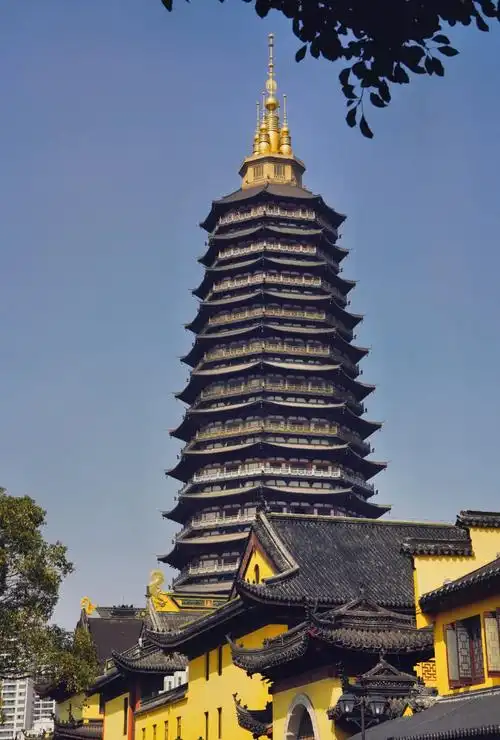
The current structures date to a major restoration during the Tongzhi reign (1862–1874), roughly contemporary with America's post-Civil War reconstruction era. The layout follows traditional Buddhist axial planning, with the Mountain Gate, Heavenly Kings Hall, and Great Hall of the Buddha arranged along a central spine—similar in logic to how medieval European cathedrals organized their naves. Red brick walls, sweeping eaves, intricate bracket sets, and faded polychrome beam paintings all reflect the standardized aesthetic of late imperial religious architecture, while subtle regional touches hint at Taizhou's position as a prosperous Grand Canal trading hub.
**Cultural Significance**
This sanctuary embodies a fascinating fusion of Buddhist doctrine and Confucian ethics, particularly through its name commemorating gratitude toward parents and ancestors. The Qing-era rebuilding coincided with the famous Southern Tours of emperors Kangxi and Qianlong, who passed through Taizhou and patronized local religious institutions. Stone steles, plaques, and ritual artifacts preserved here offer invaluable primary sources for researchers of Chinese religious history, regional identity, and the cultural exchanges that flourished along the Grand Canal—now a UNESCO World Heritage Site linking this temple to a vast network of historic waterways.
**Practical Visit Information**
Located in Taizhou's Hailing District old town, the temple operates as an active religious site and welcomes visitors free of charge throughout the year, with no ticket required. Be sure to navigate to "Taizhou Guangxiao Temple" to avoid confusion with the more famous Tianning Temples in Changzhou and Yangzhou. No formal guided tours are offered, and access may be restricted during major Buddhist ceremonies. Visitors should dress modestly, maintain a respectful silence, and refrain from photographing monks or ritual activities.
**Why Visit and Suggested Route**
Travelers seeking an unhurried encounter with authentic Chinese Buddhism will find this temple refreshingly free of commercial trappings. Allow 30 to 60 minutes for a contemplative stroll through the halls. The temple pairs beautifully with nearby attractions including the Meilánfàng Memorial Hall honoring the legendary Peking Opera artist, the panoramic Wanghai Tower, and the tranquil Rìshè Garden. For the best atmosphere, visit on weekday mornings or late afternoons when soft light bathes the courtyards and crowds thin out—conditions that allow the temple's ancient serenity to truly resonate.
**Historical Roots**
The temple's origins reach back to the Eastern Jin period, predating many famous European monasteries such as Monte Cassino in Italy. Its golden age came during the Northern Song, when Emperor Huizong bestowed the prestigious name "Tianning Wanshou Temple." After the catastrophic Jingkang Incident of 1127, when the Jurchen Jin captured the Song capital, Emperor Gaozong renamed it "Bao'en Guangxiao Chan Temple" in 1137, blending Buddhist devotion with Confucian filial piety. This remarkable lineage survived dynastic upheavals, the Mongol conquest, and the Manchu transition, making it a living testament to over 1,600 years of uninterrupted spiritual practice.
**Architecture**
The current structures date to a major restoration during the Tongzhi reign (1862–1874), roughly contemporary with America's post-Civil War reconstruction era. The layout follows traditional Buddhist axial planning, with the Mountain Gate, Heavenly Kings Hall, and Great Hall of the Buddha arranged along a central spine—similar in logic to how medieval European cathedrals organized their naves. Red brick walls, sweeping eaves, intricate bracket sets, and faded polychrome beam paintings all reflect the standardized aesthetic of late imperial religious architecture, while subtle regional touches hint at Taizhou's position as a prosperous Grand Canal trading hub.
**Cultural Significance**
This sanctuary embodies a fascinating fusion of Buddhist doctrine and Confucian ethics, particularly through its name commemorating gratitude toward parents and ancestors. The Qing-era rebuilding coincided with the famous Southern Tours of emperors Kangxi and Qianlong, who passed through Taizhou and patronized local religious institutions. Stone steles, plaques, and ritual artifacts preserved here offer invaluable primary sources for researchers of Chinese religious history, regional identity, and the cultural exchanges that flourished along the Grand Canal—now a UNESCO World Heritage Site linking this temple to a vast network of historic waterways.
**Practical Visit Information**
Located in Taizhou's Hailing District old town, the temple operates as an active religious site and welcomes visitors free of charge throughout the year, with no ticket required. Be sure to navigate to "Taizhou Guangxiao Temple" to avoid confusion with the more famous Tianning Temples in Changzhou and Yangzhou. No formal guided tours are offered, and access may be restricted during major Buddhist ceremonies. Visitors should dress modestly, maintain a respectful silence, and refrain from photographing monks or ritual activities.
**Why Visit and Suggested Route**
Travelers seeking an unhurried encounter with authentic Chinese Buddhism will find this temple refreshingly free of commercial trappings. Allow 30 to 60 minutes for a contemplative stroll through the halls. The temple pairs beautifully with nearby attractions including the Meilánfàng Memorial Hall honoring the legendary Peking Opera artist, the panoramic Wanghai Tower, and the tranquil Rìshè Garden. For the best atmosphere, visit on weekday mornings or late afternoons when soft light bathes the courtyards and crowds thin out—conditions that allow the temple's ancient serenity to truly resonate.