Hailing Wanghai Tower
⭐ 3.60
Hailing Wanghai Tower, Hailing District, Taizhou City, Jiangsu Province, China
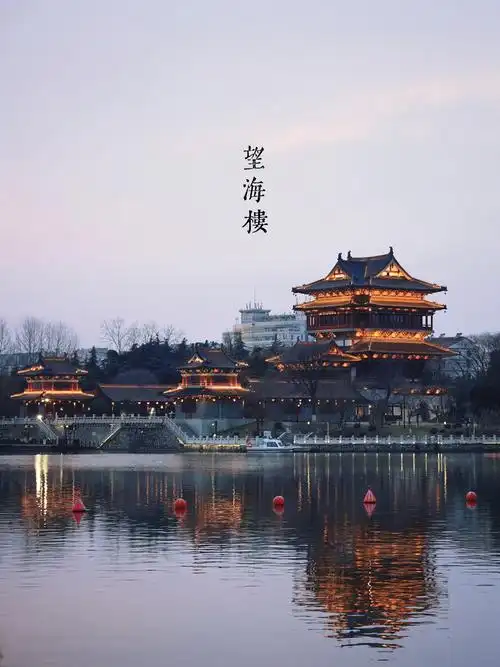 Far more than a mere scenic overlook, Wanghai Tower embodies Taizhou's enduring cultural ambition. First raised in 1229, when the Song Dynasty was defending its southern heartland against the Mongols, the tower took its poetic name—"embracing the river, facing the sea"—from a city lying far inland yet dreaming of maritime horizons. Think of it as the Chinese counterpart to a medieval European landmark that has been rebuilt several times across the centuries, each generation reaffirming its symbolic importance. The current structure, completed in the early 2000s, follows the precise proportions laid out in the Song-era building code known as Yingzao Fashi, the world's oldest surviving technical architectural manual.
Architecturally, the tower exemplifies the dignified elegance of Song design rather than the more flamboyant Qing style. Three tiers of encircling galleries lift the eye skyward beneath upturned eaves painted in chestnut brown and slate gray, a color palette reminiscent of weathered stone spires across medieval Europe. At 32 meters, the tower offers a complete 360-degree panorama of the Fengcheng River curving like a jade ribbon around the ancient walled city below—a view that has changed remarkably little in nearly eight centuries. The Wenhui Hall inside displays artifacts tracing Taizhou's literary and civic heritage, while the surrounding courtyard showcases the symbolic "Five Ministers Tree," commemorating statesmen who shaped Northern Song governance.
The tower's deeper significance lies in its celebration of Taizhou's Northern Song golden age, when the city produced an extraordinary concentration of scholar-officials who served the imperial court in Kaifeng. Most prominent among them was Fan Zhongyan (989–1052), the reform-minded minister whose famous declaration "worry before others, rejoice only after them" became a cornerstone of Confucian ethics—comparable in moral weight to the political philosophy of Cicero or the civic ideals of Pericles. A bronze statue of Fan stands on the grounds, alongside archaeological fragments of the original city walls, transforming the site into both a memorial hall and an open-air museum of regional identity.
Practical details make the visit straightforward. The tower sits at Dongnan Garden in Hailing District, the centerpiece of the 4A-rated Fengcheng River Scenic Area. It opens daily from 8:30 a.m. to 5:30 p.m., with adult admission around 30–40 yuan, frequently bundled into a combined ticket with the river cruise. Half-price or free entry applies to seniors, children, and students with valid ID. Public buses numbered 1, 9, 10, 22, and 301 stop directly at the Wanghai Tower station, and the site is easily reached by taxi from anywhere in central Taizhou. The tower itself requires only 30 to 60 minutes to explore fully.
The richest experience, however, comes from stitching the tower into a half- or full-day itinerary that captures Taizhou's layered character. Spend a late afternoon ascending the tower as golden light bathes the old rooftops, then wander through Taizhou Old Street's narrow lanes sampling Huangqiao sesame cakes, fragrant fish-soup noodles, and other local specialties. As dusk settles, board a traditional painted pleasure boat for the Fengcheng River night cruise, when illuminated bridges and waterfront pavilions transform the waterway into a stage of color and reflection. The combined journey reveals a water-bound city whose scholarly traditions and culinary pleasures have flowed as steadily as the river itself since the days of the Song emperors.
Far more than a mere scenic overlook, Wanghai Tower embodies Taizhou's enduring cultural ambition. First raised in 1229, when the Song Dynasty was defending its southern heartland against the Mongols, the tower took its poetic name—"embracing the river, facing the sea"—from a city lying far inland yet dreaming of maritime horizons. Think of it as the Chinese counterpart to a medieval European landmark that has been rebuilt several times across the centuries, each generation reaffirming its symbolic importance. The current structure, completed in the early 2000s, follows the precise proportions laid out in the Song-era building code known as Yingzao Fashi, the world's oldest surviving technical architectural manual.
Architecturally, the tower exemplifies the dignified elegance of Song design rather than the more flamboyant Qing style. Three tiers of encircling galleries lift the eye skyward beneath upturned eaves painted in chestnut brown and slate gray, a color palette reminiscent of weathered stone spires across medieval Europe. At 32 meters, the tower offers a complete 360-degree panorama of the Fengcheng River curving like a jade ribbon around the ancient walled city below—a view that has changed remarkably little in nearly eight centuries. The Wenhui Hall inside displays artifacts tracing Taizhou's literary and civic heritage, while the surrounding courtyard showcases the symbolic "Five Ministers Tree," commemorating statesmen who shaped Northern Song governance.
The tower's deeper significance lies in its celebration of Taizhou's Northern Song golden age, when the city produced an extraordinary concentration of scholar-officials who served the imperial court in Kaifeng. Most prominent among them was Fan Zhongyan (989–1052), the reform-minded minister whose famous declaration "worry before others, rejoice only after them" became a cornerstone of Confucian ethics—comparable in moral weight to the political philosophy of Cicero or the civic ideals of Pericles. A bronze statue of Fan stands on the grounds, alongside archaeological fragments of the original city walls, transforming the site into both a memorial hall and an open-air museum of regional identity.
Practical details make the visit straightforward. The tower sits at Dongnan Garden in Hailing District, the centerpiece of the 4A-rated Fengcheng River Scenic Area. It opens daily from 8:30 a.m. to 5:30 p.m., with adult admission around 30–40 yuan, frequently bundled into a combined ticket with the river cruise. Half-price or free entry applies to seniors, children, and students with valid ID. Public buses numbered 1, 9, 10, 22, and 301 stop directly at the Wanghai Tower station, and the site is easily reached by taxi from anywhere in central Taizhou. The tower itself requires only 30 to 60 minutes to explore fully.
The richest experience, however, comes from stitching the tower into a half- or full-day itinerary that captures Taizhou's layered character. Spend a late afternoon ascending the tower as golden light bathes the old rooftops, then wander through Taizhou Old Street's narrow lanes sampling Huangqiao sesame cakes, fragrant fish-soup noodles, and other local specialties. As dusk settles, board a traditional painted pleasure boat for the Fengcheng River night cruise, when illuminated bridges and waterfront pavilions transform the waterway into a stage of color and reflection. The combined journey reveals a water-bound city whose scholarly traditions and culinary pleasures have flowed as steadily as the river itself since the days of the Song emperors.