Culai Mountain Grand Canyon
⭐ 4.30
Daiyue District, Tai'an City, Shandong Province, China
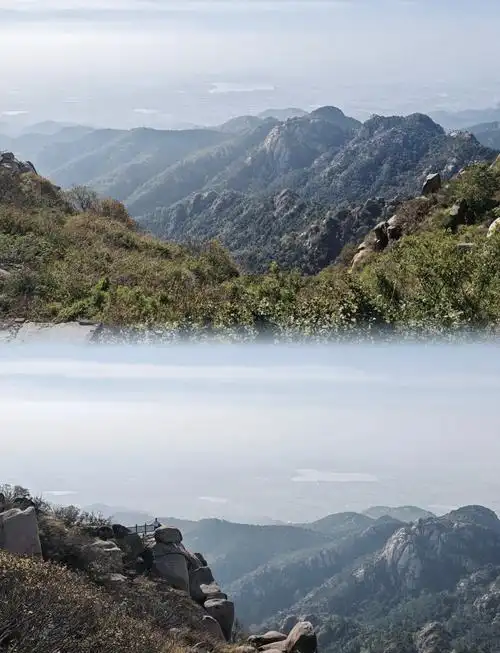 **A Hidden Gem Beneath Sacred Mount Tai**
Culaishan, anciently known as "Longlai" (Dragon's Return), has been celebrated for millennia as one of Shandong's most revered mountains, sitting on the sunlit southern flank of Mount Tai, a UNESCO World Heritage site and one of China's five sacred peaks. While Mount Tai draws millions of pilgrims each year, its lesser-known neighbor offers a wilder, more intimate encounter with nature. Think of it as China's answer to Spain's Garganta del Cares or Switzerland's Lauterbrunnen Valley, dramatic granite gorges carved by geological forces over hundreds of millions of years, where sheer cliffs plunge into jade-green pools fed by mountain springs that flow ceaselessly through all four seasons.
**The Trail and Its Natural Wonders**
The 4-kilometer pathway is a masterclass in landscape design by nature itself, threading through twenty-one bends and fourteen crystalline pools connected by tumbling waterfalls and strange, sculpted rock formations. In summer, the stream water stays refreshingly cool, inviting visitors to wade barefoot along the rocky bed beneath nearly continuous forest canopy, a rare escape from Shandong's sweltering plains. The vertical walls reach heights exceeding 130 meters in places, making the gorge feel cathedral-like in scale, with light filtering through the dense foliage above.
**Cultural Echoes of the Tang Dynasty**
Beyond its natural splendor, the canyon carries deep literary resonance. The legendary Tang Dynasty poet Li Bai, often called China's Byron, retreated to these very mountains seeking inspiration during his wandering years, leaving behind the bamboo-streambed ruins known as the Zhuxi site. Ancient pines, some over a thousand years old, stand sentinel throughout the valley. Climbing to the summit of Taiping Peak rewards visitors with sweeping vistas across the mountain range, a view known as "Culaishan Morning Radiance," celebrated by scholars and painters across the dynasties.
**Practical Route and Timing**
For the optimal experience, enter through the West Gate and drive the winding mountain road to Zhongjunzhang, the historic campsite at the canyon's heart. From there, hike past the ancient pines and Li Bai's bamboo-streambed ruins to Taiping Peak for panoramic views, then descend via the eastern gorge path to enjoy waterfalls and pools along the way, exiting through the East Gate. This one-way loop covers the canyon's highlights in three to four hours without backtracking.
**Visitor Tips and Insider Advice**
Arrive before 9 a.m. on a weekday to avoid weekend traffic on the narrow mountain roads; weekends see heavy self-drive congestion. Summer visitors should pack sturdy water shoes with good grip and a change of clothes for wading, while mobile signal can be unreliable in the deeper sections, so download offline maps beforehand. International travelers will benefit from translation apps paired with photo guides, especially to appreciate the Li Bai lore and ancient pine legends that transform a pleasant hike into a journey through two thousand years of Chinese literary and natural heritage.
**A Hidden Gem Beneath Sacred Mount Tai**
Culaishan, anciently known as "Longlai" (Dragon's Return), has been celebrated for millennia as one of Shandong's most revered mountains, sitting on the sunlit southern flank of Mount Tai, a UNESCO World Heritage site and one of China's five sacred peaks. While Mount Tai draws millions of pilgrims each year, its lesser-known neighbor offers a wilder, more intimate encounter with nature. Think of it as China's answer to Spain's Garganta del Cares or Switzerland's Lauterbrunnen Valley, dramatic granite gorges carved by geological forces over hundreds of millions of years, where sheer cliffs plunge into jade-green pools fed by mountain springs that flow ceaselessly through all four seasons.
**The Trail and Its Natural Wonders**
The 4-kilometer pathway is a masterclass in landscape design by nature itself, threading through twenty-one bends and fourteen crystalline pools connected by tumbling waterfalls and strange, sculpted rock formations. In summer, the stream water stays refreshingly cool, inviting visitors to wade barefoot along the rocky bed beneath nearly continuous forest canopy, a rare escape from Shandong's sweltering plains. The vertical walls reach heights exceeding 130 meters in places, making the gorge feel cathedral-like in scale, with light filtering through the dense foliage above.
**Cultural Echoes of the Tang Dynasty**
Beyond its natural splendor, the canyon carries deep literary resonance. The legendary Tang Dynasty poet Li Bai, often called China's Byron, retreated to these very mountains seeking inspiration during his wandering years, leaving behind the bamboo-streambed ruins known as the Zhuxi site. Ancient pines, some over a thousand years old, stand sentinel throughout the valley. Climbing to the summit of Taiping Peak rewards visitors with sweeping vistas across the mountain range, a view known as "Culaishan Morning Radiance," celebrated by scholars and painters across the dynasties.
**Practical Route and Timing**
For the optimal experience, enter through the West Gate and drive the winding mountain road to Zhongjunzhang, the historic campsite at the canyon's heart. From there, hike past the ancient pines and Li Bai's bamboo-streambed ruins to Taiping Peak for panoramic views, then descend via the eastern gorge path to enjoy waterfalls and pools along the way, exiting through the East Gate. This one-way loop covers the canyon's highlights in three to four hours without backtracking.
**Visitor Tips and Insider Advice**
Arrive before 9 a.m. on a weekday to avoid weekend traffic on the narrow mountain roads; weekends see heavy self-drive congestion. Summer visitors should pack sturdy water shoes with good grip and a change of clothes for wading, while mobile signal can be unreliable in the deeper sections, so download offline maps beforehand. International travelers will benefit from translation apps paired with photo guides, especially to appreciate the Li Bai lore and ancient pine legends that transform a pleasant hike into a journey through two thousand years of Chinese literary and natural heritage.