Mount Tai Culture Museum
⭐ 3.80
No. 155, Daizong Street, Taishan District, Tai'an City, Shandong Province, China
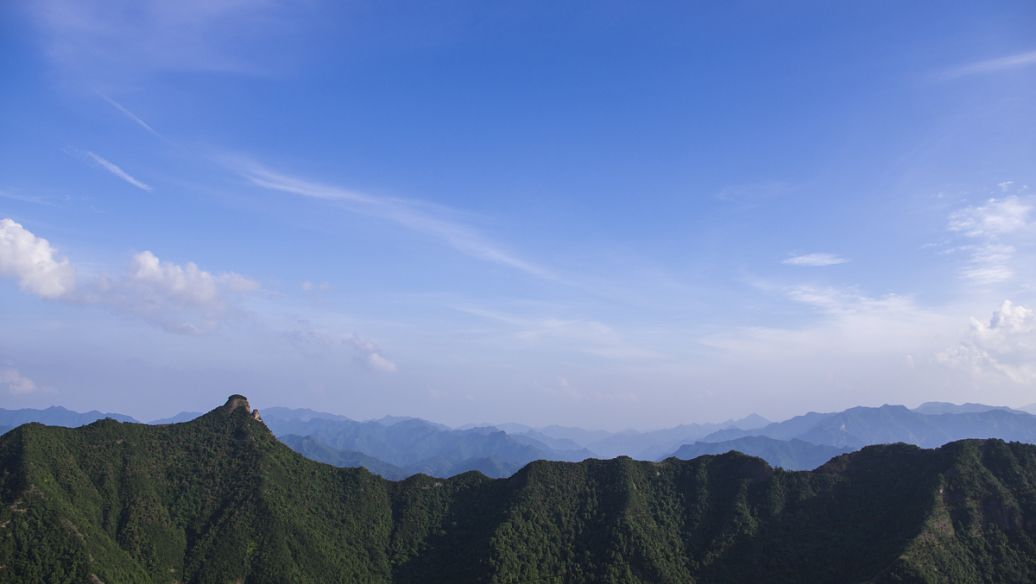 Tai'an exists in the long shadow of Mount Tai, China's most venerated sacred mountain. Inscribed as a UNESCO World Heritage Site in 1987, Mount Tai has drawn pilgrims, poets, and emperors for over three thousand years. Emperor Qin Shi Huang himself scaled its slopes in 219 BC to perform sacred rites, much as ancient Greeks climbed Mount Parnassus to consult the oracle at Delphi. This profound spiritual resonance infuses every exhibit at the cultural center, which serves as the modern interpreter of traditions born at the mountain's base.
Designated a National First-Class Cultural Center in 2021, the facility occupies the Tai'an Cultural Arts Center on Wangyue East Road, a modern architectural ensemble whose minimalist lines and dramatic lighting rival the visual sophistication of Stockholm's Kulturhuset or London's Barbican Centre. Inside, curators have crafted immersive spaces—including the Intangible Cultural Heritage Hall, Rural Memory Museum, and a high-tech interactive zone—that invite quiet contemplation without overwhelming visitors unfamiliar with Chinese cultural forms.
The Intangible Cultural Heritage Hall forms the heart of the museum, bringing to life crafts that echo practices found across the ancient Silk Road. Visitors encounter Taishan paper-cutting, whose bold symmetrical designs recall the folk traditions of Eastern European pysanky eggs; shadow puppetry, a storytelling art inscribed on UNESCO's Representative List of the Intangible Cultural Heritage of Humanity in 2009; peach wood carving; and the ancient craft of black pottery firing. Each display combines narrative panels with live demonstrations, allowing visitors to witness master artisans at work—much like watching glassblowers at Murano.
A short stroll leads to the Rural Memory Museum, a treasure trove of over one thousand everyday artifacts that recreate the textures of traditional life beneath Mount Tai. Rustic farming implements, embroidered textiles, and household objects are arranged in atmospheric tableaux reminiscent of open-air folk museums in Scandinavia or the Basque Country. This collection provides a tangible bridge between China's agrarian past and its rapidly modernizing present, offering Western visitors an authentic window into a vanishing world.
Admission is entirely free, with doors open Tuesday through Sunday from 9:00 to 17:00 (closed Mondays for maintenance). Some special workshops and exhibitions require advance booking through the center's official WeChat account. Photography is permitted, but flash is prohibited and touching exhibits is strictly forbidden. Visitors should navigate to "Tai'an Cultural Arts Center" or Wangyue East Road 9 to avoid confusion with the separate Tanshan District Cultural Center on Tangwang Street. For meals, the adjacent Wuyue Plaza shopping complex offers a wide range of restaurants.
Beyond its static collections, the center pulses with activity: weekend "Tai Hao Ting" music sessions fill the halls with live performance, while hands-on workshops in rubbings and weaving invite visitors to become makers rather than mere observers. For travelers seeking to understand why Mount Tai has commanded devotion since the Bronze Age, the Tai'an Cultural Center provides the essential cultural context—transforming a mountain pilgrimage into a deeper journey through Chinese civilization itself.
Tai'an exists in the long shadow of Mount Tai, China's most venerated sacred mountain. Inscribed as a UNESCO World Heritage Site in 1987, Mount Tai has drawn pilgrims, poets, and emperors for over three thousand years. Emperor Qin Shi Huang himself scaled its slopes in 219 BC to perform sacred rites, much as ancient Greeks climbed Mount Parnassus to consult the oracle at Delphi. This profound spiritual resonance infuses every exhibit at the cultural center, which serves as the modern interpreter of traditions born at the mountain's base.
Designated a National First-Class Cultural Center in 2021, the facility occupies the Tai'an Cultural Arts Center on Wangyue East Road, a modern architectural ensemble whose minimalist lines and dramatic lighting rival the visual sophistication of Stockholm's Kulturhuset or London's Barbican Centre. Inside, curators have crafted immersive spaces—including the Intangible Cultural Heritage Hall, Rural Memory Museum, and a high-tech interactive zone—that invite quiet contemplation without overwhelming visitors unfamiliar with Chinese cultural forms.
The Intangible Cultural Heritage Hall forms the heart of the museum, bringing to life crafts that echo practices found across the ancient Silk Road. Visitors encounter Taishan paper-cutting, whose bold symmetrical designs recall the folk traditions of Eastern European pysanky eggs; shadow puppetry, a storytelling art inscribed on UNESCO's Representative List of the Intangible Cultural Heritage of Humanity in 2009; peach wood carving; and the ancient craft of black pottery firing. Each display combines narrative panels with live demonstrations, allowing visitors to witness master artisans at work—much like watching glassblowers at Murano.
A short stroll leads to the Rural Memory Museum, a treasure trove of over one thousand everyday artifacts that recreate the textures of traditional life beneath Mount Tai. Rustic farming implements, embroidered textiles, and household objects are arranged in atmospheric tableaux reminiscent of open-air folk museums in Scandinavia or the Basque Country. This collection provides a tangible bridge between China's agrarian past and its rapidly modernizing present, offering Western visitors an authentic window into a vanishing world.
Admission is entirely free, with doors open Tuesday through Sunday from 9:00 to 17:00 (closed Mondays for maintenance). Some special workshops and exhibitions require advance booking through the center's official WeChat account. Photography is permitted, but flash is prohibited and touching exhibits is strictly forbidden. Visitors should navigate to "Tai'an Cultural Arts Center" or Wangyue East Road 9 to avoid confusion with the separate Tanshan District Cultural Center on Tangwang Street. For meals, the adjacent Wuyue Plaza shopping complex offers a wide range of restaurants.
Beyond its static collections, the center pulses with activity: weekend "Tai Hao Ting" music sessions fill the halls with live performance, while hands-on workshops in rubbings and weaving invite visitors to become makers rather than mere observers. For travelers seeking to understand why Mount Tai has commanded devotion since the Bronze Age, the Tai'an Cultural Center provides the essential cultural context—transforming a mountain pilgrimage into a deeper journey through Chinese civilization itself.