Tai'an Museum
⭐ 4.20
No. 1, Qingnian Road, Taishan District, Tai'an City, Shandong Province, China
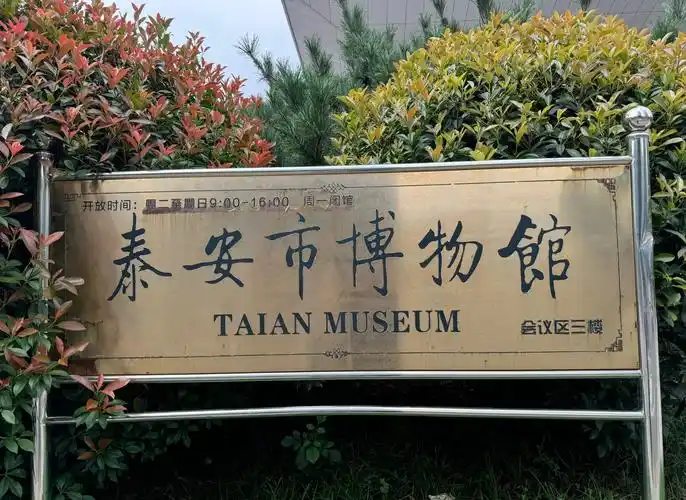 The Dai Temple complex predates most European cathedrals, with origins reaching back to the Western Han dynasty (206 BCE–220 CE), when emperors first formalized feng shan rituals, mountain-summit sacrifices blending cosmic order with political legitimacy. Comparable in spiritual function to Delphi or the pilgrim routes to Mount Olympus, the temple served as the imperial entryway to Mount Tai, China's most sacred peak, for over two millennia. In 1988, it earned designation as a National Key Cultural Relic Protection Unit, ranking alongside the Forbidden City and Confucius Temple among China's four greatest surviving architectural complexes.
Sprawling across 100,000 square meters, the temple unfolds along a north-south central axis reminiscent of a grand basilica or imperial Roman processional way. Visitors pass through the Daizong Archway, Yaocan Pavilion, Zhengyang Gate, and Peitian Gate before reaching the magnificent Tiangong Hall, a Song Dynasty masterpiece crowned by the rare double-eaved hip roof. The hall's mural, 3 meters high and 62 meters long, is China's sole surviving example of this imperial iconography, offering an immersive experience akin to walking through a medieval tapestry cycle rendered in vivid mineral pigments.
Beyond the celebrated mural, the collection holds over 20,800 artifacts, including 139 first-grade relics: Han Dynasty stone reliefs, imperial steles bearing calligraphy from successive dynasties, and ritual bronze vessels used in actual feng shan ceremonies. Surviving Han-era cypresses and Tang-period scholar trees stand alongside stone-carved corridors, while the tranquil Yuhua Daoist Academy preserves the contemplative atmosphere of classical Chinese religious practice. Together these elements illustrate how mountain worship, imperial authority, and Confucian ritual converged in Chinese civilization, a synthesis without direct Western parallel.
Located at 191 Dongyue Street in Taishan District, the museum is open year-round, with extended hours (8:00–18:00, last entry 17:30) during August's peak season. Admission is bundled with Dai Temple tickets, typically 30–40 yuan depending on season. English audio guides can be rented on-site, or licensed English-speaking docents booked in advance; passports are required for ticket purchase. Plan two to three hours and avoid weekends, when domestic tour groups crowd the halls.
Arrive between 9:00 and 11:00, when soft morning light illuminates the murals and crowds thin out. Photography is restricted inside the main halls; no flash and no tripods, so absorb the atmosphere rather than capture it. Insist on the official audio guide; without it, the symbolism embedded in steles and architectural details remains opaque. Remember the traditional pilgrim's rhythm: "temple first, mountain second." Skipping Dai Temple means missing the cultural key that unlocks Mount Tai's deeper meaning, and a striking new Mount Tai Museum is scheduled to open by 2027, lending today's visit a distinctive, transitional character.
The Dai Temple complex predates most European cathedrals, with origins reaching back to the Western Han dynasty (206 BCE–220 CE), when emperors first formalized feng shan rituals, mountain-summit sacrifices blending cosmic order with political legitimacy. Comparable in spiritual function to Delphi or the pilgrim routes to Mount Olympus, the temple served as the imperial entryway to Mount Tai, China's most sacred peak, for over two millennia. In 1988, it earned designation as a National Key Cultural Relic Protection Unit, ranking alongside the Forbidden City and Confucius Temple among China's four greatest surviving architectural complexes.
Sprawling across 100,000 square meters, the temple unfolds along a north-south central axis reminiscent of a grand basilica or imperial Roman processional way. Visitors pass through the Daizong Archway, Yaocan Pavilion, Zhengyang Gate, and Peitian Gate before reaching the magnificent Tiangong Hall, a Song Dynasty masterpiece crowned by the rare double-eaved hip roof. The hall's mural, 3 meters high and 62 meters long, is China's sole surviving example of this imperial iconography, offering an immersive experience akin to walking through a medieval tapestry cycle rendered in vivid mineral pigments.
Beyond the celebrated mural, the collection holds over 20,800 artifacts, including 139 first-grade relics: Han Dynasty stone reliefs, imperial steles bearing calligraphy from successive dynasties, and ritual bronze vessels used in actual feng shan ceremonies. Surviving Han-era cypresses and Tang-period scholar trees stand alongside stone-carved corridors, while the tranquil Yuhua Daoist Academy preserves the contemplative atmosphere of classical Chinese religious practice. Together these elements illustrate how mountain worship, imperial authority, and Confucian ritual converged in Chinese civilization, a synthesis without direct Western parallel.
Located at 191 Dongyue Street in Taishan District, the museum is open year-round, with extended hours (8:00–18:00, last entry 17:30) during August's peak season. Admission is bundled with Dai Temple tickets, typically 30–40 yuan depending on season. English audio guides can be rented on-site, or licensed English-speaking docents booked in advance; passports are required for ticket purchase. Plan two to three hours and avoid weekends, when domestic tour groups crowd the halls.
Arrive between 9:00 and 11:00, when soft morning light illuminates the murals and crowds thin out. Photography is restricted inside the main halls; no flash and no tripods, so absorb the atmosphere rather than capture it. Insist on the official audio guide; without it, the symbolism embedded in steles and architectural details remains opaque. Remember the traditional pilgrim's rhythm: "temple first, mountain second." Skipping Dai Temple means missing the cultural key that unlocks Mount Tai's deeper meaning, and a striking new Mount Tai Museum is scheduled to open by 2027, lending today's visit a distinctive, transitional character.