Mount Culai
⭐ 4.20
Culai Mountain National Forest Park, Taishan District, Tai'an City, Shandong Province, China
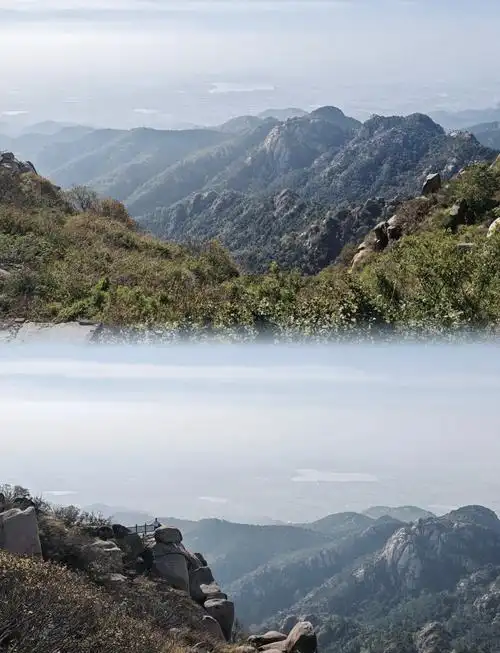 Culai Mountain stretches roughly thirty kilometers east-to-west and fifteen kilometers north-to-south as a southern spur of the Mount Tai range in Shandong Province. Geologically, it belongs to the same Archean metamorphic basement that shaped much of the North China Craton, with granite intrusions carved by tectonic uplift into the classic fault-block ridges, plunging waterfalls, and deep pools that typify this corner of China. At 1,028 meters, the main summit, Taiping Peak, is dwarfed by the Alps but mirrors the rugged profile of Scottish or Welsh highlands, while its elevation is enough to keep summer temperatures three to five degrees cooler than the Tai'an basin below.
The mountain's cultural pedigree runs deep. During the High Tang dynasty in the eighth century—roughly contemporary with Charlemagne's reign in Europe—the poet Li Bai, Du Fu, and four companions withdrew here to live as recluses along Bamboo Creek, a circle known as the "Six Eremites" that became a touchstone of Chinese literary romanticism. More than a millennium later, in 1938, communist guerrillas launched Shandong's first armed resistance against the Japanese invasion from these very slopes, an event parallel to partisan uprisings in occupied Europe, commemorated today by a stone monument erected in 1988.
Architecturally, the surviving gem is Guanghua Temple, a Buddhist monastery tucked into the wooded flanks whose origins stretch back roughly a thousand years. Stone inscriptions and stelae on the Wangyue Terrace—"Terrace for Viewing the Peak"—record centuries of pilgrimages by poets and officials drawn to the famous "Culai Sunset," one of the eight celebrated scenes of old Tai'an. Together with the uprising monument and scattered Tang and Song dynasty carvings, the mountain offers a layered cultural walk that pairs easily with, yet feels refreshingly apart from, the grander imperial complexes of Mount Tai just to the northwest.
For natural scenery, the recommended half-day route enters through the West Gate, passes the uprising monument, climbs past the knife-edged Qiuqianjia Peak, threads through the primitive botanical reserve of Zhongjunzhang with its rare relict plant communities, and culminates on Taiping Peak, where the panoramic sweep takes in Mount Tai's silhouette and the broad Wen River plain below. Seasonal highlights include late-spring locust blossoms and autumn chestnuts gathered from forest groves; in summer, the dense canopy—a "natural oxygen bar" with over 90 percent forest coverage—offers the area's most appealing draw, while winter brings leafless slopes and occasional road closures.
Practically speaking, the park operates to national AAAA standards, opening 08:00 to 17:00 with last entry at 16:30. Tickets run around 38–40 RMB, with free entry for seniors, children, and military personnel. Public buses are infrequent and the last return service leaves early, so driving is strongly advised—though visitors should note that several mountain roads are narrow and signage is sometimes sparse, so a navigation app is essential. Bring your own water and snacks as on-mountain food options are limited. A full loop takes four to six hours, while those wanting depth should plan an overnight stay.
The mountain's base is anchored by the Culai Hot Spring Resort, where the mineral-rich "Qianfeng Soup" soothes tired legs at day's end—a welcome echo of European spa traditions such as those of Baden-Baden or the Belgian Ardennes. Nearby, the Wen River Wetland Park and the Han-style Hanbo Garden can be linked into a leisurely two-day itinerary. Best visited from April through October for greenery, flowers, or autumn foliage, Culai Mountain rewards travelers who want Mount Tai's spiritual and geological seriousness without its crowds, at a fraction of the cost and effort.
Culai Mountain stretches roughly thirty kilometers east-to-west and fifteen kilometers north-to-south as a southern spur of the Mount Tai range in Shandong Province. Geologically, it belongs to the same Archean metamorphic basement that shaped much of the North China Craton, with granite intrusions carved by tectonic uplift into the classic fault-block ridges, plunging waterfalls, and deep pools that typify this corner of China. At 1,028 meters, the main summit, Taiping Peak, is dwarfed by the Alps but mirrors the rugged profile of Scottish or Welsh highlands, while its elevation is enough to keep summer temperatures three to five degrees cooler than the Tai'an basin below.
The mountain's cultural pedigree runs deep. During the High Tang dynasty in the eighth century—roughly contemporary with Charlemagne's reign in Europe—the poet Li Bai, Du Fu, and four companions withdrew here to live as recluses along Bamboo Creek, a circle known as the "Six Eremites" that became a touchstone of Chinese literary romanticism. More than a millennium later, in 1938, communist guerrillas launched Shandong's first armed resistance against the Japanese invasion from these very slopes, an event parallel to partisan uprisings in occupied Europe, commemorated today by a stone monument erected in 1988.
Architecturally, the surviving gem is Guanghua Temple, a Buddhist monastery tucked into the wooded flanks whose origins stretch back roughly a thousand years. Stone inscriptions and stelae on the Wangyue Terrace—"Terrace for Viewing the Peak"—record centuries of pilgrimages by poets and officials drawn to the famous "Culai Sunset," one of the eight celebrated scenes of old Tai'an. Together with the uprising monument and scattered Tang and Song dynasty carvings, the mountain offers a layered cultural walk that pairs easily with, yet feels refreshingly apart from, the grander imperial complexes of Mount Tai just to the northwest.
For natural scenery, the recommended half-day route enters through the West Gate, passes the uprising monument, climbs past the knife-edged Qiuqianjia Peak, threads through the primitive botanical reserve of Zhongjunzhang with its rare relict plant communities, and culminates on Taiping Peak, where the panoramic sweep takes in Mount Tai's silhouette and the broad Wen River plain below. Seasonal highlights include late-spring locust blossoms and autumn chestnuts gathered from forest groves; in summer, the dense canopy—a "natural oxygen bar" with over 90 percent forest coverage—offers the area's most appealing draw, while winter brings leafless slopes and occasional road closures.
Practically speaking, the park operates to national AAAA standards, opening 08:00 to 17:00 with last entry at 16:30. Tickets run around 38–40 RMB, with free entry for seniors, children, and military personnel. Public buses are infrequent and the last return service leaves early, so driving is strongly advised—though visitors should note that several mountain roads are narrow and signage is sometimes sparse, so a navigation app is essential. Bring your own water and snacks as on-mountain food options are limited. A full loop takes four to six hours, while those wanting depth should plan an overnight stay.
The mountain's base is anchored by the Culai Hot Spring Resort, where the mineral-rich "Qianfeng Soup" soothes tired legs at day's end—a welcome echo of European spa traditions such as those of Baden-Baden or the Belgian Ardennes. Nearby, the Wen River Wetland Park and the Han-style Hanbo Garden can be linked into a leisurely two-day itinerary. Best visited from April through October for greenery, flowers, or autumn foliage, Culai Mountain rewards travelers who want Mount Tai's spiritual and geological seriousness without its crowds, at a fraction of the cost and effort.