Bixia Temple
⭐ 4.70
Bixia Temple, Mount Tai Scenic Area, Taishan District, Tai'an City, Shandong Province, China
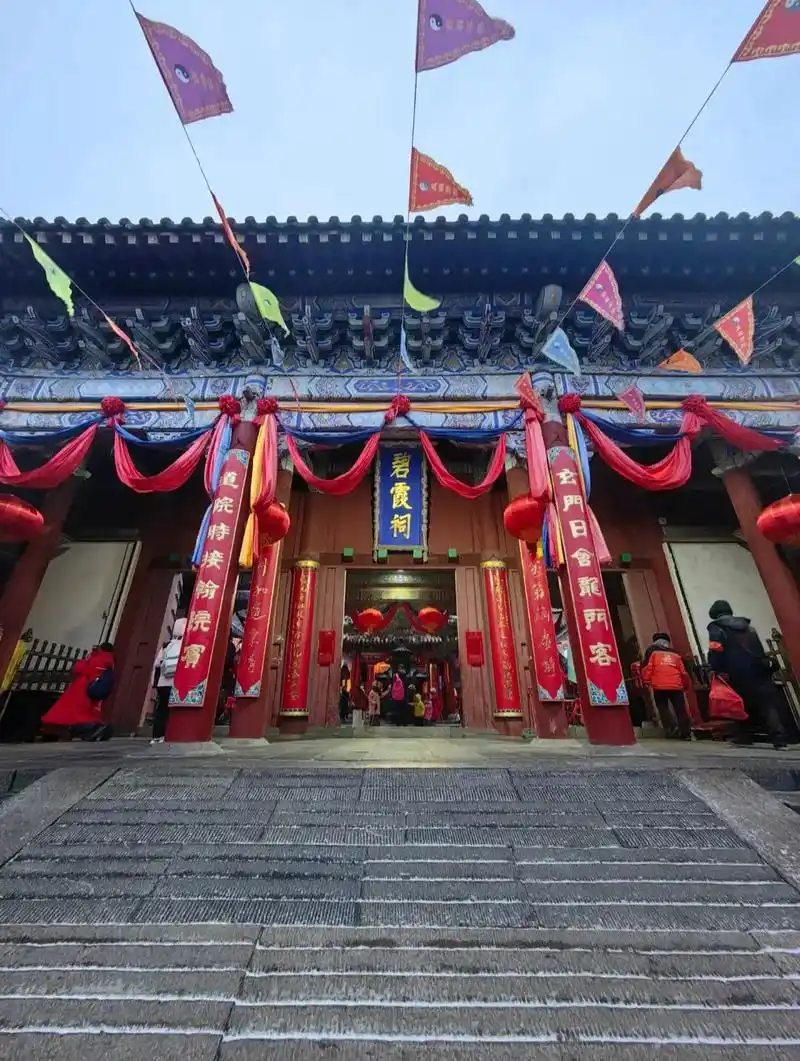 When Bixia Temple was consecrated in 1009 AD, Western Europe was still in its early medieval period—roughly contemporary with the great Romanesque abbeys of Burgundy rising in France. While Canterbury Cathedral had not yet been rebuilt and Notre-Dame de Paris lay two centuries in the future, China already possessed a flourishing tradition of imperial mountain pilgrimage centred on Mount Tai. Originally named "Zhaozhen Shrine," the temple was rebuilt and expanded through the Jin, Ming, and Qing dynasties. Most surviving structures date to the Qing era, yet the site has hosted continuous worship for over a millennium, making it one of the longest-running religious complexes anywhere in East Asia.
The complex's architectural crown is the Main Hall's copper-tiled roof, whose 360 ridges catch the high-altitude sun in dazzling waves—an effect faintly reminiscent of the gilded domes of Russian Orthodox cathedrals, though restrained in classical Chinese taste. Twelve buildings align along a strict north-south axis: the South Divine Gate, Music and Dance Tower, Bell and Drum Towers, Incense Pavilion, Main Hall, and flanking shrines to the goddess's attendants. Inside stand two Ming-era gilded bronze stelae and a copper pavilion—collectively known as the "Three Bronzes"—prized as masterpieces of metalwork. The luminous symmetry of the layout gives the compound its "Celestial Palace Above the Clouds" character.
Bixia Yuanjun, known to ordinary worshippers as "Grandma of Mount Tai," is one of northern China's most beloved female deities. She is invoked by couples praying for children, mothers seeking protection, and travellers asking for safe descent from the mountain's perilous paths. Imperial patronage matched the folk devotion: Qing emperors Yongzheng and Qianlong presented plaques still hanging in the hall, inscribed "Blessings Spreading Across the Realm" and "Assisting the Eastern Sovereign." This fusion of folk piety and state ritual—a pattern comparable to medieval European Marian devotion at shrines such as Montserrat—makes the temple a unique window into how sacred geography functioned in imperial China.
Admission is included in the Mount Tai entrance ticket (115 RMB, roughly US$16); no separate fee is required. From Tianjie Street at the summit, the temple is a 10–15 minute walk east. Allow 60–90 minutes for a relaxed visit; morning hours offer the best light on the copper roof and the thinnest crowds. Foreign visitors must reserve through the official "Mount Tai Scenic Area" WeChat account in advance and present their original passport at the manual gate. Strict rules apply inside: no photography or video, never point at the statues, and enter respectfully through the side doors. Free incense is available, but politely decline any vendor quoting suspiciously high prices.
Climbing Mount Tai is one of China's classic pilgrimages—Confucius himself made the ascent—and no visit to the summit feels complete without entering Bixia Temple. Few sanctuaries on earth combine such an extreme setting at 1,545 metres with imperial-scale architecture and a living faith spanning ten centuries. Pair the temple with nearby Jade Emperor Peak, the true summit, and Zhanlu Terrace, where the vast North China Plain stretches to the horizon. When sunrise sets the sea of clouds rolling beneath you and the copper roof ignites in gold, it is easy to understand why emperors and peasants alike long regarded this as the closest place on earth to heaven.
When Bixia Temple was consecrated in 1009 AD, Western Europe was still in its early medieval period—roughly contemporary with the great Romanesque abbeys of Burgundy rising in France. While Canterbury Cathedral had not yet been rebuilt and Notre-Dame de Paris lay two centuries in the future, China already possessed a flourishing tradition of imperial mountain pilgrimage centred on Mount Tai. Originally named "Zhaozhen Shrine," the temple was rebuilt and expanded through the Jin, Ming, and Qing dynasties. Most surviving structures date to the Qing era, yet the site has hosted continuous worship for over a millennium, making it one of the longest-running religious complexes anywhere in East Asia.
The complex's architectural crown is the Main Hall's copper-tiled roof, whose 360 ridges catch the high-altitude sun in dazzling waves—an effect faintly reminiscent of the gilded domes of Russian Orthodox cathedrals, though restrained in classical Chinese taste. Twelve buildings align along a strict north-south axis: the South Divine Gate, Music and Dance Tower, Bell and Drum Towers, Incense Pavilion, Main Hall, and flanking shrines to the goddess's attendants. Inside stand two Ming-era gilded bronze stelae and a copper pavilion—collectively known as the "Three Bronzes"—prized as masterpieces of metalwork. The luminous symmetry of the layout gives the compound its "Celestial Palace Above the Clouds" character.
Bixia Yuanjun, known to ordinary worshippers as "Grandma of Mount Tai," is one of northern China's most beloved female deities. She is invoked by couples praying for children, mothers seeking protection, and travellers asking for safe descent from the mountain's perilous paths. Imperial patronage matched the folk devotion: Qing emperors Yongzheng and Qianlong presented plaques still hanging in the hall, inscribed "Blessings Spreading Across the Realm" and "Assisting the Eastern Sovereign." This fusion of folk piety and state ritual—a pattern comparable to medieval European Marian devotion at shrines such as Montserrat—makes the temple a unique window into how sacred geography functioned in imperial China.
Admission is included in the Mount Tai entrance ticket (115 RMB, roughly US$16); no separate fee is required. From Tianjie Street at the summit, the temple is a 10–15 minute walk east. Allow 60–90 minutes for a relaxed visit; morning hours offer the best light on the copper roof and the thinnest crowds. Foreign visitors must reserve through the official "Mount Tai Scenic Area" WeChat account in advance and present their original passport at the manual gate. Strict rules apply inside: no photography or video, never point at the statues, and enter respectfully through the side doors. Free incense is available, but politely decline any vendor quoting suspiciously high prices.
Climbing Mount Tai is one of China's classic pilgrimages—Confucius himself made the ascent—and no visit to the summit feels complete without entering Bixia Temple. Few sanctuaries on earth combine such an extreme setting at 1,545 metres with imperial-scale architecture and a living faith spanning ten centuries. Pair the temple with nearby Jade Emperor Peak, the true summit, and Zhanlu Terrace, where the vast North China Plain stretches to the horizon. When sunrise sets the sea of clouds rolling beneath you and the copper roof ignites in gold, it is easy to understand why emperors and peasants alike long regarded this as the closest place on earth to heaven.