Yongning Ancient City
⭐ 3.80
Yongning Ancient City, Yongning Town, Hui'an County, Quanzhou City, Fujian Province, China
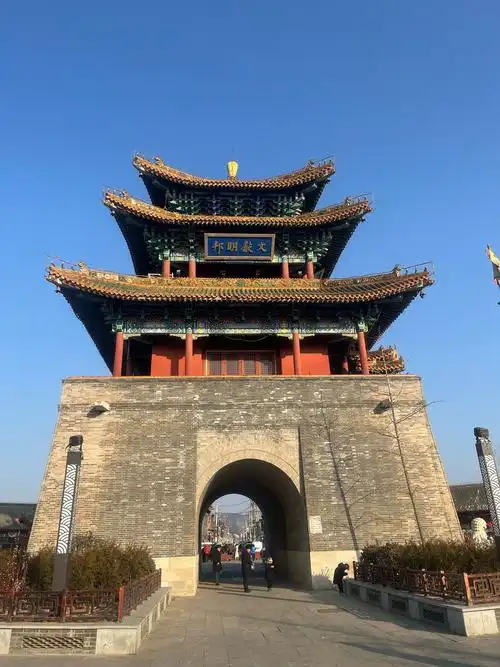 Yongning Ancient Garrison City traces its origins to 1387, when the Ming court erected it as a frontline stronghold against Japanese pirates along Fujian's turbulent coast. At its peak, more than 10,000 troops were garrisoned here, earning it a place among China's "Three Great Wei Cities" alongside Tianjin to the north and Weihai on the Shandong peninsula. Built during the same era that produced Europe's late-medieval fortified ports like Rhodes or Dubrovnik, Yongning's weathered granite ramparts, surviving gate passages, and horse-face defensive bastions still hint at the military might that once guarded this stretch of the South China Sea.
The architecture is where Yongning truly dazzles. The classic Minnan red-brick courtyard homes, with their swallowtail roof ridges and intricate cut-and-paste ceramic decorations, form a regional style sometimes likened to a southern Chinese cousin of the gabled brick houses of the Low Countries. Strikingly intermixed are the "banzailou" or "foreign-style buildings"—grand mansions erected by overseas Chinese who made fortunes in Southeast Asia and returned home to flaunt their success. These blend Western Roman columns, ornate plasterwork, and Art Nouveau flourishes with traditional Minnan craftsmanship, echoing the hybrid elegance of Macau's Portuguese-era façades.
Yongning's old street, designated a National Historic Cultural Street, follows a classic "one vertical, three horizontal" layout threading through ancestral halls marked with lineage plaques such as "Yingchuan Branch." Scattered curiosities like the half-moon communal wells punctuate lanes where shrines to the City God, deities of wealth, and the legendary sea-calming stone reveal a folk religious tapestry stretching back centuries. Authentic local life flourishes here: tinsmiths, corner grocery stores, and laundry drying above cobbled lanes create a tableau far removed from the polished commercial reconstructions common elsewhere in China.
Practicalities are refreshingly simple. The town is free, open around the clock, and requires no reservation. Most visitors enter through the East Gate tower and meander two to three hours down Yongning Old Street, past the City God Temple and the cluster of banzailou mansions. Local snacks are exceptional: try four-fruit soup with shaved ice, pan-fried meat buns, sea worm jelly (a Fujian delicacy), vermicelli congee, and sticky rice dumplings from long-standing family kitchens. The nearby ten-li Golden Coast beach and the sea-bound Luojia Temple make it easy to combine a half-day cultural visit with a scenic coastal afternoon.
The best times to visit are early morning or late afternoon to avoid the subtropical heat; sturdy shoes are essential for the uneven stone pavements. Facilities are deliberately modest—no boutique hotels or designer coffee shops here—which is precisely the point. Bring water and snacks, ask permission before photographing residents, and observe decorum at the temples. Just a short drive from Quanzhou's UNESCO-listed historic center, Yongning rewards travelers seeking the kind of unvarnished, lived-in authenticity that has earned it the poetic nickname "half city of mortal烟火, half city of immortal仙"—a place where everyday life and centuries-old traditions coexist in quiet harmony.
Yongning Ancient Garrison City traces its origins to 1387, when the Ming court erected it as a frontline stronghold against Japanese pirates along Fujian's turbulent coast. At its peak, more than 10,000 troops were garrisoned here, earning it a place among China's "Three Great Wei Cities" alongside Tianjin to the north and Weihai on the Shandong peninsula. Built during the same era that produced Europe's late-medieval fortified ports like Rhodes or Dubrovnik, Yongning's weathered granite ramparts, surviving gate passages, and horse-face defensive bastions still hint at the military might that once guarded this stretch of the South China Sea.
The architecture is where Yongning truly dazzles. The classic Minnan red-brick courtyard homes, with their swallowtail roof ridges and intricate cut-and-paste ceramic decorations, form a regional style sometimes likened to a southern Chinese cousin of the gabled brick houses of the Low Countries. Strikingly intermixed are the "banzailou" or "foreign-style buildings"—grand mansions erected by overseas Chinese who made fortunes in Southeast Asia and returned home to flaunt their success. These blend Western Roman columns, ornate plasterwork, and Art Nouveau flourishes with traditional Minnan craftsmanship, echoing the hybrid elegance of Macau's Portuguese-era façades.
Yongning's old street, designated a National Historic Cultural Street, follows a classic "one vertical, three horizontal" layout threading through ancestral halls marked with lineage plaques such as "Yingchuan Branch." Scattered curiosities like the half-moon communal wells punctuate lanes where shrines to the City God, deities of wealth, and the legendary sea-calming stone reveal a folk religious tapestry stretching back centuries. Authentic local life flourishes here: tinsmiths, corner grocery stores, and laundry drying above cobbled lanes create a tableau far removed from the polished commercial reconstructions common elsewhere in China.
Practicalities are refreshingly simple. The town is free, open around the clock, and requires no reservation. Most visitors enter through the East Gate tower and meander two to three hours down Yongning Old Street, past the City God Temple and the cluster of banzailou mansions. Local snacks are exceptional: try four-fruit soup with shaved ice, pan-fried meat buns, sea worm jelly (a Fujian delicacy), vermicelli congee, and sticky rice dumplings from long-standing family kitchens. The nearby ten-li Golden Coast beach and the sea-bound Luojia Temple make it easy to combine a half-day cultural visit with a scenic coastal afternoon.
The best times to visit are early morning or late afternoon to avoid the subtropical heat; sturdy shoes are essential for the uneven stone pavements. Facilities are deliberately modest—no boutique hotels or designer coffee shops here—which is precisely the point. Bring water and snacks, ask permission before photographing residents, and observe decorum at the temples. Just a short drive from Quanzhou's UNESCO-listed historic center, Yongning rewards travelers seeking the kind of unvarnished, lived-in authenticity that has earned it the poetic nickname "half city of mortal烟火, half city of immortal仙"—a place where everyday life and centuries-old traditions coexist in quiet harmony.