Bayi Park
⭐ 3.50
Bayi Park, Tianshan District, Urumqi, Xinjiang Uygur Autonomous Region, China
 The park's origins lie in one of modern China's most ambitious grassroots greening campaigns. In 1956, at the height of the Cold War and just seven years after Xinjiang's peaceful incorporation into the People's Republic, People's Liberation Army troops stationed in the arid Urumqi basin voluntarily set about transforming barren scrubland into a public garden. They planted saplings, dug the central lake by hand, and heaped earth into gentle hills—a collective effort that mirrored wartime victory gardens across Europe and the Soviet Union. That volunteer legacy makes Bayi not merely a park but a living monument to a generation's belief in civic renewal.
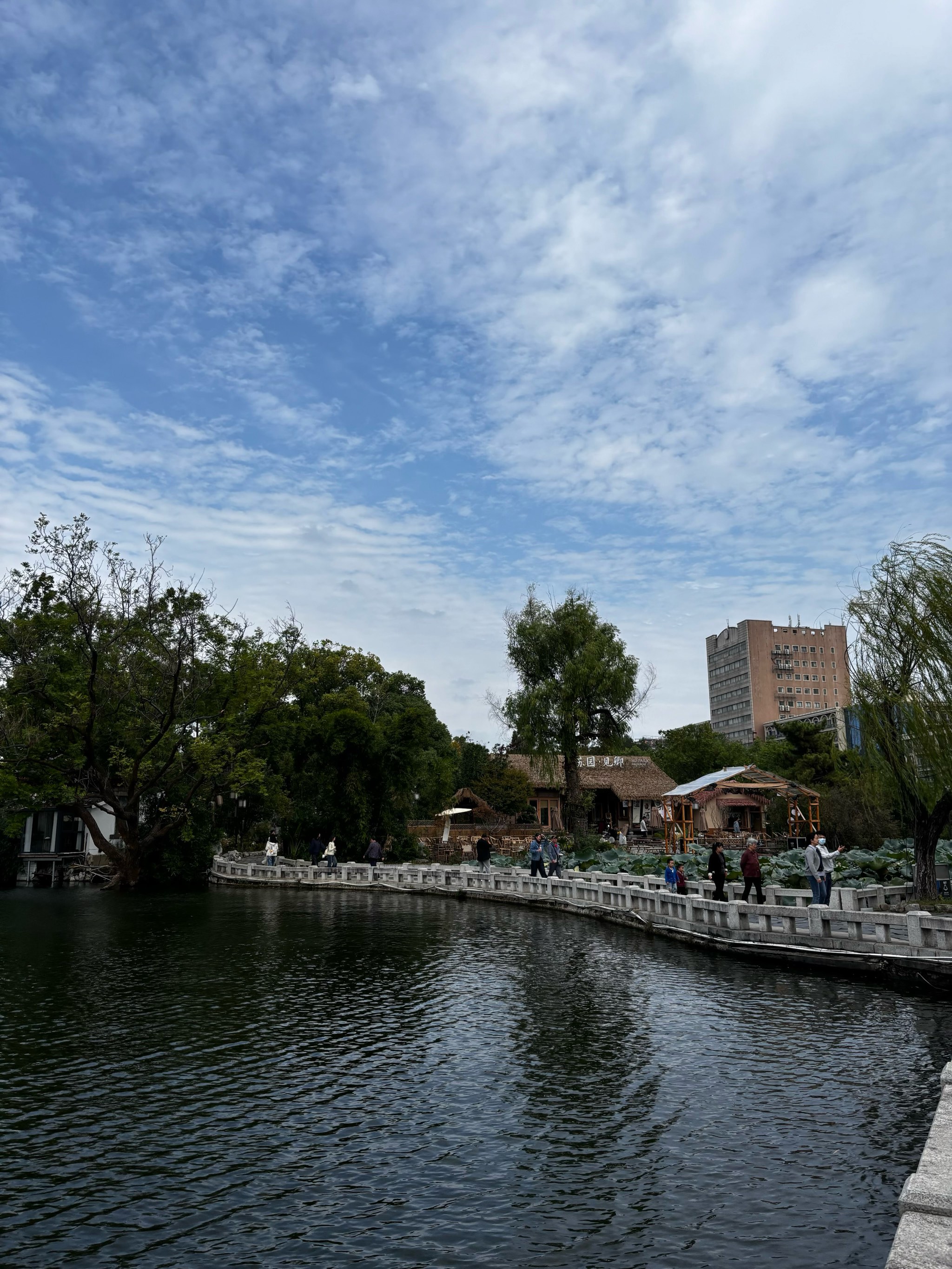
The landscape design draws on both Chinese and continental European traditions. A roughly 1.5-kilometer lakeside promenade circles the water, shaded by avenues of white poplar, weeping willow, and Chinese scholar tree—species familiar from stately Russian and Austrian imperial parks. Wisteria-draped pergolas and pavilions with upturned eaves nod to classical Chinese garden aesthetics, while open lawns along the shore evoke the open vistas of London's Hyde Park or Paris's Bois de Boulogne. In autumn, supplementary plantings of Amur maple and golden-leaf elm ignite the canopy in crimson and amber hues that rival New England's fall foliage.
Running through the park, a dedicated Red Culture corridor links the site's military heritage to its present role as a community space. Sculptures, inscribed walls, and period slogans recalling the founding of the PLA are integrated discreetly among the flowerbeds and pathways, offering the same blend of patriotism and pastoral calm found in Soviet-era memorial parks in Kyiv or Berlin's Treptower complex. Visitors dressed in light tones will find particularly striking backdrops here, while low-energy LED lighting after dark sculpts the exhibits into a warm, dignified silhouette that has quickly become a fixture of Urumqi's after-dark skyline.
Practical comforts have been layered onto the historic core for modern visitors. A 400-square-meter children's play area features non-powered equipment such as slides and spinning chairs, the looping lakeside path attracts joggers and tai chi practitioners at dawn and dusk, and grassy shores invite picnics and quiet reading. The park is entirely free, requires no advance booking, and sits within easy reach of central Urumqi—take Bus 5 directly to the "Bayi Park" stop, where drivers will find complimentary parking. Be aware that commercial amenities are minimal, so carry your own water.
For the best experience, plan a visit between late spring and mid-autumn, when wisteria and the colorful maple groves are at their peak, and aim for the cooler hours before 9am or after 7pm to escape the strong midday UV typical of the high-altitude Junggar basin. English signage is limited, so downloading an offline translation app ahead of time will enrich exploration of the cultural corridor. Whether you come for the foliage, the military history, or simply a chance to share a bench with locals watching the lake, Bayi Park offers one of Central Asia's most rewarding urban park experiences—on par with the finest civic green spaces of Europe yet infused with the spirit of the modern Chinese Northwest.
The park's origins lie in one of modern China's most ambitious grassroots greening campaigns. In 1956, at the height of the Cold War and just seven years after Xinjiang's peaceful incorporation into the People's Republic, People's Liberation Army troops stationed in the arid Urumqi basin voluntarily set about transforming barren scrubland into a public garden. They planted saplings, dug the central lake by hand, and heaped earth into gentle hills—a collective effort that mirrored wartime victory gardens across Europe and the Soviet Union. That volunteer legacy makes Bayi not merely a park but a living monument to a generation's belief in civic renewal.
The landscape design draws on both Chinese and continental European traditions. A roughly 1.5-kilometer lakeside promenade circles the water, shaded by avenues of white poplar, weeping willow, and Chinese scholar tree—species familiar from stately Russian and Austrian imperial parks. Wisteria-draped pergolas and pavilions with upturned eaves nod to classical Chinese garden aesthetics, while open lawns along the shore evoke the open vistas of London's Hyde Park or Paris's Bois de Boulogne. In autumn, supplementary plantings of Amur maple and golden-leaf elm ignite the canopy in crimson and amber hues that rival New England's fall foliage.
Running through the park, a dedicated Red Culture corridor links the site's military heritage to its present role as a community space. Sculptures, inscribed walls, and period slogans recalling the founding of the PLA are integrated discreetly among the flowerbeds and pathways, offering the same blend of patriotism and pastoral calm found in Soviet-era memorial parks in Kyiv or Berlin's Treptower complex. Visitors dressed in light tones will find particularly striking backdrops here, while low-energy LED lighting after dark sculpts the exhibits into a warm, dignified silhouette that has quickly become a fixture of Urumqi's after-dark skyline.
Practical comforts have been layered onto the historic core for modern visitors. A 400-square-meter children's play area features non-powered equipment such as slides and spinning chairs, the looping lakeside path attracts joggers and tai chi practitioners at dawn and dusk, and grassy shores invite picnics and quiet reading. The park is entirely free, requires no advance booking, and sits within easy reach of central Urumqi—take Bus 5 directly to the "Bayi Park" stop, where drivers will find complimentary parking. Be aware that commercial amenities are minimal, so carry your own water.
For the best experience, plan a visit between late spring and mid-autumn, when wisteria and the colorful maple groves are at their peak, and aim for the cooler hours before 9am or after 7pm to escape the strong midday UV typical of the high-altitude Junggar basin. English signage is limited, so downloading an offline translation app ahead of time will enrich exploration of the cultural corridor. Whether you come for the foliage, the military history, or simply a chance to share a bench with locals watching the lake, Bayi Park offers one of Central Asia's most rewarding urban park experiences—on par with the finest civic green spaces of Europe yet infused with the spirit of the modern Chinese Northwest.