Wudianshi Historical and Cultural District
⭐ 4.20
Wudianshi Historical and Cultural Block, Licheng District, Quanzhou City, Fujian Province, China
 Quanzhou, where Wudianshi sits, was medieval China's great emporium on the Maritime Silk Road, ranked by Marco Polo alongside Alexandria as one of the world's busiest ports in the late thirteenth century. Wudianshi takes its name from five shops opened here in the Kaiyuan era of the Tang dynasty (around 720 AD) by a seventh-generation descendant of the Cai clan, making it the original seed from which the sprawling modern city of Jinjiang grew. Over the following Song, Yuan, Ming, and Qing centuries it thickened into a thriving merchant quarter; today its lanes still hold surviving layers of that long history, offering a tangible counterpoint to the better-preserved Italian port-republics of the same era.
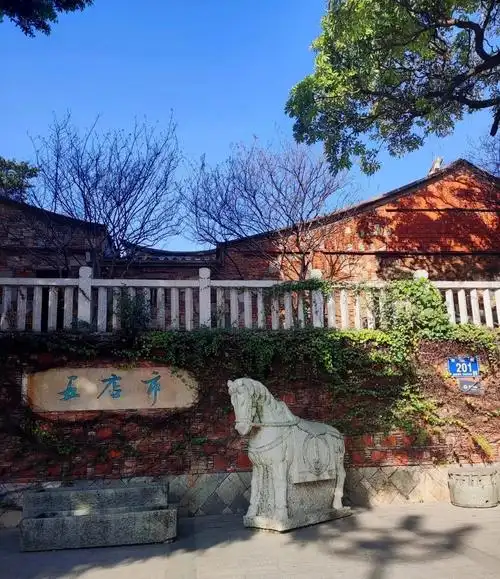
The architectural highlight is a remarkable collection of red-brick mansions built in the classic Minnan "palace-style" (皇宫起) tradition, the regional equivalent of a Renaissance palazzo in scale and ambition. Sweeping swallow-tail ridges soar against the sky in a manner reminiscent of Dutch Baroque gables, while carved stone, wood, and brickwork covers every lintel and beam. Eighteen of the buildings are protected heritage structures preserved on site or relocated here for conservation. Interspersed among them stand striking Nanyang-style buildings erected by returning overseas Chinese in the 1920s and 1930s, their white columns and verandas offering a visual dialogue between southern Fujian and the Straits Settlements of Penang and Singapore.
As a living showcase of Minnan culture, the district stages daily performances of Nanyin, one of China's oldest surviving musical traditions and a UNESCO-listed art form, alongside Gaojia farce and the witty, balletic glove puppetry for which Fujian is famous. Inside the Chaobei Mansion folk museum and the Jinjiang Art Gallery (some exhibitions charge a small fee of around 10 yuan), visitors can explore clan genealogy, the great overseas-Chinese migration of the nineteenth and twentieth centuries, and local wedding and festival customs. The 2022 designation as a National Nighttime Cultural and Tourism Consumption Cluster has brought thoughtful lighting design that turns the lanes into an atmospheric evening destination.
Practical information: the district is at 1 Jinshi Road, Meiling Subdistrict, Jinjiang, Quanzhou, Fujian. The public lanes are open and free twenty-four hours a day; shops and exhibition halls generally operate from 9:00 a.m. to 9:00 p.m. It is roughly a twenty-minute drive from Jinjiang Airport and fifteen minutes from Quanzhou South Railway Station; city buses 802, 12, and 3 stop at Meiling Industrial Park, a short walk from the entrance. The official enquiry line is 0595-36770058.
Allow between ninety minutes and three hours. Aim to arrive in the late afternoon so you can study the brickwork and carvings in natural light, watch an evening performance, then linger as the lanterns come on. A suggested route is main entrance, Cai and Zhuang ancestral halls (exterior viewing only), the red-brick arcade lanes, the intangible-heritage performance area, the snack street, and finally a rest near the Shigu Temple. Respect closed ancestral halls, watch for no-photography signs, and avoid weekends and lunchtime, when crowds peak. For guided tours and performance schedules, follow the official WeChat account "晋江五店市."
Why visit: few places in coastal China allow such a concentrated walk through a thousand years of merchant, clan, and migrant history, framed by some of the country's most photogenic vernacular architecture. For travellers who have already marvelled at the Forbidden City or the water towns of Jiangnan, Wudianshi offers something rarer, an unpolished, still-functioning old quarter where the descendants of the Tang-dynasty founders still practise their ancestors' music, food, and crafts.
Quanzhou, where Wudianshi sits, was medieval China's great emporium on the Maritime Silk Road, ranked by Marco Polo alongside Alexandria as one of the world's busiest ports in the late thirteenth century. Wudianshi takes its name from five shops opened here in the Kaiyuan era of the Tang dynasty (around 720 AD) by a seventh-generation descendant of the Cai clan, making it the original seed from which the sprawling modern city of Jinjiang grew. Over the following Song, Yuan, Ming, and Qing centuries it thickened into a thriving merchant quarter; today its lanes still hold surviving layers of that long history, offering a tangible counterpoint to the better-preserved Italian port-republics of the same era.
The architectural highlight is a remarkable collection of red-brick mansions built in the classic Minnan "palace-style" (皇宫起) tradition, the regional equivalent of a Renaissance palazzo in scale and ambition. Sweeping swallow-tail ridges soar against the sky in a manner reminiscent of Dutch Baroque gables, while carved stone, wood, and brickwork covers every lintel and beam. Eighteen of the buildings are protected heritage structures preserved on site or relocated here for conservation. Interspersed among them stand striking Nanyang-style buildings erected by returning overseas Chinese in the 1920s and 1930s, their white columns and verandas offering a visual dialogue between southern Fujian and the Straits Settlements of Penang and Singapore.
As a living showcase of Minnan culture, the district stages daily performances of Nanyin, one of China's oldest surviving musical traditions and a UNESCO-listed art form, alongside Gaojia farce and the witty, balletic glove puppetry for which Fujian is famous. Inside the Chaobei Mansion folk museum and the Jinjiang Art Gallery (some exhibitions charge a small fee of around 10 yuan), visitors can explore clan genealogy, the great overseas-Chinese migration of the nineteenth and twentieth centuries, and local wedding and festival customs. The 2022 designation as a National Nighttime Cultural and Tourism Consumption Cluster has brought thoughtful lighting design that turns the lanes into an atmospheric evening destination.
Practical information: the district is at 1 Jinshi Road, Meiling Subdistrict, Jinjiang, Quanzhou, Fujian. The public lanes are open and free twenty-four hours a day; shops and exhibition halls generally operate from 9:00 a.m. to 9:00 p.m. It is roughly a twenty-minute drive from Jinjiang Airport and fifteen minutes from Quanzhou South Railway Station; city buses 802, 12, and 3 stop at Meiling Industrial Park, a short walk from the entrance. The official enquiry line is 0595-36770058.
Allow between ninety minutes and three hours. Aim to arrive in the late afternoon so you can study the brickwork and carvings in natural light, watch an evening performance, then linger as the lanterns come on. A suggested route is main entrance, Cai and Zhuang ancestral halls (exterior viewing only), the red-brick arcade lanes, the intangible-heritage performance area, the snack street, and finally a rest near the Shigu Temple. Respect closed ancestral halls, watch for no-photography signs, and avoid weekends and lunchtime, when crowds peak. For guided tours and performance schedules, follow the official WeChat account "晋江五店市."
Why visit: few places in coastal China allow such a concentrated walk through a thousand years of merchant, clan, and migrant history, framed by some of the country's most photogenic vernacular architecture. For travellers who have already marvelled at the Forbidden City or the water towns of Jiangnan, Wudianshi offers something rarer, an unpolished, still-functioning old quarter where the descendants of the Tang-dynasty founders still practise their ancestors' music, food, and crafts.