Mount Qingyuan
⭐ 3.60
Qingyuan Mountain Scenic Area, Qingyang County, Chizhou City, Anhui Province, China
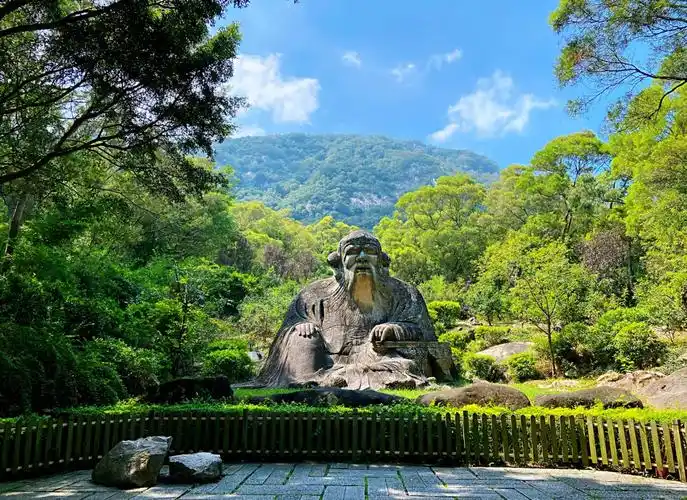 Qingyuan Mountain rises gently from the southwestern outskirts of Qingyang County, part of the extended Jiuhua mountain range in southeastern Anhui. The area's well-developed karst topography—formed over millions of years as water slowly dissolved the limestone bedrock—produces a landscape reminiscent of Slovenia's Karst region or Britain's Cheddar Gorge. With modest elevations and gentle trails, the mountain welcomes visitors of all ages, while the surrounding forests provide crisp, refreshing air, especially welcome during China's humid summer months.
At the spiritual heart of the mountain stands Qingyuan Temple, founded in the late Song Dynasty and now over eight centuries old. According to local tradition, the site was first visited by the Tang Dynasty monk Kim Qiaojue, a Korean prince whose missionary travels helped establish Mount Jiuhua as one of China's four sacred Buddhist mountains. The temple's restrained, weathered halls and curling incense smoke evoke the hushed reverence of a medieval European abbey—a place where time slows and contemplation comes easily.
The mountain's most visually arresting feature is the Five Hundred Arhat Stone Sculpture complex, where artisans have carved an entire pantheon of Buddhist saints directly into natural boulders. Much like the sculpted facades of Gothic cathedrals or the monumental faces of Mount Rushmore, these figures transform raw geology into sacred art. Each Arhat displays a distinct expression and posture, and the sheer scale of the carved cliff face makes it one of eastern China's most ambitious religious stoneworks.
A short walk away, the Qingyuan Cave stretches several hundred metres into the hillside, its chambers dripping with stalactites, stone curtains, and delicate cave flowers formed over countless millennia. A 2.8-metre statue of the Wealth Deity watches over one chamber, blending natural wonder with folk devotion. The cave maintains a constant, comfortable temperature year-round, offering cool refuge in summer. Outside, sprawling maple groves—comparable to New England's autumn forests—ignite in brilliant reds and oranges each October, framed by the mountain's whimsical rock formations.
Practical details make visiting straightforward. The site opens daily from 08:00 to 17:30, with tickets priced between 35 and 60 RMB, and parking is free. Allow two to three hours for a relaxed visit, and bring water and light snacks. From Chizhou city or Mount Jiuhua, the drive takes roughly one hour along the G318 national road; simply enter "Qingyuan Mountain Scenic Area" into your GPS. Spring and autumn offer the finest conditions, with October's maple foliage providing the season's most spectacular backdrop. Comfortable hiking shoes are recommended, particularly for the cave passages and potentially damp stone steps.
Qingyuan Mountain rises gently from the southwestern outskirts of Qingyang County, part of the extended Jiuhua mountain range in southeastern Anhui. The area's well-developed karst topography—formed over millions of years as water slowly dissolved the limestone bedrock—produces a landscape reminiscent of Slovenia's Karst region or Britain's Cheddar Gorge. With modest elevations and gentle trails, the mountain welcomes visitors of all ages, while the surrounding forests provide crisp, refreshing air, especially welcome during China's humid summer months.
At the spiritual heart of the mountain stands Qingyuan Temple, founded in the late Song Dynasty and now over eight centuries old. According to local tradition, the site was first visited by the Tang Dynasty monk Kim Qiaojue, a Korean prince whose missionary travels helped establish Mount Jiuhua as one of China's four sacred Buddhist mountains. The temple's restrained, weathered halls and curling incense smoke evoke the hushed reverence of a medieval European abbey—a place where time slows and contemplation comes easily.
The mountain's most visually arresting feature is the Five Hundred Arhat Stone Sculpture complex, where artisans have carved an entire pantheon of Buddhist saints directly into natural boulders. Much like the sculpted facades of Gothic cathedrals or the monumental faces of Mount Rushmore, these figures transform raw geology into sacred art. Each Arhat displays a distinct expression and posture, and the sheer scale of the carved cliff face makes it one of eastern China's most ambitious religious stoneworks.
A short walk away, the Qingyuan Cave stretches several hundred metres into the hillside, its chambers dripping with stalactites, stone curtains, and delicate cave flowers formed over countless millennia. A 2.8-metre statue of the Wealth Deity watches over one chamber, blending natural wonder with folk devotion. The cave maintains a constant, comfortable temperature year-round, offering cool refuge in summer. Outside, sprawling maple groves—comparable to New England's autumn forests—ignite in brilliant reds and oranges each October, framed by the mountain's whimsical rock formations.
Practical details make visiting straightforward. The site opens daily from 08:00 to 17:30, with tickets priced between 35 and 60 RMB, and parking is free. Allow two to three hours for a relaxed visit, and bring water and light snacks. From Chizhou city or Mount Jiuhua, the drive takes roughly one hour along the G318 national road; simply enter "Qingyuan Mountain Scenic Area" into your GPS. Spring and autumn offer the finest conditions, with October's maple foliage providing the season's most spectacular backdrop. Comfortable hiking shoes are recommended, particularly for the cave passages and potentially damp stone steps.