Cangzhou Science and Technology Museum
⭐ 3.50
Northwest Corner of the Intersection of Renmin Road and Guangming Street, Yunhe District, Cangzhou City, Hebei Province, China
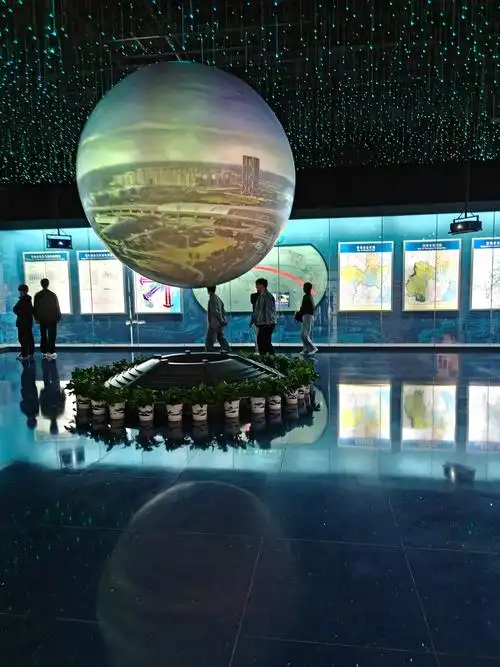 Cangzhou, a historic canal city in Hebei Province tracing back over 1,400 years to the Sui Dynasty, now channels its heritage into modern science education through two complementary venues. The science hall within the Cangzhou City Museum has long served as the region's primary platform for youth science启蒙, presenting foundational physics and mathematics principles in a traditional museum setting. The Yunhe District Science Museum, unveiled in December 2025 and opened to individual visitors in May 2026, represents Cangzhou's ambitious investment in next-generation STEM education, focusing on artificial intelligence, aerospace, and mechanical assembly.
The Cangzhou City Museum itself spans roughly 30,000 square meters—comparable in scale to a mid-sized European provincial museum like the Musée de Picardie in Amiens. Its science wing occupies a modest portion of this vast complex, prioritizing accessible learning over spectacle. In contrast, the Yunhe District Science Museum stands as a purpose-built facility with ten immersive themed spaces, including AI strategy rooms, holographic experience zones, drone classrooms, and aerospace model workshops. Think of it as Cangzhou's answer to Munich's Deutsches Museum, but with a distinctly contemporary, hands-on emphasis and significantly smaller footprint.
Together, these venues form a tiered science education ecosystem addressing different audiences and interests. The museum hall caters to casual learners and families seeking brief, classic encounters with scientific principles—ideal for those passing through or with limited time. The Yunhe facility targets school-aged children and curious adults eager to engage directly with emerging technologies, blending hands-on experimentation with competitive challenges designed to spark lasting scientific curiosity.
Practical planning requires attention to contrasting access policies. The museum science hall sits at 59 Yuhe Road in Yunhe District, open Tuesday through Sunday from 9:00 to 17:00 (closed Mondays), with free admission and no reservation required. The Yunhe District Science Museum operates far more restrictively—only Saturday and Sunday mornings from 9:30 to 11:00, limited to 50 visitors per session, free but mandatory WeChat booking in advance with QR code entry verification. No walk-up tickets exist.
Strategic timing maximizes value. If weekend morning reservations succeed, prioritize the Yunhe District Science Museum first (allow 1–1.5 hours), then spend the afternoon exploring the broader Cangzhou City Museum collections. If visiting midweek or unable to secure bookings, treat the museum's science hall as a pleasant supplementary stop with tempered expectations. Always verify booking channels and weekly session availability before departure—limited capacity means disappointment for the unprepared.
Why visit? Cangzhou remains off the typical Western tourist circuit, but these venues offer an authentic glimpse into how a mid-sized Chinese city balances ancient canal heritage with twenty-first-century technological ambition. For families traveling with children, science enthusiasts, or anyone curious about contemporary China's grassroots approach to public science education, these museums provide rewarding, uncrowded alternatives to Beijing's oversubscribed flagship institutions.
Cangzhou, a historic canal city in Hebei Province tracing back over 1,400 years to the Sui Dynasty, now channels its heritage into modern science education through two complementary venues. The science hall within the Cangzhou City Museum has long served as the region's primary platform for youth science启蒙, presenting foundational physics and mathematics principles in a traditional museum setting. The Yunhe District Science Museum, unveiled in December 2025 and opened to individual visitors in May 2026, represents Cangzhou's ambitious investment in next-generation STEM education, focusing on artificial intelligence, aerospace, and mechanical assembly.
The Cangzhou City Museum itself spans roughly 30,000 square meters—comparable in scale to a mid-sized European provincial museum like the Musée de Picardie in Amiens. Its science wing occupies a modest portion of this vast complex, prioritizing accessible learning over spectacle. In contrast, the Yunhe District Science Museum stands as a purpose-built facility with ten immersive themed spaces, including AI strategy rooms, holographic experience zones, drone classrooms, and aerospace model workshops. Think of it as Cangzhou's answer to Munich's Deutsches Museum, but with a distinctly contemporary, hands-on emphasis and significantly smaller footprint.
Together, these venues form a tiered science education ecosystem addressing different audiences and interests. The museum hall caters to casual learners and families seeking brief, classic encounters with scientific principles—ideal for those passing through or with limited time. The Yunhe facility targets school-aged children and curious adults eager to engage directly with emerging technologies, blending hands-on experimentation with competitive challenges designed to spark lasting scientific curiosity.
Practical planning requires attention to contrasting access policies. The museum science hall sits at 59 Yuhe Road in Yunhe District, open Tuesday through Sunday from 9:00 to 17:00 (closed Mondays), with free admission and no reservation required. The Yunhe District Science Museum operates far more restrictively—only Saturday and Sunday mornings from 9:30 to 11:00, limited to 50 visitors per session, free but mandatory WeChat booking in advance with QR code entry verification. No walk-up tickets exist.
Strategic timing maximizes value. If weekend morning reservations succeed, prioritize the Yunhe District Science Museum first (allow 1–1.5 hours), then spend the afternoon exploring the broader Cangzhou City Museum collections. If visiting midweek or unable to secure bookings, treat the museum's science hall as a pleasant supplementary stop with tempered expectations. Always verify booking channels and weekly session availability before departure—limited capacity means disappointment for the unprepared.
Why visit? Cangzhou remains off the typical Western tourist circuit, but these venues offer an authentic glimpse into how a mid-sized Chinese city balances ancient canal heritage with twenty-first-century technological ambition. For families traveling with children, science enthusiasts, or anyone curious about contemporary China's grassroots approach to public science education, these museums provide rewarding, uncrowded alternatives to Beijing's oversubscribed flagship institutions.