Zhengjiatun, Nanpi County
⭐ 1.50
Zhengjiatun, Nanpi County, Cangzhou City, Hebei Province, China
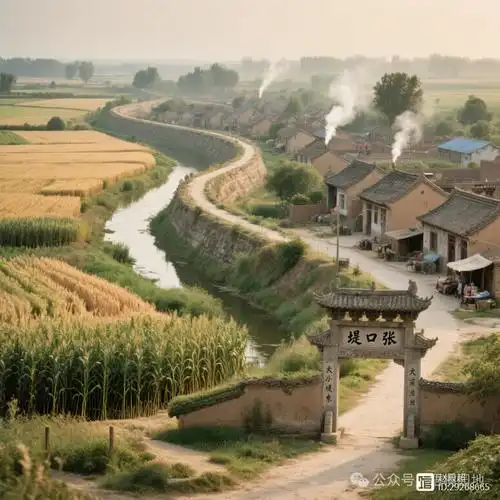 Nanpi County sits in southeastern Hebei Province, part of the North China Plain that has supported agriculture for over three millennia. The region falls within the historic Grand Canal corridor, the 1,794-kilometer waterway linking Beijing and Hangzhou that, like Venice's canal network, shaped commerce and migration across eastern China from the Sui Dynasty (581–618) onward. The county's recorded history stretches back to the Han Dynasty, though it never held major administrative status. For Western visitors familiar with European provincial landscapes, the flat terrain, wheat fields, and scattered villages resemble the agricultural heartlands of northern France or the Hungarian puszta.
There is no developed architectural attraction at the so-called Zhengjiatun site. If the reference is to Zhengtun Village in neighboring Cangxian, visitors will encounter a typical North China farming settlement: single-story brick homes, narrow lanes, and collective farmland. The village bears no heritage designation, no preserved historical buildings, and no interpretive infrastructure. Unlike the restored water towns of Suzhou or the heritage courtyard residences of Beijing's hutongs, Zhengtun offers nothing architecturally distinctive. Travelers expecting period buildings, temple complexes, or museums will be disappointed.
The cultural significance of the broader Nanpi area lies elsewhere. The county is best known as the ancestral home of Zhang Zhidong (1837–1909), one of the "Four Great Officials" of late Qing Dynasty modernization. His preserved former residence and tomb complex offer genuine insight into the Self-Strengthening Movement, China's 19th-century push for industrial and educational reform, comparable in ambition to Japan's Meiji Restoration. Nearby, the Grand Canal intangible heritage base showcases local folk traditions including Cangzhou Luozi, a regional narrative performance art akin to ballad storytelling traditions found across Europe.
Practical information is sparse. No fixed opening hours exist, no admission fees apply because there is no managed site, and public transport coverage is minimal. Visitors must arrange private vehicles or taxis from Cangzhou city, approximately 40 kilometers north. Lodging options are limited to economy hotels in Nanpi town center, such as the Xinhe Hotel, offering basic but functional accommodations. Local cuisine reflects Hebei traditions, featuring donkey meat dishes, wheat-based noodles, and hearty stews, similar in spirit to rustic northern Italian or Austrian country cooking.
So why visit? Honestly, most travelers should not. Zhengjiatun offers no compelling reason for a dedicated journey. However, those with deep interest in late Qing history, the Grand Canal heritage corridor, or offbeat rural China may find value in incorporating the region into a broader Hebei itinerary. A sensible day plan pairs Zhang Zhidong's residence with the Cangzhou Iron Lion, the world's largest surviving cast-iron artifact, cast in 953 AD, a true standout comparable in scale ambition to medieval European cathedral bells. With careful planning, the area rewards patient explorers; without it, the trip risks disappointment.
Nanpi County sits in southeastern Hebei Province, part of the North China Plain that has supported agriculture for over three millennia. The region falls within the historic Grand Canal corridor, the 1,794-kilometer waterway linking Beijing and Hangzhou that, like Venice's canal network, shaped commerce and migration across eastern China from the Sui Dynasty (581–618) onward. The county's recorded history stretches back to the Han Dynasty, though it never held major administrative status. For Western visitors familiar with European provincial landscapes, the flat terrain, wheat fields, and scattered villages resemble the agricultural heartlands of northern France or the Hungarian puszta.
There is no developed architectural attraction at the so-called Zhengjiatun site. If the reference is to Zhengtun Village in neighboring Cangxian, visitors will encounter a typical North China farming settlement: single-story brick homes, narrow lanes, and collective farmland. The village bears no heritage designation, no preserved historical buildings, and no interpretive infrastructure. Unlike the restored water towns of Suzhou or the heritage courtyard residences of Beijing's hutongs, Zhengtun offers nothing architecturally distinctive. Travelers expecting period buildings, temple complexes, or museums will be disappointed.
The cultural significance of the broader Nanpi area lies elsewhere. The county is best known as the ancestral home of Zhang Zhidong (1837–1909), one of the "Four Great Officials" of late Qing Dynasty modernization. His preserved former residence and tomb complex offer genuine insight into the Self-Strengthening Movement, China's 19th-century push for industrial and educational reform, comparable in ambition to Japan's Meiji Restoration. Nearby, the Grand Canal intangible heritage base showcases local folk traditions including Cangzhou Luozi, a regional narrative performance art akin to ballad storytelling traditions found across Europe.
Practical information is sparse. No fixed opening hours exist, no admission fees apply because there is no managed site, and public transport coverage is minimal. Visitors must arrange private vehicles or taxis from Cangzhou city, approximately 40 kilometers north. Lodging options are limited to economy hotels in Nanpi town center, such as the Xinhe Hotel, offering basic but functional accommodations. Local cuisine reflects Hebei traditions, featuring donkey meat dishes, wheat-based noodles, and hearty stews, similar in spirit to rustic northern Italian or Austrian country cooking.
So why visit? Honestly, most travelers should not. Zhengjiatun offers no compelling reason for a dedicated journey. However, those with deep interest in late Qing history, the Grand Canal heritage corridor, or offbeat rural China may find value in incorporating the region into a broader Hebei itinerary. A sensible day plan pairs Zhang Zhidong's residence with the Cangzhou Iron Lion, the world's largest surviving cast-iron artifact, cast in 953 AD, a true standout comparable in scale ambition to medieval European cathedral bells. With careful planning, the area rewards patient explorers; without it, the trip risks disappointment.