Cangzhou Wushu Hall
⭐ 2.00
Cangzhou Wushu Hall, Yunhe District, Cangzhou City, Hebei Province, China
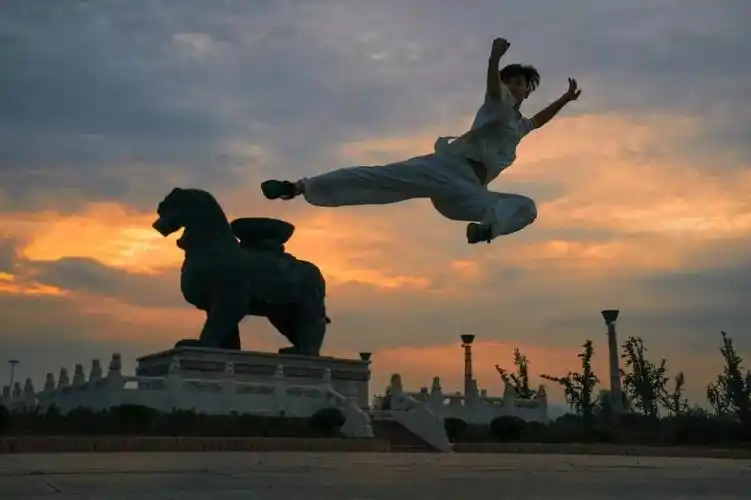 For over two millennia, Cangzhou has stood as one of northern China's foremost cradles of martial culture, its reputation rivaling that of medieval Europe's knightly academies or Japan's samurai strongholds. Located in Hebei Province near the Grand Canal, the city has produced more than fifty distinct fighting styles, with Baji Quan (Eight Extremities Fist), Pigua Quan (Chopping-Hanging Fist), and Yanqing Quan standing among the most celebrated. This legacy earned Cangzhou an enduring title as China's "Hometown of Wushu," drawing practitioners from across East Asia much as Toledo once drew swordsmen seeking the finest blades in Europe.
The primary institution bearing the Cangzhou Martial Arts name is actually the Cangzhou Wushu Research Institute, a state-funded professional academy situated along the city's southern outer ring road. Unlike a conventional museum or theme park, this facility functions as a closed training compound—comparable to a European fencing guild house rather than a public exhibition space. Random visitors are unlikely to gain entry beyond the perimeter walls; the campus hosts national-level tournaments and trains elite competitors, prioritizing pedagogy over tourism. Travelers interested in martial exchanges should arrange visits through formal cultural contact channels well in advance.
For most international tourists, the Cangzhou Museum on Yuhe Road in the Yunhe District offers the most rewarding and accessible encounter with this heritage. Its free martial arts exhibition hall divides into themed zones such as "Warrior Spirit for Survival" and "Cold Steel and Iron Weapons," showcasing authentic weaponry, training manuals, and lineage charts tracing each school's development. A VR virtual gallery supplements the physical displays, allowing deeper immersion into combat forms and historical contexts without physical risk—a welcome feature for those unfamiliar with the strenuous discipline of Chinese martial arts.
Practical planning is essential. The museum operates Tuesday through Sunday from 9:00 to 17:00, closing on Mondays, with last admission at 16:30. Foreign visitors must reserve tickets in advance through the WeChat account "沧州博物馆" and present a valid passport at entry. Weekend mornings often feature free introductory Baji Quan lessons suitable for beginners, though participants should prepare translation tools, as instruction is conducted primarily in Mandarin. Comfortable clothing is recommended for any hands-on activities, and visitors should avoid attempting advanced techniques without qualified supervision to prevent injury.
This destination pairs naturally with two nearby cultural landmarks: the Iron Lion of Cangzhou, a colossal Song-dynasty cast-iron Buddhist sculpture dating to 953 AD and predating many of Europe's great metalworks, and the atmospheric Grand Canal historic district, where Ming and Qing merchant architecture lines the waterway just as Bruges or Amsterdam's old centers do. A well-planned half-day itinerary combining martial heritage at the museum, the ancient iron lion, and a stroll along the canal offers a comprehensive portrait of this often-overlooked northern cultural capital.
For over two millennia, Cangzhou has stood as one of northern China's foremost cradles of martial culture, its reputation rivaling that of medieval Europe's knightly academies or Japan's samurai strongholds. Located in Hebei Province near the Grand Canal, the city has produced more than fifty distinct fighting styles, with Baji Quan (Eight Extremities Fist), Pigua Quan (Chopping-Hanging Fist), and Yanqing Quan standing among the most celebrated. This legacy earned Cangzhou an enduring title as China's "Hometown of Wushu," drawing practitioners from across East Asia much as Toledo once drew swordsmen seeking the finest blades in Europe.
The primary institution bearing the Cangzhou Martial Arts name is actually the Cangzhou Wushu Research Institute, a state-funded professional academy situated along the city's southern outer ring road. Unlike a conventional museum or theme park, this facility functions as a closed training compound—comparable to a European fencing guild house rather than a public exhibition space. Random visitors are unlikely to gain entry beyond the perimeter walls; the campus hosts national-level tournaments and trains elite competitors, prioritizing pedagogy over tourism. Travelers interested in martial exchanges should arrange visits through formal cultural contact channels well in advance.
For most international tourists, the Cangzhou Museum on Yuhe Road in the Yunhe District offers the most rewarding and accessible encounter with this heritage. Its free martial arts exhibition hall divides into themed zones such as "Warrior Spirit for Survival" and "Cold Steel and Iron Weapons," showcasing authentic weaponry, training manuals, and lineage charts tracing each school's development. A VR virtual gallery supplements the physical displays, allowing deeper immersion into combat forms and historical contexts without physical risk—a welcome feature for those unfamiliar with the strenuous discipline of Chinese martial arts.
Practical planning is essential. The museum operates Tuesday through Sunday from 9:00 to 17:00, closing on Mondays, with last admission at 16:30. Foreign visitors must reserve tickets in advance through the WeChat account "沧州博物馆" and present a valid passport at entry. Weekend mornings often feature free introductory Baji Quan lessons suitable for beginners, though participants should prepare translation tools, as instruction is conducted primarily in Mandarin. Comfortable clothing is recommended for any hands-on activities, and visitors should avoid attempting advanced techniques without qualified supervision to prevent injury.
This destination pairs naturally with two nearby cultural landmarks: the Iron Lion of Cangzhou, a colossal Song-dynasty cast-iron Buddhist sculpture dating to 953 AD and predating many of Europe's great metalworks, and the atmospheric Grand Canal historic district, where Ming and Qing merchant architecture lines the waterway just as Bruges or Amsterdam's old centers do. A well-planned half-day itinerary combining martial heritage at the museum, the ancient iron lion, and a stroll along the canal offers a comprehensive portrait of this often-overlooked northern cultural capital.