Cangxian Ancient City Wall
⭐ 2.00
Cangxian, Cangzhou, Hebei Province, China
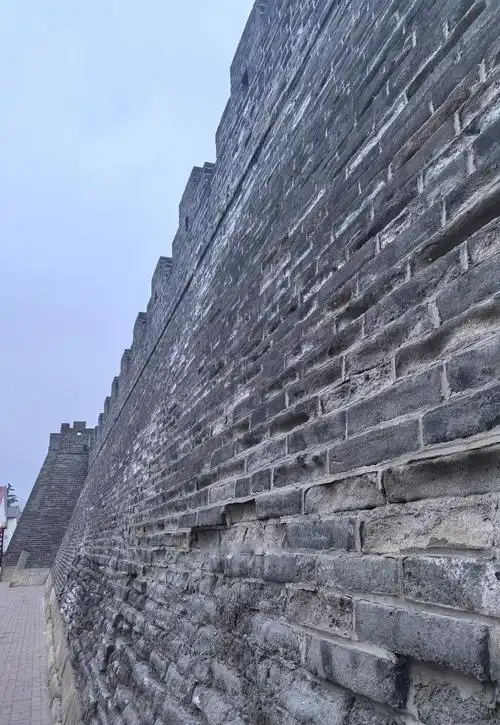 Founded in the fifth year of Emperor Gaozu's reign (202 BCE)—roughly contemporaneous with Rome's victory over Carthage at Zama—Cangxian's ancient city served as the administrative heart of Fuyang Commandery for over a thousand years. While the Roman Empire was building its aqueducts and Hadrian's Wall, this Han Dynasty outpost anchored Chinese governance over the Hebei plains. When Ming administrators relocated the prefectural seat to Changlu in 1404, the city was gradually abandoned, leaving earthen ramparts to melt back into the landscape. Its 2021 selection among "Hebei's Century of 100 Major Archaeological Discoveries" confirms its enduring scholarly importance.
What survives is powerfully evocative: five fragmentary wall sections on the city's western and southern flanks, the tallest rising 8.5 meters with bases ranging from 8 to 53 meters wide. The rammed-earth (hangtu) construction—China's ancient equivalent to Europe's medieval clay-daub fortifications—incorporates scattered brick and stone additions, producing stratigraphic cross-sections that reveal centuries of repair and reinforcement. Unlike the restored grandeur of Carcassonne in France or Ávila in Spain, no attempt has been made to rebuild these walls. Weathered ramparts stand in their ruined glory, with wild grasses softening the raw archaeological profile.
The site's strategic position along the northern reaches of the Beijing-Hangzhou Grand Canal—itself a UNESCO World Heritage corridor—placed it at the crossroads of imperial commerce and military control. Beneath the surface, cultural strata spanning Han, Tang, and Song Dynasties await further excavation, hinting at layers as rich as those at Pompeii or Troy. As the only surviving physical testament to a millennium of Cangzhou's administrative evolution, from commandery seat to prefectural capital, the ruins offer rare insight into how northern Chinese urban centers grew, contracted, and adapted to shifting dynastic priorities.
The ruins sit in Dongguan Village, Jiuzhou Town, roughly 18 to 20 kilometers southeast of Cangzhou city center. Admission is free, but visitors should temper expectations: there is no visitor center, interpretive signage, or commercial infrastructure, with the nearest facilities clustered around a small parking area at the entrance. Public transport is virtually nonexistent, so a rental car, taxi, or chartered vehicle is essential. Travelers can navigate using "Cangzhou Ancient City Ruins" or "Jiuzhou Town Dongguan Village" as search terms. Those without private transport should consider arranging a driver through their hotel.
Pair this visit with the nearby Iron Lion and Old City Ruins Park, where a protective pavilion shelters the famous Zhenyuan Iron Lion—a Song Dynasty cast-iron behemoth weighing nearly 32 tons—and an exhibition hall fills interpretive gaps left by the bare ruins. Photographers should arrive at dawn or dusk, when slanting light transforms the crumbling ramparts into silhouettes of profound melancholy. Summer visitors need sun protection, insect repellent, and sturdy non-slip footwear. Most importantly: respect the strict prohibition against climbing the fragile walls. For travelers drawn to authentic, unrestored history rather than polished reconstructions, this forgotten Han-era fortress delivers an experience as rare as it is unforgettable.
Founded in the fifth year of Emperor Gaozu's reign (202 BCE)—roughly contemporaneous with Rome's victory over Carthage at Zama—Cangxian's ancient city served as the administrative heart of Fuyang Commandery for over a thousand years. While the Roman Empire was building its aqueducts and Hadrian's Wall, this Han Dynasty outpost anchored Chinese governance over the Hebei plains. When Ming administrators relocated the prefectural seat to Changlu in 1404, the city was gradually abandoned, leaving earthen ramparts to melt back into the landscape. Its 2021 selection among "Hebei's Century of 100 Major Archaeological Discoveries" confirms its enduring scholarly importance.
What survives is powerfully evocative: five fragmentary wall sections on the city's western and southern flanks, the tallest rising 8.5 meters with bases ranging from 8 to 53 meters wide. The rammed-earth (hangtu) construction—China's ancient equivalent to Europe's medieval clay-daub fortifications—incorporates scattered brick and stone additions, producing stratigraphic cross-sections that reveal centuries of repair and reinforcement. Unlike the restored grandeur of Carcassonne in France or Ávila in Spain, no attempt has been made to rebuild these walls. Weathered ramparts stand in their ruined glory, with wild grasses softening the raw archaeological profile.
The site's strategic position along the northern reaches of the Beijing-Hangzhou Grand Canal—itself a UNESCO World Heritage corridor—placed it at the crossroads of imperial commerce and military control. Beneath the surface, cultural strata spanning Han, Tang, and Song Dynasties await further excavation, hinting at layers as rich as those at Pompeii or Troy. As the only surviving physical testament to a millennium of Cangzhou's administrative evolution, from commandery seat to prefectural capital, the ruins offer rare insight into how northern Chinese urban centers grew, contracted, and adapted to shifting dynastic priorities.
The ruins sit in Dongguan Village, Jiuzhou Town, roughly 18 to 20 kilometers southeast of Cangzhou city center. Admission is free, but visitors should temper expectations: there is no visitor center, interpretive signage, or commercial infrastructure, with the nearest facilities clustered around a small parking area at the entrance. Public transport is virtually nonexistent, so a rental car, taxi, or chartered vehicle is essential. Travelers can navigate using "Cangzhou Ancient City Ruins" or "Jiuzhou Town Dongguan Village" as search terms. Those without private transport should consider arranging a driver through their hotel.
Pair this visit with the nearby Iron Lion and Old City Ruins Park, where a protective pavilion shelters the famous Zhenyuan Iron Lion—a Song Dynasty cast-iron behemoth weighing nearly 32 tons—and an exhibition hall fills interpretive gaps left by the bare ruins. Photographers should arrive at dawn or dusk, when slanting light transforms the crumbling ramparts into silhouettes of profound melancholy. Summer visitors need sun protection, insect repellent, and sturdy non-slip footwear. Most importantly: respect the strict prohibition against climbing the fragile walls. For travelers drawn to authentic, unrestored history rather than polished reconstructions, this forgotten Han-era fortress delivers an experience as rare as it is unforgettable.