Huanghua Port
⭐ 3.20
Huanghua Port, Huanghua City, Cangzhou, Hebei Province, China
 Huanghua Port sits on the Bohai Gulf, a stretch of water that has carried maritime traffic since Ming-dynasty salt barges first plied these coastal flats. Today, the port channels the industrial ambitions of the Beijing–Tianjin–Hebei megalopolis, comparable in scale and ambition to Rotterdam's Maasvlakte or Hamburg's expanding terminals. As the primary coal-shipping hub for China's National Energy Group, it surpassed 200 million tonnes in 2024, securing its place as Hebei's busiest port. In 2018, it was named one of China's "Most Beautiful Ports," reflecting its unusual dual identity as both an energy artery and a destination in its own right.
The port itself functions as a national AAA-rated industrial tourism site, where visitors can observe automation on a scale that rivals Europe's smartest container terminals. Towering ship-to-shore cranes—taller than London's Tower Bridge—swing silently above the decks of bulk carriers and chemical tankers. An on-site exhibition hall reveals the choreography of loading coal, liquid chemicals, and roll-on/roll-off cargo. Access to active working zones is strictly limited, so advance booking or joining a guided tour is essential.
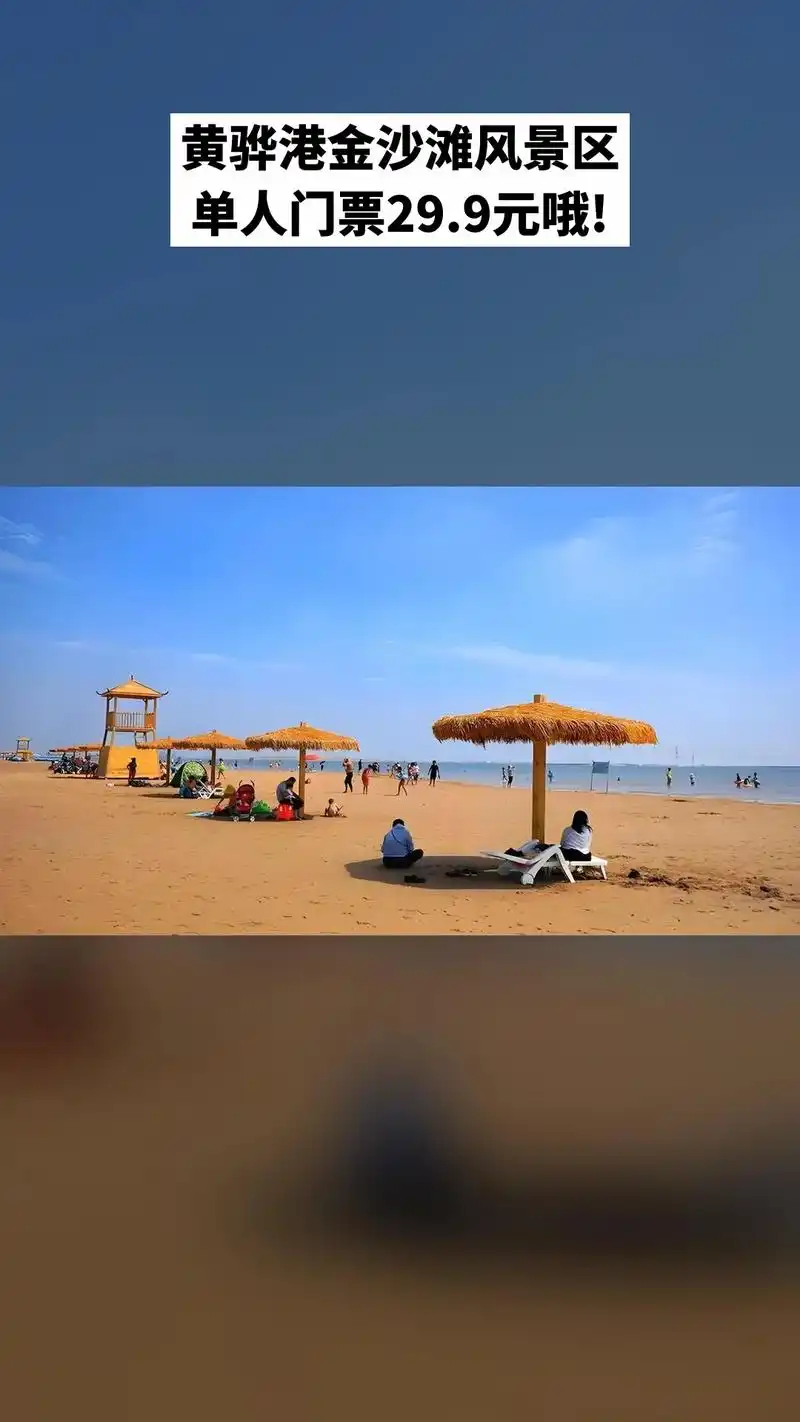
A short drive inland brings you to Canghai Cultural Scenic Area, home to China's largest artificial beach—a sweeping ribbon of golden sand stretching five to fifteen kilometres along the coast. Think of it as the Bohai's answer to Italy's Rimini or Spain's Costa del Sol, but without the crowds. Visitors can wade in shallow waves, hunt for shellfish at low tide, rev up jet skis, or pitch a tent for the evening. Sunset is magical: the sinking sun paints the sand amber while distant cargo ships silhouette on the horizon—a scene reminiscent of old Dutch maritime paintings.
Beyond the beach, a constellation of attractions weaves together the region's cultural and natural heritage. The Hebei Sea Salt Museum chronicles a thousand years of salt-making—an industry as old as the salt flats of Aveiro in Portugal or the famous mines of Wieliczka in Poland—making it a delightful stop for families. Shell Lake Park, encircled by quiet walking paths, draws crimson-billed gulls each winter, while Nandagang Wetland, an important refuge on the East Asian–Australasian Flyway, attracts birdwatchers from across the hemisphere in spring.
Plan one to two days for a thorough visit. On day one, arrive in time for sunset at Golden Beach, then dine on Bohai specialties like mantis shrimp and swimming crabs at harbour-district restaurants. On day two, tour the Sea Salt Museum or Shell Lake in the morning, then head to Nanpaihe fishing harbour for hands-on shellfish gathering and fresh seafood to take home. The best season runs from May to September.
Driving is by far the most convenient option; Huanghua lies roughly two to three hours from Beijing or Shijiazhuang via expressway. Public transport is sparse, so renting a car or joining a tour is advisable. Shade on the beach is limited, so bring sunscreen, hats, and plenty of water. Note that the summer fishing moratorium restricts net-casting, though beachcombing and boat sightseeing remain perfectly feasible. Restaurants cluster around Gangcheng New District, offering both shopping-street fare and authentic fisherman's kitchens.
Huanghua Port sits on the Bohai Gulf, a stretch of water that has carried maritime traffic since Ming-dynasty salt barges first plied these coastal flats. Today, the port channels the industrial ambitions of the Beijing–Tianjin–Hebei megalopolis, comparable in scale and ambition to Rotterdam's Maasvlakte or Hamburg's expanding terminals. As the primary coal-shipping hub for China's National Energy Group, it surpassed 200 million tonnes in 2024, securing its place as Hebei's busiest port. In 2018, it was named one of China's "Most Beautiful Ports," reflecting its unusual dual identity as both an energy artery and a destination in its own right.
The port itself functions as a national AAA-rated industrial tourism site, where visitors can observe automation on a scale that rivals Europe's smartest container terminals. Towering ship-to-shore cranes—taller than London's Tower Bridge—swing silently above the decks of bulk carriers and chemical tankers. An on-site exhibition hall reveals the choreography of loading coal, liquid chemicals, and roll-on/roll-off cargo. Access to active working zones is strictly limited, so advance booking or joining a guided tour is essential.
A short drive inland brings you to Canghai Cultural Scenic Area, home to China's largest artificial beach—a sweeping ribbon of golden sand stretching five to fifteen kilometres along the coast. Think of it as the Bohai's answer to Italy's Rimini or Spain's Costa del Sol, but without the crowds. Visitors can wade in shallow waves, hunt for shellfish at low tide, rev up jet skis, or pitch a tent for the evening. Sunset is magical: the sinking sun paints the sand amber while distant cargo ships silhouette on the horizon—a scene reminiscent of old Dutch maritime paintings.
Beyond the beach, a constellation of attractions weaves together the region's cultural and natural heritage. The Hebei Sea Salt Museum chronicles a thousand years of salt-making—an industry as old as the salt flats of Aveiro in Portugal or the famous mines of Wieliczka in Poland—making it a delightful stop for families. Shell Lake Park, encircled by quiet walking paths, draws crimson-billed gulls each winter, while Nandagang Wetland, an important refuge on the East Asian–Australasian Flyway, attracts birdwatchers from across the hemisphere in spring.
Plan one to two days for a thorough visit. On day one, arrive in time for sunset at Golden Beach, then dine on Bohai specialties like mantis shrimp and swimming crabs at harbour-district restaurants. On day two, tour the Sea Salt Museum or Shell Lake in the morning, then head to Nanpaihe fishing harbour for hands-on shellfish gathering and fresh seafood to take home. The best season runs from May to September.
Driving is by far the most convenient option; Huanghua lies roughly two to three hours from Beijing or Shijiazhuang via expressway. Public transport is sparse, so renting a car or joining a tour is advisable. Shade on the beach is limited, so bring sunscreen, hats, and plenty of water. Note that the summer fishing moratorium restricts net-casting, though beachcombing and boat sightseeing remain perfectly feasible. Restaurants cluster around Gangcheng New District, offering both shopping-street fare and authentic fisherman's kitchens.