Shenyang Beiling Park (Qing Zhaoling Mausoleum)
⭐ 4.60
Beiling Park (Qing Zhaoling Mausoleum), Shenyang, Liaoning, China
 Zhaoling was begun in 1643, just eight years before the Manchu armies would sweep south and establish Qing rule over all of China. As the resting place of Hong Taiji—emperor of a realm that stretched from the Korean peninsula to the Mongolian steppes—it predates the more famous Ming Tombs near Beijing and offers visitors something those imperial necropolises cannot: the raw, formative architecture of a dynasty in the making. Completed in 1651 under the young Shunzhi Emperor, it represents the final flowering of a distinctly Manchurian imperial culture before it absorbed the Chinese traditions of the Ming.
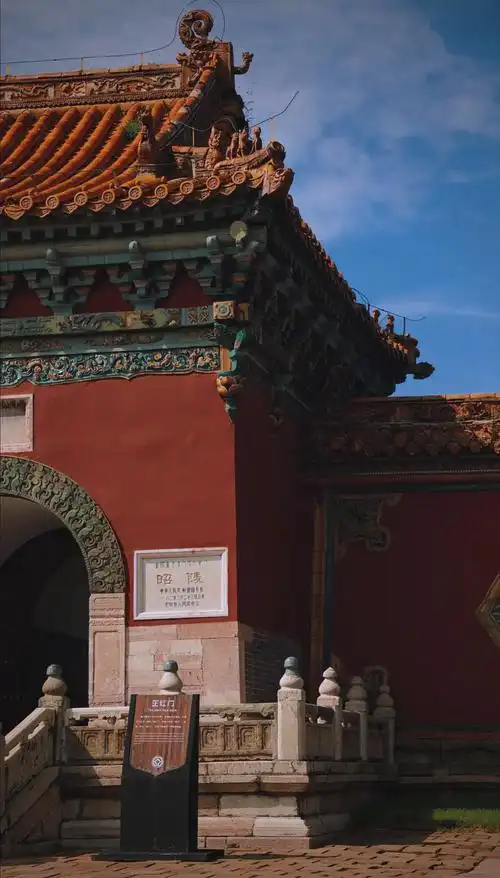
The mausoleum unfolds along a strict north-south axis in the classic "front court, rear residence" configuration familiar from Beijing's Forbidden City, but executed on a more intimate, almost mystical scale. Visitors pass through a stone memorial archway, then the Spirit Way flanked by stone guardian animals—lions, qilin, horses, and camels reminiscent of the sacred processional routes of ancient Egypt or the bronze beasts guarding European cathedrals—before reaching the vermilion-walled Great Red Gate. The Long'en Hall, with its imperial yellow roof tiles, served as the ceremonial heart of the complex and functions much like the royal chapels at France's Saint-Denis Basilica.
What truly distinguishes Zhaoling from purely Han Chinese imperial tombs is the visible fusion of three civilizations. A rare trilingual stele carved in Manchu, Chinese, and Mongolian marks the political genius of the early Qing—a multilingual empire that prefigured, in its own way, the Habsburg model of multiethnic governance. Particularly striking are stone carvings depicting the phoenix above the dragon, a deliberate inversion of Han iconography celebrating Manchu-Mongol matrimonial alliances. These details make the site essential for anyone interested in how empires negotiate cultural identity.
Beyond the architecture, the surrounding park harbors what is believed to be the largest planted grove of ancient Chinese red pines (Pinus tabuliformis) on the North China Plain. Walking among these towering, sculpted specimens offers a meditative counterpoint to the formal geometry of the mausoleum, much as the landscaped parkland at England's Blenheim Palace frames Vanbrugh's baroque architecture. Lakeside boardwalks and forested paths make the outer park an attractive destination in its own right.
The site is remarkably accessible: Exit E of Beiling Park Station on Metro Line 2 drops you at the entrance. The outer park is free, while the core mausoleum area costs 50 yuan in peak season (April 1–October 31, opening hours 08:30–17:00). Buy your mausoleum ticket in advance to avoid a second queue. On-site dining and English interpretation are limited, so bring water, snacks, and ideally a translation app or guidebook.
Visit early in the morning when pine-scented air is cool and crowds are thin. Walk the entire central axis from south to north—this is the only way to appreciate the careful choreography of imperial power embedded in every gateway and courtyard. Respect the monuments by refraining from touching stonework and keeping voices low on the Spirit Way. For Western travelers who have already explored the Ming Tombs or Beijing's Forbidden City, Zhaoling offers the complementary perspective of the dynasty's northern roots, where Manchu shamanism, Mongol alliance, and Confucian ritual first merged into the blueprint that would govern China for the next three centuries.
Zhaoling was begun in 1643, just eight years before the Manchu armies would sweep south and establish Qing rule over all of China. As the resting place of Hong Taiji—emperor of a realm that stretched from the Korean peninsula to the Mongolian steppes—it predates the more famous Ming Tombs near Beijing and offers visitors something those imperial necropolises cannot: the raw, formative architecture of a dynasty in the making. Completed in 1651 under the young Shunzhi Emperor, it represents the final flowering of a distinctly Manchurian imperial culture before it absorbed the Chinese traditions of the Ming.
The mausoleum unfolds along a strict north-south axis in the classic "front court, rear residence" configuration familiar from Beijing's Forbidden City, but executed on a more intimate, almost mystical scale. Visitors pass through a stone memorial archway, then the Spirit Way flanked by stone guardian animals—lions, qilin, horses, and camels reminiscent of the sacred processional routes of ancient Egypt or the bronze beasts guarding European cathedrals—before reaching the vermilion-walled Great Red Gate. The Long'en Hall, with its imperial yellow roof tiles, served as the ceremonial heart of the complex and functions much like the royal chapels at France's Saint-Denis Basilica.
What truly distinguishes Zhaoling from purely Han Chinese imperial tombs is the visible fusion of three civilizations. A rare trilingual stele carved in Manchu, Chinese, and Mongolian marks the political genius of the early Qing—a multilingual empire that prefigured, in its own way, the Habsburg model of multiethnic governance. Particularly striking are stone carvings depicting the phoenix above the dragon, a deliberate inversion of Han iconography celebrating Manchu-Mongol matrimonial alliances. These details make the site essential for anyone interested in how empires negotiate cultural identity.
Beyond the architecture, the surrounding park harbors what is believed to be the largest planted grove of ancient Chinese red pines (Pinus tabuliformis) on the North China Plain. Walking among these towering, sculpted specimens offers a meditative counterpoint to the formal geometry of the mausoleum, much as the landscaped parkland at England's Blenheim Palace frames Vanbrugh's baroque architecture. Lakeside boardwalks and forested paths make the outer park an attractive destination in its own right.
The site is remarkably accessible: Exit E of Beiling Park Station on Metro Line 2 drops you at the entrance. The outer park is free, while the core mausoleum area costs 50 yuan in peak season (April 1–October 31, opening hours 08:30–17:00). Buy your mausoleum ticket in advance to avoid a second queue. On-site dining and English interpretation are limited, so bring water, snacks, and ideally a translation app or guidebook.
Visit early in the morning when pine-scented air is cool and crowds are thin. Walk the entire central axis from south to north—this is the only way to appreciate the careful choreography of imperial power embedded in every gateway and courtyard. Respect the monuments by refraining from touching stonework and keeping voices low on the Spirit Way. For Western travelers who have already explored the Ming Tombs or Beijing's Forbidden City, Zhaoling offers the complementary perspective of the dynasty's northern roots, where Manchu shamanism, Mongol alliance, and Confucian ritual first merged into the blueprint that would govern China for the next three centuries.