Marshal Zhang's Mansion
⭐ 4.20
No. 1, Chaoyang Street, Shenhe District, Shenyang City, Liaoning Province, China
 Rising to power during the chaotic warlord period that followed the fall of the Qing Dynasty, Zhang Zuolin controlled Manchuria from this very compound between 1916 and 1928, ruling a vast northeastern territory roughly the size of France. His son, the so-called "Young Marshal" Zhang Xueliang, inherited this domain and made world headlines in 1936 with the Xi'an Incident, when he detained his own leader, Chiang Kai-shek, to force a united front against Japan. Walking through these halls, visitors encounter the same corridors where decisions shaped the fate of millions, much like touring Versailles reveals the ambitions of Louis XIV, only here the drama unfolded with machine guns and manifestos rather than powdered wigs.
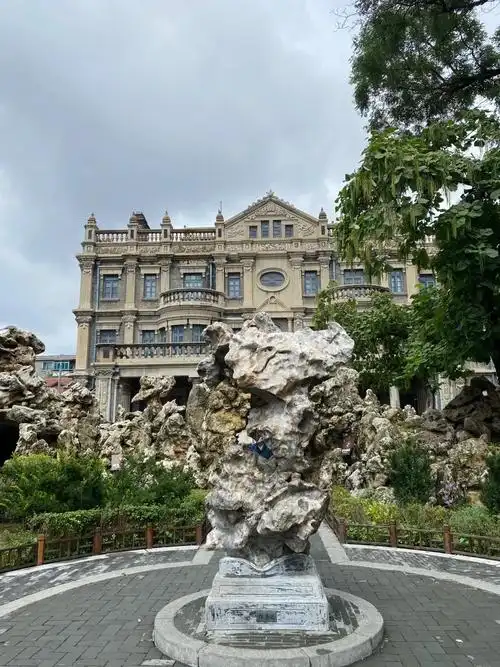
The architectural ensemble is one of the finest surviving examples of "East-meets-West" fusion in China, divided into eastern, central, and western compounds. The central courtyard, a dignified three-tiered siheyuan in the style of Qing imperial princes, recalls the residential quarters of Beijing's Forbidden City, with grey brick walls and intricate painted eaves. By contrast, the imposing Great Blue Building borrows freely from Roman and Baroque European models, its massive arched windows and ornamental stonework reminiscent of an Italian palazzo, though clad in distinctive Manchurian blue brick that gives the structure its nickname.
Each building carries powerful historical resonance. Inside the Great Blue Building's ground floor, the "Tiger Room" earned its fearsome reputation as the site where Zhang Xueliang ordered the execution of two rival officers in 1929, a moment that solidified his authority. Upstairs, the meticulously restored bedroom and study of the Young Marshal offer an intimate glimpse into his daily life, while the photogenic spiral staircase has become a favorite of visitors and photographers alike. Nearby, the more delicate Small Blue Building marks the spot where Zhang Zuolin spent his final hours following the Japanese-planned Huanggutuan bombing, an event that propelled Manchuria toward the tragedy of Japanese occupation.
Beyond the residential quarters, the on-site Shenyang Financial Museum, housed in the former Bianye Bank, provides a surprisingly engaging immersion into early 20th-century Chinese banking. Visitors can marvel at the colossal original vault doors and pose beside lifelike wax figures depicting Republican-era bank clerks, giving rare insight into the economic forces that shaped modern China. The adjacent Zhao Yidi Residence preserves the elegant French furnishings and music room where the Young Marshal's longtime companion lived, adding a touching human dimension to the political drama.
The mansion sits at 46 Shaoshuai Fu Lane in Shenyang's Shenhe District, just a 10-minute walk from the magnificent Shenyang Imperial Palace, making it easy to combine both attractions in a single day. Admission is 48 RMB, with discounts for students and seniors; the site is closed on Mondays but otherwise opens from 8:30 a.m., with extended hours in summer. Take Metro Line 1 to Zhongjie Station, Exit C, and you're just steps away. To fully appreciate the layered history, rent an audio guide or hire a local guide, wear something light-colored or vintage-inspired for photographs, and consider pairing your visit with lunch at the nearby Zhongjie food street, famous for traditional dumplings and steamed buns.
This is no ordinary museum, but rather a living chronicle of Northeast China's transformation from warlord fiefdom to contested battleground of Japanese imperialism and Chinese nation-building. Few places in Asia allow travelers to stand in rooms where pivotal 20th-century decisions were made, surrounded by period furnishings, bullet-scarred walls, and the atmospheric weight of history. For anyone seeking to understand how modern China emerged from the ashes of empire and civil war, Zhang's Marshal Mansion is an essential, deeply moving stop that rewards curiosity with unforgettable stories.
Rising to power during the chaotic warlord period that followed the fall of the Qing Dynasty, Zhang Zuolin controlled Manchuria from this very compound between 1916 and 1928, ruling a vast northeastern territory roughly the size of France. His son, the so-called "Young Marshal" Zhang Xueliang, inherited this domain and made world headlines in 1936 with the Xi'an Incident, when he detained his own leader, Chiang Kai-shek, to force a united front against Japan. Walking through these halls, visitors encounter the same corridors where decisions shaped the fate of millions, much like touring Versailles reveals the ambitions of Louis XIV, only here the drama unfolded with machine guns and manifestos rather than powdered wigs.
The architectural ensemble is one of the finest surviving examples of "East-meets-West" fusion in China, divided into eastern, central, and western compounds. The central courtyard, a dignified three-tiered siheyuan in the style of Qing imperial princes, recalls the residential quarters of Beijing's Forbidden City, with grey brick walls and intricate painted eaves. By contrast, the imposing Great Blue Building borrows freely from Roman and Baroque European models, its massive arched windows and ornamental stonework reminiscent of an Italian palazzo, though clad in distinctive Manchurian blue brick that gives the structure its nickname.
Each building carries powerful historical resonance. Inside the Great Blue Building's ground floor, the "Tiger Room" earned its fearsome reputation as the site where Zhang Xueliang ordered the execution of two rival officers in 1929, a moment that solidified his authority. Upstairs, the meticulously restored bedroom and study of the Young Marshal offer an intimate glimpse into his daily life, while the photogenic spiral staircase has become a favorite of visitors and photographers alike. Nearby, the more delicate Small Blue Building marks the spot where Zhang Zuolin spent his final hours following the Japanese-planned Huanggutuan bombing, an event that propelled Manchuria toward the tragedy of Japanese occupation.
Beyond the residential quarters, the on-site Shenyang Financial Museum, housed in the former Bianye Bank, provides a surprisingly engaging immersion into early 20th-century Chinese banking. Visitors can marvel at the colossal original vault doors and pose beside lifelike wax figures depicting Republican-era bank clerks, giving rare insight into the economic forces that shaped modern China. The adjacent Zhao Yidi Residence preserves the elegant French furnishings and music room where the Young Marshal's longtime companion lived, adding a touching human dimension to the political drama.
The mansion sits at 46 Shaoshuai Fu Lane in Shenyang's Shenhe District, just a 10-minute walk from the magnificent Shenyang Imperial Palace, making it easy to combine both attractions in a single day. Admission is 48 RMB, with discounts for students and seniors; the site is closed on Mondays but otherwise opens from 8:30 a.m., with extended hours in summer. Take Metro Line 1 to Zhongjie Station, Exit C, and you're just steps away. To fully appreciate the layered history, rent an audio guide or hire a local guide, wear something light-colored or vintage-inspired for photographs, and consider pairing your visit with lunch at the nearby Zhongjie food street, famous for traditional dumplings and steamed buns.
This is no ordinary museum, but rather a living chronicle of Northeast China's transformation from warlord fiefdom to contested battleground of Japanese imperialism and Chinese nation-building. Few places in Asia allow travelers to stand in rooms where pivotal 20th-century decisions were made, surrounded by period furnishings, bullet-scarred walls, and the atmospheric weight of history. For anyone seeking to understand how modern China emerged from the ashes of empire and civil war, Zhang's Marshal Mansion is an essential, deeply moving stop that rewards curiosity with unforgettable stories.