Shenyang Imperial Palace
⭐ 4.70
No. 171, Shenyang Road, Shenhe District, Shenyang, Liaoning Province, China
 Built in 1625 under Prince Hong Taiji, Shenyang Imperial Palace predates the Qing takeover of Beijing and the construction of the more famous Forbidden City. While the Ming-Qing transition reshaped East Asia, contemporaries in Europe were still navigating the aftermath of the Thirty Years' War. The complex functioned as the political and military command center of the Manchu state before 1644, making it roughly contemporaneous with the early Stuart palaces in Britain and predating Versailles by several decades.
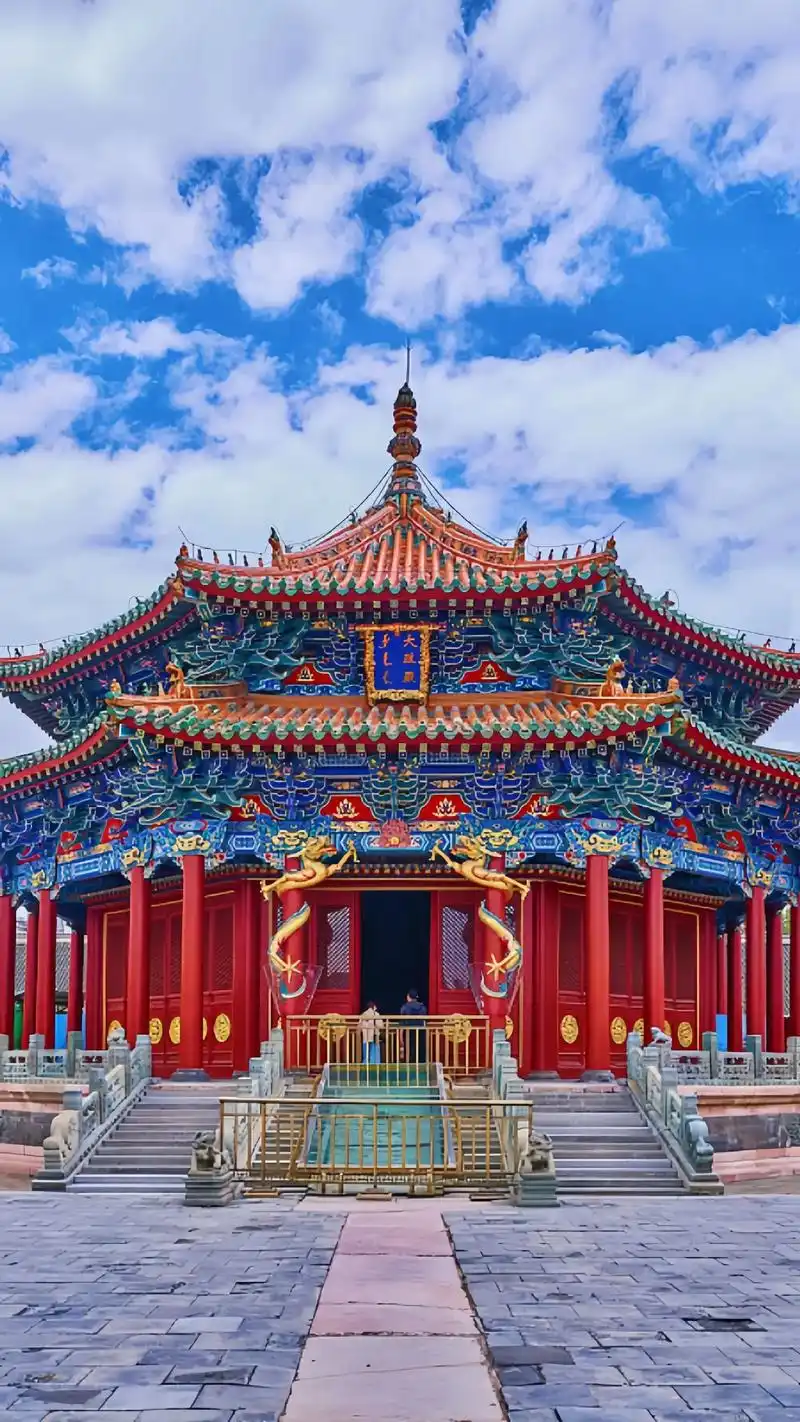
The layout defies the rigid central symmetry of Beijing's Forbidden City, instead forming a "目" character pattern of three parallel routes. The central axis contains the formal state halls and imperial living quarters, while the eastern section centers on the remarkable Dazheng Hall—an octagonal, double-eaved pavilion flanked by ten wedge-shaped pavilions. These pavilions housed the offices of the Eight Banners, the Manchu military-administrative system that governed the early Qing, illustrating the unique "ruler-and-officials-working-together" tradition unique to early Qing governance.
The Phoenix Tower, perched atop the central platform, served as the tallest structure in old Shenyang—comparable in status to a medieval European watchtower keeping watch over a walled capital. Its famous Qianlong-era plaque reading "Purple Air Comes from the East" and the scenic view "Sunrise over Phoenix Tower" once ranked among the celebrated Eight Views of Shengjing. Ascending to the upper platform reveals the intimate residential palaces where Hong Taiji and his consorts lived, including the Yongfu Palace once occupied by the formidable Empress Dowager Xiaozhuang.
The western section houses the Wensu Pavilion, constructed in the 18th century specifically to safeguard a copy of the Siku Quanshu (Complete Library of the Four Treasuries), one of the largest literary compilations in human history with over 3,500 titles. Modeled on Ningbo's famed Tianyi Pavilion, its distinctive black-glazed tiles with green trim reflect the fire-prevention symbolism central to Chinese library tradition—a solution to a problem that also plagued medieval European monasteries. Today, reproductions of this encyclopedic treasure remain on display, offering a tangible link to Qing-era scholarship.
For practical planning, the palace welcomes visitors daily from 8:30 AM to 5:30 PM, with last entry at 4:45 PM. Tickets cost approximately 50 RMB, and two to three hours suffice for a thorough visit. The recommended route enters through the Daqing Gate, then follows the central axis through Chongzheng Hall, Phoenix Tower, and the upper palace, before crossing to the eastern Eight Banners complex and finally the western Wensu Pavilion—a logical sequence that avoids backtracking.
Reaching the site is straightforward via Metro Line 1 to Zhongjie Station, where exits B or C place visitors within a five-to-eight-minute walk. Compared to the overwhelming scale of Beijing's Forbidden City, Shenyang's more intimate palace offers a refreshingly manageable experience, with its quieter courtyards and vivid vermilion walls providing exceptionally photogenic moments free from the crowds that throng China's more famous monuments—an ideal destination for travelers seeking deeper insight into the Qing Dynasty's remarkable rise from frontier horsemen to continental emperors.
Built in 1625 under Prince Hong Taiji, Shenyang Imperial Palace predates the Qing takeover of Beijing and the construction of the more famous Forbidden City. While the Ming-Qing transition reshaped East Asia, contemporaries in Europe were still navigating the aftermath of the Thirty Years' War. The complex functioned as the political and military command center of the Manchu state before 1644, making it roughly contemporaneous with the early Stuart palaces in Britain and predating Versailles by several decades.
The layout defies the rigid central symmetry of Beijing's Forbidden City, instead forming a "目" character pattern of three parallel routes. The central axis contains the formal state halls and imperial living quarters, while the eastern section centers on the remarkable Dazheng Hall—an octagonal, double-eaved pavilion flanked by ten wedge-shaped pavilions. These pavilions housed the offices of the Eight Banners, the Manchu military-administrative system that governed the early Qing, illustrating the unique "ruler-and-officials-working-together" tradition unique to early Qing governance.
The Phoenix Tower, perched atop the central platform, served as the tallest structure in old Shenyang—comparable in status to a medieval European watchtower keeping watch over a walled capital. Its famous Qianlong-era plaque reading "Purple Air Comes from the East" and the scenic view "Sunrise over Phoenix Tower" once ranked among the celebrated Eight Views of Shengjing. Ascending to the upper platform reveals the intimate residential palaces where Hong Taiji and his consorts lived, including the Yongfu Palace once occupied by the formidable Empress Dowager Xiaozhuang.
The western section houses the Wensu Pavilion, constructed in the 18th century specifically to safeguard a copy of the Siku Quanshu (Complete Library of the Four Treasuries), one of the largest literary compilations in human history with over 3,500 titles. Modeled on Ningbo's famed Tianyi Pavilion, its distinctive black-glazed tiles with green trim reflect the fire-prevention symbolism central to Chinese library tradition—a solution to a problem that also plagued medieval European monasteries. Today, reproductions of this encyclopedic treasure remain on display, offering a tangible link to Qing-era scholarship.
For practical planning, the palace welcomes visitors daily from 8:30 AM to 5:30 PM, with last entry at 4:45 PM. Tickets cost approximately 50 RMB, and two to three hours suffice for a thorough visit. The recommended route enters through the Daqing Gate, then follows the central axis through Chongzheng Hall, Phoenix Tower, and the upper palace, before crossing to the eastern Eight Banners complex and finally the western Wensu Pavilion—a logical sequence that avoids backtracking.
Reaching the site is straightforward via Metro Line 1 to Zhongjie Station, where exits B or C place visitors within a five-to-eight-minute walk. Compared to the overwhelming scale of Beijing's Forbidden City, Shenyang's more intimate palace offers a refreshingly manageable experience, with its quieter courtyards and vivid vermilion walls providing exceptionally photogenic moments free from the crowds that throng China's more famous monuments—an ideal destination for travelers seeking deeper insight into the Qing Dynasty's remarkable rise from frontier horsemen to continental emperors.